
Clean Your Pet’s Ears Safely at Home With These Tips!
An important (yet often overlooked) part of your pet’s grooming needs, ear cleaning helps to prevent unnecessary discomfort from ear infections and inflammation. Whether you are attempting this for the first time or just looking for tips to make the process easier, today’s post is for you! I’m going to break down everything that you need to know in order to clean your pet’s ears at home safely and effectively!
DISCLOSURE: THIS POST MAY CONTAIN AFFILIATE LINKS, MEANING I WILL EARN A COMMISSION IF YOU PURCHASE THROUGH MY LINKS, AT NO COST TO YOU. FOR MORE INFO, PLEASE READ MY FULL DISCLOSURE.
While many pet owners will rely on veterinarians and groomers to meet their pet’s grooming needs, you may find yourself in a situation in which you need to tackle these tasks at home.
Faced with lockdown and social distancing restrictions, many groomers are temporarily closed while veterinarians are limiting their appointments to vaccinations and emergency situations.
If you’re overwhelmed, don’t worry. I’ve got you covered!
This post is part 3 of a 4-part series on grooming your pets at home. In each post, I am sharing the information, products and safety tips you need to keep your pet clean, healthy and looking sharp.
New to the blog? You can check out the first 2 parts here:
Part 1: ‘Groom Your Pets at Home (With Little To No Regrets)’
Part 2: ‘How to Cut Your Pet’s Nails at Home (Including Tips for Nervous Pets)’
Stay Tuned for Part 4: Dental Care!
Now, onto what you’ve been waiting for….
Tips, Tricks and Step by Step Guides to Clean Your Pet’s Ears at Home
While there are some similarities between pets, the process of cleaning a dog’s ears versus a rabbit’s ears are actually quite different.
For this reason, I have broken this post down into 3 parts: Dogs, Cats and Small Animals (which will include rabbits, guinea pigs, chinchillas and ferrets).
Dogs
If you are tackling your dog’s grooming at home, ear cleaning is an important part of the process. This will help to prevent ear infections.
What this will look like will depend on your individual dog. Some dogs will simply need their ears wiped clean periodically while other dogs will need a thorough cleaning once a week.
It is important to note that cleaning your dog’s ears too often can cause irritation.
If you are unsure of exactly what your dog will require, contact your veterinarian to discuss his/her unique needs.
Ear inflammation and ear infections are a common problem for dog owners. The most common causes are allergies, trauma, underlying health issues, a build-up of dirt/debris, and infectious agents such as bacteria, fungi and ear mites.
There are some breeds that are more susceptible to ear infections due to their long, hanging ears such as Cocker Spaniels and Basset Hounds. However, NO dog is immune!
An ear infection is NOT a sign of poor grooming habits. Therefore, regular grooming does not mean that you are free and clear.
Trust me, our girl Daviana gets them every spring due to her allergies (and has for the 11 years that I’ve owned her). It can happen to anyone…
As part of your dog’s grooming schedule, you should be inspecting their ears approximately once a week.
A clean, healthy ear is pink, odourless and free from dirt/debris. If your dog’s ears meet all of these qualifications, cleaning is not necessary at that time.
If, however, you notice a mild odour, the presence of wax or debris or if your dog has been shaking his/her head, it’s time to break out the ear cleaner.
I can’t discuss ear cleaning without mentioning the risks of ear infections.
An infected ear can cause your dog a lot of pain and discomfort. Furthermore, it can lead to some pretty serious health concerns if left unaddressed.
Common ear infection symptoms include:
- Excessive head shaking
- Rubbing of the ears against the ground or other objects (like furniture)
- Repeated scratching at the affected ear
- Redness or swelling of the ear canal
- Scabs or crusting in or around the ear
- Tenderness or pain when you touch your dog’s ear
- Unpleasant or ‘yeasty’ smell
- Significant wax buildup
- Dark discharge in or around the ear
If you notice any of these signs, you need to consult your veterinarian.
While most ear infections can be cleared up relatively easily in the early stages, more serious cases may even require surgery. If in doubt, it is always better to seek help.
How to Clean Your Dog’s Ears
In order to clean your dog’s ears, you will need cotton gauze pads or cotton balls, an ear cleaning solution formulated for dogs such as Four Paws Ear Wash and a towel for clean up.
If you are trying to do this alone or if you are working with a squirmy or nervous dog, you may also want a leash and collar to keep your dog close or a blanket to swaddle your dog, restricting their movement.
#1 – Have your dog sit or lie down in front of you. Make sure that you have all of your materials close at hand.
Warning: You are NOT going to want to do this on a carpeted surface. When your dog shakes, he/she is going to send ear cleaner and ear wax flying. It is best to do this outside or in an easy to clean area of the home.
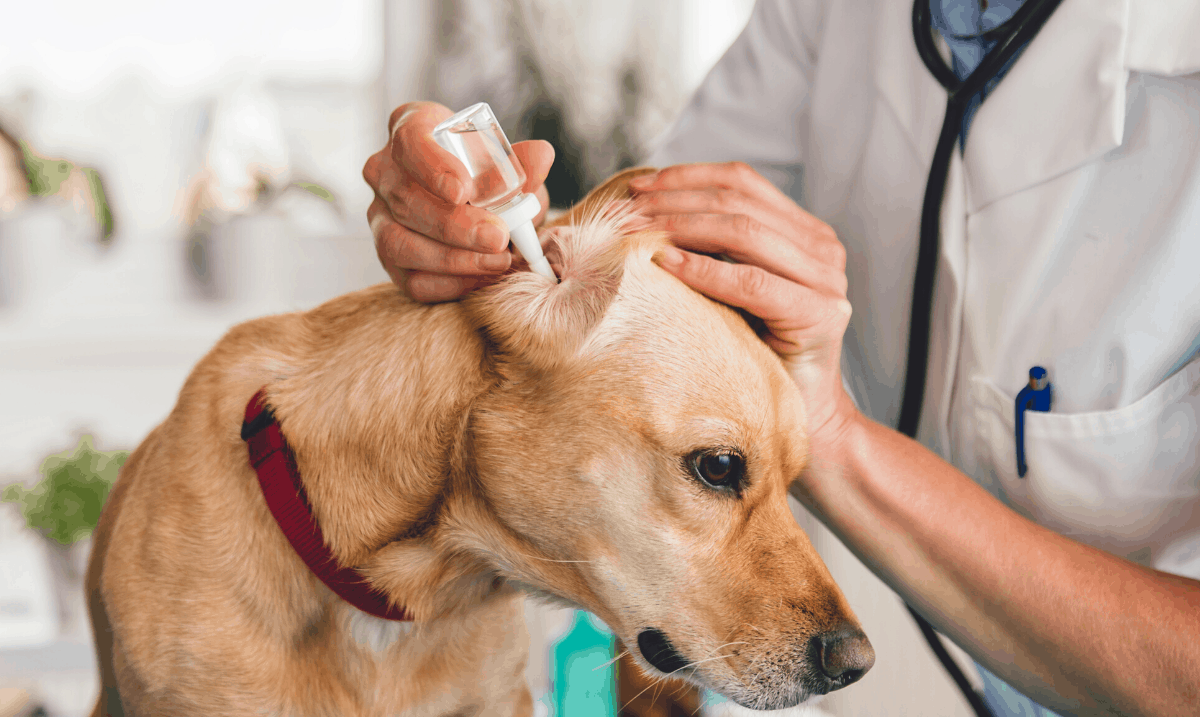
#2 – Gently pull back your dog’s ear flap to reveal the ear canal. Carefully pour the cleaner into the canal until you see it reach the surface.
#3 – Massage at the base of your dog’s ear for approximately 30 seconds. This will help to work the cleaner down into the horizontal portion of your dog’s ear canal where earwax can become trapped.
If you are doing this right, you should hear a smacking or ‘gushing’ sound.
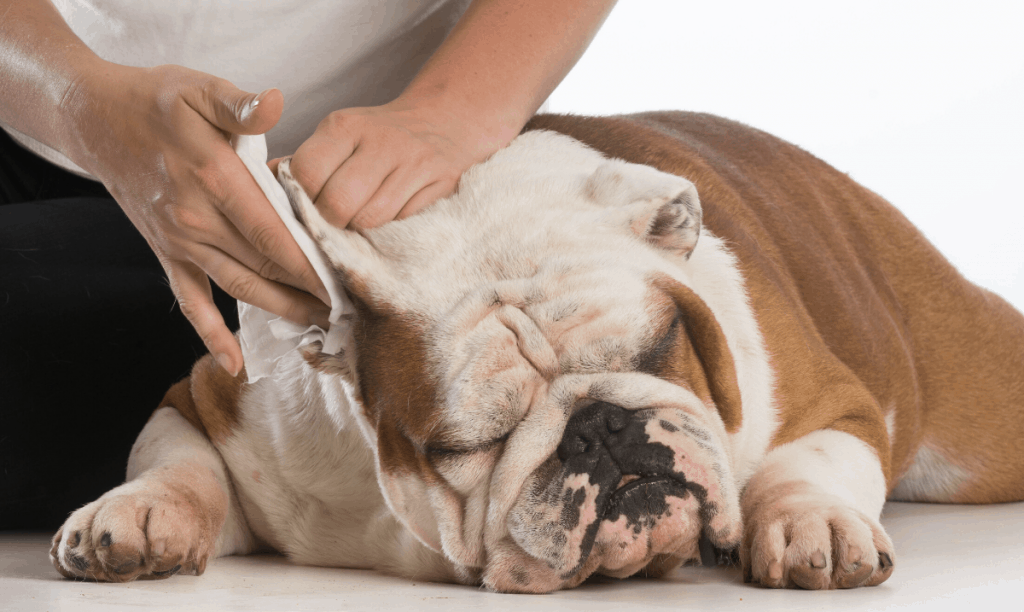
#4 – Take your gauze or cotton pad and use it to reach into your dog’s ear with it wrapped around your finger, wiping the wax free from the sides of the ear canal.
If you notice your dog showing signs of pain or discomfort at any point during this stage, stop and contact your veterinarian.
Throughout this step, your dog will want to shake his/her head. This is an important part of the process as it allows your dog to shake free any loose wax and should be encouraged.
#5 – Don’t forget to give your dog a treat and plenty of praise! This will help your dog to see the ear cleaning process as a positive one, making it easier in the future.
For an easy-to-follow demonstration, check out this video from LakesVeterinaryHospital on YouTube!
Cats
Unlike dogs, most cats will not need their ears cleaned regularly. They do a great job of keeping themselves clean, and their ears are no exception.
However, you should be checking your cat’s ears approximately once a week to ensure that there are no concerns.
How often your cat will need their ears cleaned will vary from cat to cat.
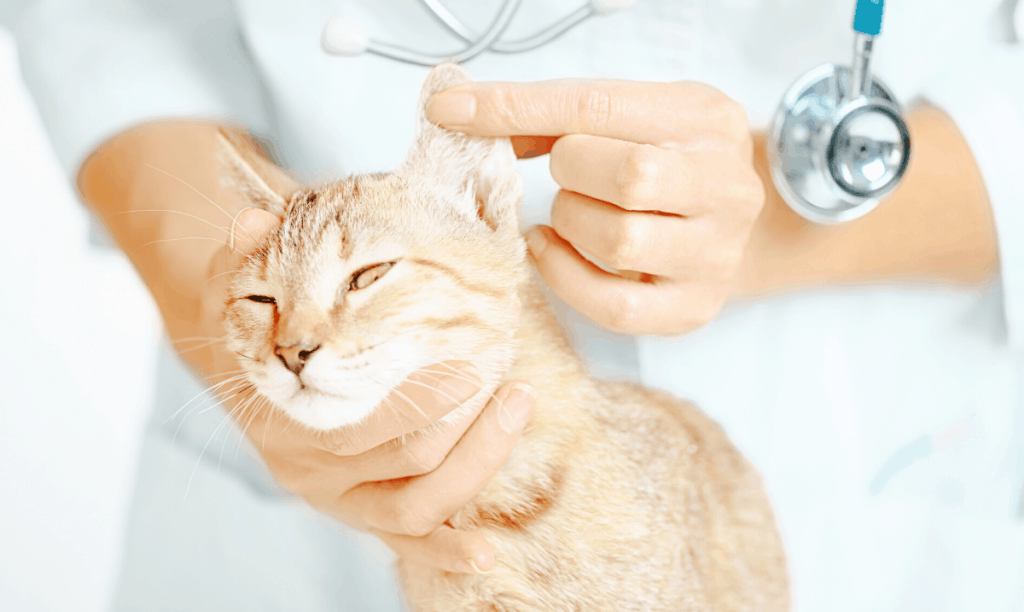
Approximately once a week, cat owners should do a visual check of the cats easier. Carefully hold the ear open and look inside for signs of wax build-up or debris.
If you have a cat that doesn’t like having his/her ears cleaned, this simple weekly check will help him/her get used to having their ears handled. This can make a BIG difference during cleaning!
In addition to checking to see if it’s time for a cleaning, you should watch for the following symptoms of an ear infection:
- Bald patches around the ear
- Scaly skin
- Excessive scratching of your cat’s ears
- Repetitive head shaking
- Dark-coloured debris in or around the ears
- Any signs of blood in or around the ears
- Bad odours
- Significant ear wax buildup (more than you would normally see prior to cleaning)
- Ears that are tender to the touch and/or warm to the touch
If your cat is showing any of these symptoms, contact your veterinarian as soon as possible. While most ear infections can be treated easily, they may be the sign of a larger health problem.
Ear infections that are left untreated can lead to serious complications.
How to Clean Your Cat’s Ears
The process to clean a cat’s ears is incredibly simple.
You will need cotton gauze pads or cotton balls, a towel or blanket to wrap your cat up (if you are doing this alone) and ear cleaning solution that is specifically formulated for cats such as Four Paws Ear Wash.
#1 – If you have someone else with you, have them gently hold your cat still throughout the process. If not, use a blanket or towel to securely wrap your cat up restricting movement.
#2 – Unlike when cleaning a dog’s ears, it is not recommended to pour the ear solution directly into your cat’s ears (unless you are using a medicated product under veterinary supervision). Instead, pour the ear cleaner directly onto the gauze pad or cotton ball.
#3 – Gently pull back the ear and wipe away any signs of ear wax using the gauze pad.
NOTE: Do NOT use Q-tips or other cotton swabs. These products can cause serious harm to your cat if they are placed too far into the ear canal.
#4 – Don’t forget to reward your cat with a treat at the end!
(Pippen and Jinx wouldn’t be impressed with me if I forgot to include that point!)
Visual learner? No problem! Check out this easy-to-follow video from the Ontario SPCA and Humane Society on YouTube including an explanation of how to best ‘swaddle’ your cat in a blanket or towel!
Small Animals
Some small animals such as rabbits, guinea pigs, chinchillas and ferrets may require ear cleaning due to the build-up of wax and debris.
Much like a cat or dog, you can clean your pet’s ears at home by following a few simple steps.
Rabbits/Guinea Pigs/Chinchilla
Dampen cotton gauze or a cotton ball with an ear cleaning solution specifically formulated for rabbits such as Marshall Peter’s Ear Cleaning Solution for Rabbits and Small Animals.
For small ears like that of a Guinea Pig you can use a cotton swab, however, do NOT insert the swab into the pet’s ear. This should be used ONLY for surface cleaning.
If you notice significant wax build-up or any sign that your pet’s ears are causing them pain or discomfort, this may indicate your pet is dealing with ear mites or an ear infection. Consult your veterinarian.
Related: ‘Learn to Recognize These 12 Common Rabbit Diseases, Illnesses and Ailments’
Ferrets
The process for a ferret is slightly different than other small animals. You will need a cleaning solution that is specifically formulated for ferrets such as Marshall Ferret Ear Cleaner.
A ferret’s body temperature is warmer than ours. For this reason, cold ear drops are very uncomfortable. To avoid upsetting your ferret, set the bottle of ear cleaner in a bowl of warm water and allow it to warm up first.
NOTE: You should always check to make sure that the cleaner isn’t too hot before proceeding.
Carefully apply a few drops of the cleanser into each ear canal, massaging the area behind the ear. Wipe the surface of the ear clean with a cotton ball or cotton swab.
As with the other animals above, if there is any sign of pain or discomfort, contact your veterinarian.
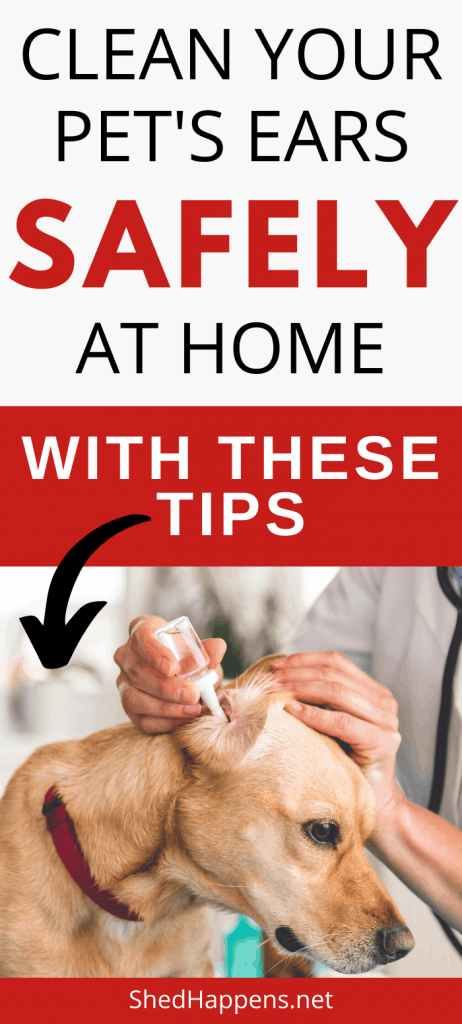
Do you have any go-to tricks or tips that help you to clean your pet’s ears? If so, please feel free to share them in the comment section!

I’ll keep these tips in mind. My cat gets super dirty ears and I was wondering how I could clean them.
It’s a lot easier than a lot of people think! The hardest part is keeping your cat calm while you handle their ears… However, over time you can help them to adjust to it appropriately.
This is very good information and could prevent costly vet bills. Our Bassetts are very prone to ear infections and prevention is much better. Thanks for posting.
Yes, ear infections can definitely get costly!
These are such great tips! We have cleaned our cats ears twice since we have had him (a little over a year) he does a good job keeping them clean, and I’ve used a warm wash cloth, but I might try some solution next!
Our cats are amazing at it, plus they clean one another’s ears which helps even more. I’ve had Pippen, for example, for 11 years and I can count the number of times I’ve had to clean her ears on one hand. She still gets a weekly check though.
Thats good that people can clean their dogs ears at home. Now to hope that the dog cooperates
Some do, some don’t… Our sweet boy Indy turns into a little monster when it comes to ear cleaning lol I usually end up wearing as much ear cleaner as I manage to get into his ear, if not more lol
I don’t have pets, and I’m not sure if I can ever do that. I’ll let my pet-lover friends know about this though. They are so hands on like you.
Thank you for sharing!
We’re not the best at cleaning our cat’s ears mainly because they both HATE it. But it’s something we’ve been meaning to do more often. Luckily they are both getting used to having their claws done so maybe we can entice them to allow us to clean their ears (and teeth).
Thank you for the tips!
I definitely recommend just touching their ears more at first so that they adapt to that. It’s a sensitive part of the body, so their natural reaction is to recoil and protect them. As they get comfortable with that, it will make cleaning them MUCH easier. That being said, mine still aren’t a fan of it lol
Cleaning dogs ears is a nightmare! Although not as bad as clipping their nails. This is a very helpful guide, thank you
It definitely can be. We have one that is SO good about it – Dav will come up to me, sit in front of me and patiently let me do it. Then there’s Indy…. The last time I did his ears it ended up turning into a TikTok video of his hilarious behaviour hahaha
this post is very timely. i just cleaned our cats ears yesterday… and i have to remind myself to do it every week. thanks to this post!
Thank you! It sounds like your kitty is really well taken care of! Clear sign of a great owner!
Such an informative read! These are great tips. Both of my dogs have floppy ears, so we definitely have to keep them clean! So much of this was exactly what our vet told us, too!
Yes, floppy-eared dogs are definitely more susceptible. Their ears prevent the airflow that dries them out creating the perfect atmosphere for bacteria. I’m sure your pups are glad that you stay on top of it!
Great info! We are getting our adopted puppy this week and it’s been quite a few years since I had a dog. Will definitely be referring back to this post. Thanks!
Congratulations! It’s such an exciting time!
Thanks for sharing these tips! My husky has had an ear infection in the past so we try to be vigilant with keeping them clean. I usually end up showered in it after he shakes his head!
I make sure that I’m not wearing anything I plan on leaving the house in after… Nothing like being out at your fav cafe having a coffee with a friend and you look down to see a chunk of ear wax on your pant leg lol (yes, that was oddly specific because it’s a true story lol)
Love to read this informative and useful article, the process of cleaning the ears of cats looks simple and easy for cat and dog owners. Thanks for sharing this valuable information with your reader.
Thank you!
This is so helpful! I didn’t know it was that easy. Thanks a lot for sharing and the product suggestions.
Thank you! It’s definitely easier than a lot of people realize. It’s just a matter of making sure that you have the right products on hand.
I think most people do not think that part of grooming is their pets ears…great information!
It’s definitely one piece of the puzzle that is often overlooked. I’ll be honest, it wasn’t one that I always remembered as much as I should have until I had a dog prone to infections due to allergies.
This is very interesting. I never knew that dog and cats ears needed cleaning that often. I am not a fur Mom as present but it is good to know that it is possible to do this at home. I was also surprised that cats will allow you to clean their ears.
It takes cats some getting used to. If you do end up adopting a cat down the road, I recommend touching their ears regularly right from the beginning. That way they get used to it and when it comes time to clean them, they think nothing of it. Similar to touching a pet’s paws before needing to cut their nails.
My Beagle Rocco is forever having issues with his ears. Our vet said because Beagles ears are so long they don’t get enough air inside to dry them out. At least twice a year he comes down with something in his ears that needs treating. He has luckily gotten used to the ear drops and gauze pads to clean them. He hated it at first but now just comes inside and sits down and waits.
Yes, any of the floppy-eared breeds struggle with that more often than not. Dav is similar – she gets hers due to allergies, but she’s so used to the drops and gauze pads that she’ll actually sit in front of me and stay still so I can do it lol
What a great read, Thankyou ! I am a huge animal lover myself with two dogs at home so I found your blog really useful 🙂
I can’t imagine our lives without them! They give us SO much and ask for such little in return – the least we can do is learn to take care of things like this at a time where we may not be able to access a groomer.
Dirty pet ears have always bothered me, lol. And for whatever reason, my cats love for me to rub the inside of their ears with my knuckle. It’s safe because my knuckle is big enough to not get to critical parts that can cause damage. It’s actually pretty funny because the more I do it, the more they try to push my knuckle even farther.
That’s adorable – and hugely helpful… Clearly they are okay with you touching their ears, which makes this whole process easier.
This is really useful considering my cat fights me in any way I try to groom him and take care of him. Thank you for sharing!
It takes practice. However, if you stick with it he’ll get used to it over time.
Great tips! I am almost as good as professional when it goes to cleaning ears for dogs. My first dog ever had ear condition so I had to clean it everyday for her 14 years old life. I am thankful my pups now don’t need that much of a care. This post is an excellent guide!
That’s how I am with my pup – I’ve had her for 11 years now and she gets chronic ear infections due to allergies. After a while, you get really good at it! lol
My golden retriever would get ear infections anytime we went to the lake. He loved to swim, but something in the water really irritated his ears. The vet did give us meds, but stressed how important it was to keep his ears clean. These tips are very helpful. Thank you!
Some dogs definitely react to situations like that more than others. I’m glad you were able to figure out what was causing it and how to deal with it!
Wow so easy to clean pet ear at home specially in this pandemic when we all wish to stay home and avoid going out.
As long as you know the steps, it’s easier than most people realize to take care of their pets at home! I hope that in sharing this, I can help some pet owners avoid panicking and/or worrying about it.
This is such great information! I have to admit I haven’t really ever cleaned my cats ears before. I will be checking them more often now after reading this post. Thanks for sharing!`
I’ve had my girl Pippen for 11 years now and I can count on one hand the number of times that I have had to clean her ears. Cats are pretty good at keeping them clean, but you should definitely keep an eye on it, just in case.
Thank God my Dog let’s me clean her ears. She doesn’t make a fuss about it. This is very important for our pets health.
We have one that’s really good about it, and one that makes it far more difficult lol
This is super helpful. I’ve always struggled with getting my pets ears cleaned.
It can definitely be a challenge, especially if they aren’t overly comfortable with the process!