
Groom Your Pets at Home (With Little To No Regrets)
The world, as we know it, has changed. In light of the current global situation, we are making a lot of changes and concessions to our typical schedule. For pet owners around the world, this may include the loss of your trusted groomer! Don’t panic! Today we’re going to talk about how to groom your pets at home (Part 1).
DISCLOSURE: THIS POST MAY CONTAIN AFFILIATE LINKS, MEANING I WILL EARN A COMMISSION IF YOU PURCHASE THROUGH MY LINKS, AT NO COST TO YOU. FOR MORE INFO, PLEASE READ MY FULL DISCLOSURE.
Pet grooming isn’t just about making sure that your pet ‘looks’ good. Regular grooming is essential to prevent ear infections, injuries from overgrown nails, dental issues, and more.
For this reason, pet owners everywhere are taking to the internet for the best tips, tricks, and suggestions to maintain their pet’s grooming during this time. Whether you’re opting to groom your pets at home for financial reasons or due to a global pandemic, I’ve got you covered!
There is A LOT of information to include, so I’ve decided to break this down into multiple posts. Part 2 will be published on Monday. The second part will cover nail care, with dental care and ear care to follow in subsequent posts.
Don’t want to miss Part 2? Make sure to join my mailing list and it will be delivered to your inbox!
[mc4wp_form id=”36″]
Tips & Tricks to Groom Your Pets At Home with Little to No Regrets!
Pet Suppliers ARE Considered Essential
If you’re worried about whether or not you have the supplies necessary for your pet’s grooming needs, you’re in luck.
While there seems to be some debate in the news recently as to whether or not groomers will fall under the classification of ‘essential’, pet suppliers are allowed to continue operating as long as they limit their sales to ‘safer’ alternatives like curbside pick up or delivery. This means that you have options!
Not only can you call up your favourite local retailer to discuss their curbside pickup options, but you can also shop safely from home with a wide variety of great online retailers including Pets Warehouse (a personal favourite) and, of course, Amazon!
Stick to Shorter and More Frequent Grooming Periods
If your pet isn’t a huge fan of the grooming process, the idea of doing a full brush-out is likely a little intimidating.
I understand! While our dogs love being brushed, Pippen is a completely different story. She may only be 3 lbs of cat, but you don’t want to get on her bad side! That little diva’s got some spunk!
Rather than trying to convince your pet to sit through a long, drawn-out grooming session, break it down into smaller and more manageable periods of time. This will help to avoid stressing your pet out too much and making the whole situation painful for everyone involved.
Schedule short 2 to 5-minute blocks throughout your week, focusing on just a little at a time.
Don’t forget the treats!
Grooming can be a fun bonding time for you and your pet if you make it a positive experience. Lots of praise and your pet’s favourite treats will definitely help!
Use the Right Brush for the Job
Have you ever noticed how many different tools a groomer has at their disposal? This is due to the fact that different coat types will require different brushes.
The key to effectively grooming your pets at home is to start with the right brush.
To help you choose a brush, let’s break down the different types and their intended uses…
Bristle Brushes & Pinhead Brushes
One of the most common types of brushes on the market, the bristle brush is super versatile. Depending on how close the bristles are, they can work for nearly any coat type.
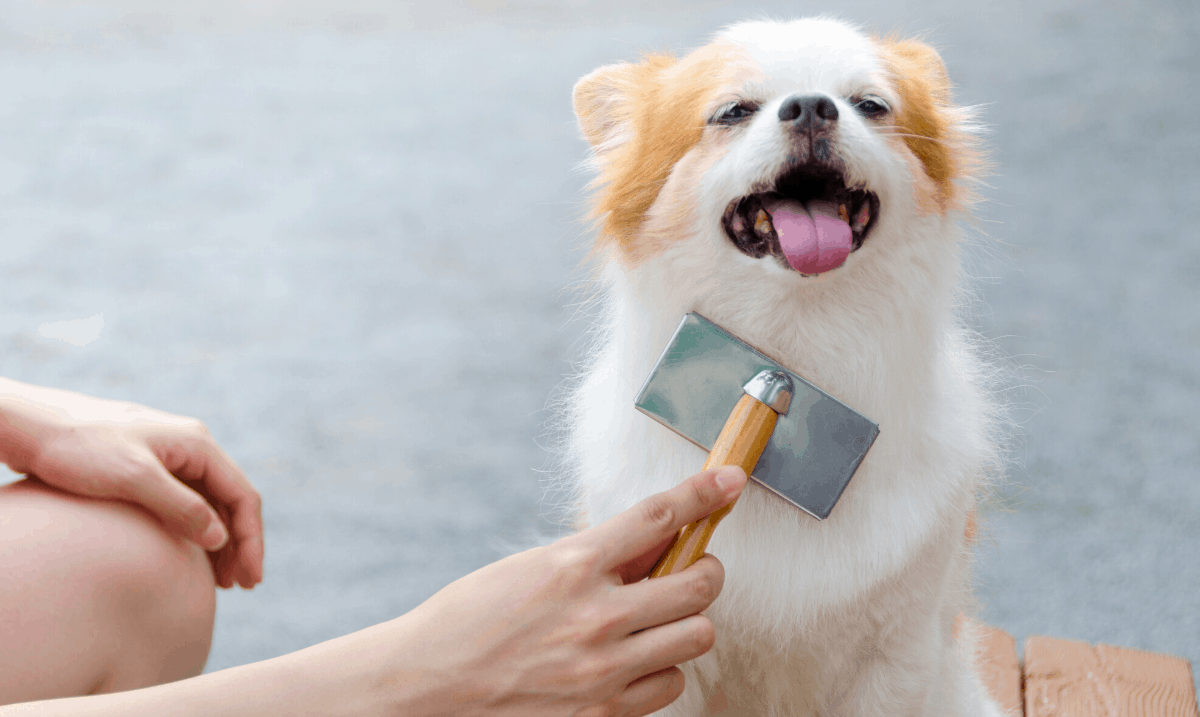
A bristle brush with short bristles close together such as the JW Pet Company GripSoft Bristle Brush is best for a shorter coat.
Pinhead brushes like the JW Pet Company GripSoft Pin Brush have longer metal pins in places of the bristles, meaning that they are better suited for medium to long coats.
You can also purchase combination bristle and pinhead brushes like this JW Pet Company GripSoft Double-Sided Brush with two sides depending on what option you’re looking to use.
These brushes are great for removing dirt and loose hair from the top coat of your pet’s coat but are not designed for dealing with lots of loose hair or an undercoat.
Slicker Brush
Ideal for short to medium-haired pets as well as those with curly coats, the slicker brush uses a number of fine, short wires that are angled to work through the coat while avoiding your pet’s skin.
These can be purchased in a variety of sizes. Small options like the Living World Small Animal Slicker Brush are ideal for rabbits, guinea pigs, chinchillas, and ferrets. Meanwhile, the Coastal Safari Soft Slicker Brush comes in a 4 ¼” size for larger dogs.
Note: If you use too much pressure when using a slicker brush, it can cause discomfort for your pet. You should always be gentle and exercise caution when grooming your pet.
Deshedding Brushes & Undercoat Rakes
For those dogs that are shedding a significant amount of hair, you may want to purchase a product specifically designed to address shedding. The most popular of which is the FURminator Line of Deshedding Tools which includes de-shedding brushes, de-matting tools, vacuum attachments, de-shedding shampoos, and more.
These brushes work by not only removing dirt and debris from the pet’s topcoat but also removing the dead hair from your pet’s undercoat.
Undercoat rakes like the JW Pet Company GripSoft Double Row Undercoat Rake specifically target a pet’s undercoat, removing dead hair from the undercoat while breaking up any mats and tangles that may be forming. These should be reserved for those animals with a dense undercoat as they can irritate the skin of dogs that don’t require them.
Actively addressing your pet’s shedding will not only help to keep your home clean, but it will also help to reduce the formation of hairballs.
If you have a cat that is prone to hairballs, you may want to also consider providing cat grass.
For more information, check out my post: ‘The Benefits of Cat Grass for Your Feline Friend’
Rubber Brushes and Grooming Mitts
Ideal for pets with shorter coats, rubber brushes like the Hagen Le Salon Grooming Brush with Loop Handle, and grooming mitts like the Hagen Le Salon Grooming Mitt work to remove dirt, debris, and dead hair while also massaging the skin.
These are also a great option during bath time if your pet tends to get overly dirty. Simply use the brush to massage the shampoo into your pet’s coat.
Bathing Your Pet
I have seen a number of people suggest bathing your dog to break up a difficult tangle or mat in the fur. Unfortunately, that’s not how it works. In fact, the opposite is true… bathing a pet with a mat in their fur will cause the fur to get more tangled and set.
Always take the time to brush any tangles and loose hair out of your pet before heading to the bathtub.
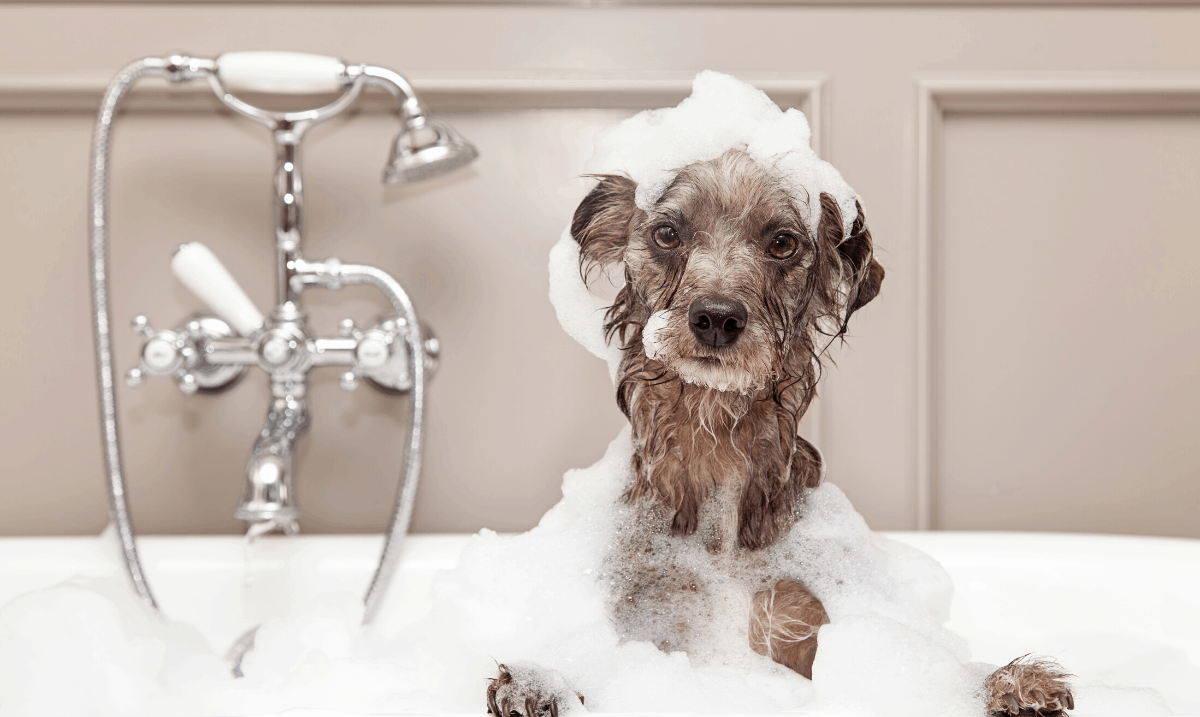
If you have a bathtub with a spray hose, that’s MUCH easier than trying to use a fixed shower head. Especially if your pet isn’t accustomed to being bathed at home. If not, run the bath until it’s filled with approximately 3 to 4 inches of lukewarm water, and use a large plastic pitcher or cup to wet your pet down.
Wet your pet’s fur down completely, careful to avoid pouring water directly into his/her eyes, ears, or nose.
Massage the shampoo gently into your pet, working from the head down to the tail. You want to use a pet-specific shampoo. That being said, take the time to read the instructions! Shampoos are not all created equally. Many will specify which animals they are safe for. Do NOT use a dog shampoo on your cat or ferret unless it is listed as safe on the bottle.
After a good lather, rinse your pet’s fur thoroughly. You want to remove ALL shampoo from the coat. If you are using a conditioner, this is the time. If not, you can move straight to drying your pet with a large towel!
If you are bathing a pet that isn’t comfortable in the bath or one that appears to be overly excited (like a young puppy) consider offering a distraction.
This can be done easily by throwing a floating toy into the tub or, for pups, putting a small dollop of peanut butter on the edge of the tub.
Small Animals and Bathing
I can’t talk about bathing without addressing the fact that small animals generally require little to no grooming. When they do, most small animals do NOT bathe in water.
Chinchillas, for example, use a product known as bath sand or dust bath. This is a fine powder that they will roll in for their bathing needs once every few weeks. Simply provide your pet with a pet-specific product like Super Pet Critter Bath Powder which is marketed for dwarf hamsters, gerbils, and chinchillas.
You can contain the mess that your pet may cause by using the Super Pet Chinchilla Bath House.
Ferrets are the exception. They can be cleaned using a spray-on product like the Marshall Ferret Odor Remover or using a ferret-specific shampoo like the Marshall Pet Ferret Aloe Vera Shampoo.
Do NOT use a shampoo meant for dogs or cats on your ferret!
Leave the Scissors for the Pros
You may be tempted to break out the scissors and try to replicate your groomer’s last style. Not only can this go HORRIBLY wrong from a cosmetic standpoint, but if you aren’t skilled in cutting your pet’s hair, it can also be dangerous.
A pet’s skin is incredibly sensitive. This means that you can easily nick their skin, causing them pain and discomfort.
The most important rule if you’re going to groom your pets at home – Leave the scissors to the pros!
Sure, they may not be rocking the beautiful haircut that you’re used to, but it’s not worth it.
With the exception of cutting back hair from their eyes (always hold the hair with your fingers between where you’re cutting and the skin), it’s always safer to simply maintain grooming habits and wait for your groomer to open up again!
Interested in more grooming tips?
Ready to groom your pets at home safely and effectively?
I’ll be coming back to you MONDAY with PART 2 of this post – Including dental care and how to cut your pet’s nails!

I had no idea that bathing makes the coat worse until a few weeks ago. Thanks for the tip to brush out knots before putting the dog in the bath.
I have a Cavalier King Charles with a long coat, and it can be a nightmare.
Georgia| Britvoyage
It’s definitely worth putting the time in brushing first. My one cat is long-haired, so I totally understand the struggle!
Caitlin uses the furminator for her goldendoodle! Gotta make sure there’s no matting 🙂
I love the Furminator! It makes a HUGE difference for our girl Daviana. Shedding season hits her HARD lol
I don’t have a pet at home but I think grooming them at home is a lot more economical
Definitely a great way to cut back on the budget – owning a pet is expensive!
Pet grooming is so Awesome! And now that we can’t go outfit, doing it at home is important.
Exactly – We used to have the luxury of having someone else take care of it for us, but many people don’t now. So, it’s important to learn what to do ourselves at home to take care of our pets.
I used to use a deshedding brush on my cats when I had them. Believe it or not, the feeling of raking the teeth along the fur and the sound it made was just as therapeutic for me!
I get that! Honestly, grooming my German Shepherd is definitely therapeutic for me!
Thanks for the tips! Luckily my dog doesn’t need grooming. But my cousin’s dog does! I will send this to her 🙂
Thank you!
Thanks for sharing such valuable info on grooming a dog!
We love our Golden Retriever, but our two cats are soooo much easier to groom! The Golden takes an hour to dry afterward. But grooming a golden is important given the under coat. Thinks can get matted as smelly pretty quickly without proper grooming. Thanks for the tips.
I understand this all too well! My girl Daviana is a German Shepherd mix, so she sheds like CRAZY all year long. I will say that our girl Pippen (long-haired cat) needs a fair amount of grooming compared to the average cat.
I cringe when I see the furminators recommended. They don’t tell you it is a stripping blade, if you use it as they suggest you can ruin your cat’s coat, especially a longhaired breed. Like the scissors I recommend leaving that to a pro. I wrecked my Shadow’s tail with a furminator used as suggested before I did my grooming training. He had a beautiful tail but I stripped it and it never grew back the same. If you have a long haired breed cat skip the brushes, get a steel comb. I like Chris Christensen but Wahl and Andis have good ones too. Use a slicker brush for finish work.
Great advice. I’ll be honest, I’ve never tried a Furminator on a cat before. That being said, I have had great luck with it with a dog in the past. On our long-haired cat, Pippen, I have been using a steel comb because it’s the only thing that works and that she will tolerate. She’s also picky about which combs she likes or doesn’t like so there was some serious experimentation to find the one that she was okay with in order to make grooming time easier hahaha