
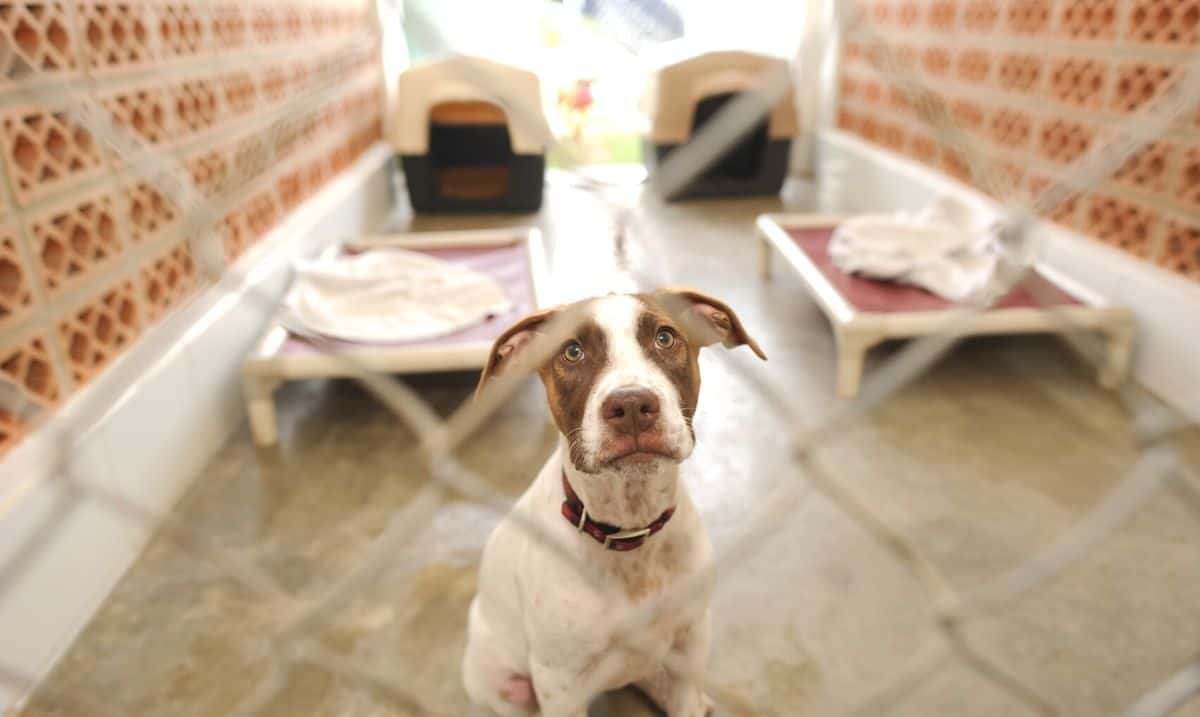
Why Is It So Hard to Adopt A Rescue Dog?
It is one of the most common questions that I receive regarding the world of animal rescue. With so many animals in need of a forever home, why is it so hard to adopt a rescue dog? The answer goes beyond just looking at the numbers…
According to the ASPCA website, approximately 1.5 million shelter animals are euthanized each year in the United States.
Despite that statistic, many people apply to adopt at shelters and rescues only to be rejected or hear nothing back at all.
With the ongoing ‘Adopt, Don’t Shop’ push in our society, prospective dog owners are left frustrated.
What is the point in telling people to adopt rescue pets if they aren’t going to be accepted anyway?
Why isn’t adopting a dog as easy as purchasing one at a pet store or local breeder?
First, I’d like to take a moment to address he fact that I am NOT against reputable breeders.
However, that doesn’t include the backyard breeders and puppy mills that can be found selling their dogs on Facebook Marketplace or Kijiji.
For more information about the difference between Backyard Breeders, Puppy Mills and Responsible Breeders, check out my post ‘Adopting a Dog vs Buying From a Breeder: What’s Right for Me?’
Returning to the question at hand, why is it so hard to adopt a rescue dog?
To better understand this, we must first look at the process that the average shelter or rescue has in place to determine the best home for the dogs in their care.
After all, that is the goal! Not only find a home but find a home that is a good fit for ALL parties.
At the end of the day, a rescue’s priority is the wellbeing and happiness of the dog in their care throughout the remainder of their lives, not being a people-pleaser.
While this may be hard to hear, it’s important to keep in mind!
Related: ‘What Is Black Dog Syndrome?‘
Why Is It So Hard to Adopt A Rescue Dog?
Non-Negotiables
If you’re here reading this post, you likely don’t fall into this category.
However, I can’t discuss the reasons for an adoption denial without addressing those that are declined for reasons that are considered non-negotiable.
These reasons aren’t just potential concerns, they are often big red flags for those in the rescue community.
Financial Concerns: If, during the adoption process, you ask for the adoption fees to be waved or reduced so that you can afford to adopt, you are going to be declined. If you can’t afford the adoption fee, how are you going to afford the ongoing care of your new dog (vet visits, food, etc.)?
Failure to Provide A Veterinary Reference: If you have previously had pets in your home but refuse to provide a veterinary reference, there is generally only one reason… Your former veterinarian wouldn’t recommend you as a dog owner. The rescue needs to know that you’re going to provide the necessary medical care to keep your new dog happy and healthy.
You Currently Own Unaltered or Unvaccinated Pets: If you aren’t already providing the necessary vaccinations to keep your current pets safe, the rescue isn’t going to trust that you will suddenly change your mind and vaccinate a new pet. Most rescues require pets to be neutered/spayed to help with the overpopulation of pets and prevent backyard breeding. If your current pets are unaltered, you have shown that you don’t share the same views.
You Have Previously Abandoned A Dog: If you have previously dumped a dog at a local shelter because it just ‘didn’t fit your lifestyle’ at the time, don’t think you’re going to get another dog from a rescue that easily! You’ve already shown that you aren’t interested in committing to the full life of a dog.
Unstable Home Environment: If you don’t currently have a stable home (staying on a friend’s couch, for example) or the rescue workers see any reason to question the stability of your home environment moving forward (such as an abusive spouse), this isn’t the right time to take on the responsibility of another life.
Refusal to Provide Landlord’s Contact Info: The fact that you are renting isn’t going to make or break your ability to provide a happy home for a pet. However, most rescues will want to verify that your landlord is okay with the addition of a dog to the home. Too many dogs have been returned or dropped off at shelters due to issues with finding pet-friendly living situations.
Lack of Respect for Rescue Workers: If you are rude or belligerent throughout the adoption process, you are likely destroying your chances of adoption. How can a rescue worker trust that you will treat a dog with respect if you can’t even treat them with respect during the stage when you should be trying to impress them?
It’s About the Individual Dog, Not Just the Breed
Each dog has its own individual personality, quirks, and needs.
For example, you may be completely in love with a specific breed, like the German Shepherd (my love), but that’s just the tip of the iceberg!
Even having previously raised a German Shepherd or German Shepherd mix doesn’t necessarily mean you’re the right choice for THIS German Shepherd.
Coming from a variety of different homes and situations, shelters find themselves looking for homes that are prepared to care for:
- Overprotective German Shepherds
- Fearful (even Fear Aggressive) German Shepherds
- Untrained/Destructive/Difficult German Shepherds
- Shy German Shepherds
- Reactive German Shepherds
- German Shepherds with Separation Anxiety
And so much more…
For each rescue dog that is adopted out, there is a focus on better understanding the needs of the dog as well as the home/lifestyle of potential adopters.
A dog that is fearful may have different needs than a dog that is struggling with separation anxiety.
If the rescue were to place a dog with anyone that inquired, disregarding these details, they are going to see a steep increase of dogs being returned to the shelter when things don’t work.
Why set everyone up to fail when they are already aware of why it likely won’t be a good fit?
These dogs have already been in a shelter/rescue at least once, imagine the psychological impact of going through that repeatedly!
Related: ‘Find the Best Shelter Dog for Your Family by Following This Advice!‘
Concerns Regarding the Home Itself
Each rescue has their idea of the ideal ‘home environment’ based on their own experiences and the dogs in their care.
The good news here is that these are generally aspects that can be addressed to move forward or adjust your focus.
Do you live in an apartment, condo, or small townhome without a personal yard?
If you’re applying for a high-energy dog that requires a lot of energy to be happy and healthy, this could very well be the reason that you were denied.
Try refocusing your search, looking instead for a smaller, more laid back or older dog that is better fit to that lifestyle.
The most common reason for denial that I see mentioned in this category is the lack of a fenced back yard.
A large percentage of dogs found in shelters/rescues were found either chained up in a yard without access to a warm, loving home or found roaming lost on the streets.
Having seen this time and time again, the rescue is (understandably) taking steps to prevent this from happening to the dogs in their care.
This is particularly true for dogs that are known to be runners or escape artists.
If you have been denied for this reason and are serious about adding a high-energy dog to your family, consider having a fence put up before reapplying.
Family Dynamics
You may be 110% interested in adopting a pet and adding to your family, but that doesn’t mean that everyone in your family is ready.
Many shelters and rescues require that all family members attend any ‘meet and greets’ with the dog to ensure that everyone is on the same page.
The rescue wants to ensure that everyone is ready to take on the responsibilities associated with taking on a new dog.
For this reason, if your spouse states that they aren’t interested, your application will be denied.
Even if you’re going to be the primary caregiver, adding a dog to the house does impact everyone that lives there in one way or another.
Children may also lead to the denial of an application for a couple reasons.
First, there are some dogs that simply aren’t good with children.
For these dogs, a home with children comes with an increased risk of something happening, which isn’t a risk that rescues are willing to take.
Second, if your children are acting aggressive or entitled during the meet and greet, the rescue is going to deny your application.
Even a dog that has shown that it is great which children can be pushed too far.
If the rescue workers are concerned that the dog will be put into a situation that could be dangerous for anyone involved, they aren’t going to take chances.
Schedule/Lifestyle
Are you married to your work? If you work long hours and your new dog will be stuck alone at home, you will likely be declined.
Dogs are social creatures that are interested in creating a loving bond with their owners.
However, they aren’t going to have that love and attention if no one is home with them more often than not.
The same can be said for someone that travels regularly.
While there are many great kennels and pet sitters available, the rescue is searching for a home where the dog will have the opportunity to create a loving bond with their new owner.
Related: ‘Top 10 Reasons to Adopt A Senior Dog‘
Differences in Values/Beliefs
I’m not talking about religious beliefs, however, there are some personal opinions or values that could lead to the denial of an application.
This can occur when there is a difference of opinion in regard to training practices.
For example, if you are looking at adopting from a rescue that advocates for crate training and you state that you will NOT crate train your dog, you may be denied.
The same can be said for anyone that states that they aren’t interested in paying for professional training regardless of the situation.
Another example that I have seen arise comes from the vegan community.
I am NOT anti-vegan or saying that vegans can’t provide a happy, healthy home for a pet.
However, most rescues will not adopt out to someone that has expressed that they will force their new dog to eat only a vegan diet due to concerns about proper nutrition.
There May Have Been A Better Fit
No one wants to hear this, but there are times when it’s nothing more than a case of timing and a better fit.
Your home could provide everything that dog wants and needs, however, someone else applied at the same time whose application was just a little bit better.
Don’t be discouraged!
If there are no specific reason that your application was denied, then you are sure to find the ‘right’ dog if you keep applying and stay positive!
There are many other incredible dogs out there waiting for their ‘happily ever after’.
As for the question: Why is it so hard to adopt a rescue dog?
The short answer is simply that there is a lot involved with finding the ‘right’ home.
It’s a huge commitment and rescues want nothing but the best for the dogs in their care.
Have you adopted a rescue dog? If so, I’d love to hear about your experience with the process in the comments below!

I have always been keener to adopt a rescue dog than one that you can get from a breeder. First of all, I am after a dog where all household members can bond and that is not determined by the pedigree papers of the dog. I am after a dog that will be regarded as another family member, rather than a show or trophy dog. It really irks me that people sometimes think of dogs as they would purchasing other possessions and seem to overlook the fact that they have real feelings and needs like anyone else. This is a really great post to educate people on what shelters look at for the benefit of the dog, not the humans who simply ‘want’ a dog.
It is definitely important to focus on the well-being of everyone involved, and that includes the dog too! I am not against those that are searching for a purebred and opt to go to a responsible breeder as long as they aren’t supporting backyard breeders and puppy mills, where they are just in it for the money. That’s where the treatment of the dogs really suffers.
It is so sad that so many animals have to be euthanized because they don’t end up adopting. I do understand that shelters want the best for the animals that are up for adoption. Those requirements can be harder for those without a vet or not the best history. These dogs need love – I think these rules need some kind of reforming. I know lower income households do have the ability to be able to give the pets the love and care. At the same time, I do think vets are quite expensive – if there can be a “pool” that accepts donations to help pets that are sick, that would be a huge plus!
Nancy ✨
There are definitely resources available for those that are in need of assistance. It may take a little research to find out what is available in your area, but there are great organizations out there interested in helping. Here in our small town, there’s the Angel Fund which was started by our veterinarian. They do fundraising throughout the year to add to the funds available. Right now they are selling calendars and our cat Pippen is the festive December picture!
I am totally against backyard breeders and puppy mills myself. My dogs are not adopted though actually… well because they are pure breed and they are meant to be fathers. Only of them is actually, the other developed health issues (inheritable) so he is not meant to be for the breed’s good. However have I not the breeding ambitions, I might just adopted the puppy. I might be in future.
on the other hand I often hear the most common con to adoption is our country: it is that want to get a puppy and raise not, not to solve issues the dog already has from past experience. This is the one hard to beat really, most adopted dogs have not lead carefree life and it always has consequences.
I can’t speak to the availability in your country, but here in Canada and the United States, there are many young puppies that end up in the care of rescues and shelters that are just as carefree as those that are purchased from breeders. Our cat, for example, was only 4 weeks old when we brought her home.
I am very anti-breeding as it is more money over morals. I agree that rules for adopting animals should be strict. Imagine if rescue centres didn’t do such rigorous checks and gave away animals to someone who was going to leave it alone all day or abuse it? Just like adopting a child is challenging, adopting a dog shouldn’t be easy either.
Helen
I think there’s a big difference between a responsible breeder that is genuinely interested in the dogs themselves and the betterment of the breed, and backyard breeders/puppy mills that are just in it for the money. I have met breeders before that fall into the first category that take big financial hits just to ensure the best care for their dogs and the puppies that they bring into the world. Personally, I’ve only ever rescued dogs but I do think we need to be careful not to lump all breeders into one category because there is definitely a HUGE difference!
Great post to read..agree with all of your points.shelters often require specific living requirements and specialist care before taking any decision. In my childhood I was in India One day I picked up street puppy roaming alone..and bring it to my home. That dog stay will us for 8 years. But now I m in US my kids too want a pet at home but every time we get confused what we do and always dropped. Now by your post some points are clear to me.Thanks it is very helpful Blog.
I’m glad to hear that I was able to help! If you have any questions along the way, feel free to reach out. I’m also in the process of starting a rescue specific Facebook group if you’re interested in connecting with others that have opened their home to rescue pets. I can let you know once it is up and rolling.
Here’s another post that you may find helpful where I discuss the steps to finding the best shelter dog for your family: https://shedhappens.net/find-the-best-shelter-dog-for-your-family-by-following-this-advice/
We in my family have always got all of our pets, cats, and dogs at the SPCA our CASCA for cats. And it’s always a great feeling to provide a nice quiet home for animals in need.
All of our pets are rescues and we do short-term medical foster, so we are definitely a pro-rescue family as well. I love knowing that I was able to give our pets the life that they deserved, a second chance that I wish we could give to every rescue pet out there.
Some great insight here. It makes sense that certain owners are just not suited to certain dogs, but that doesn’t mean that every future application will be denied. It’s just a case of trying again until a great fit has been found. I’m sure for many pet owners, it will be worth it in the end!
Exactly! Being denied because you aren’t a fit with one particular dog doesn’t mean that there won’t be a dog that you do fit with. If you apply for a high-energy working dog like a German Shepherd but your lifestyle is calmer and relaxed, they are likely going to select someone that would fit better with what that particular dog needs.
I do understand that the shelter needs to qualify you to adopt a dog but sometimes their requirements can be too strict. I think it is better for these aminals to be adopted vs. the shelter killing them. However I do believe they need to have some kind of standards in order to get these animals to the “right home” so they can be loved like they deserve to be.
Kill shelters, I’ve found, are a little more lenient in terms of requirements for adoption. Luckily, here in Canada the ‘kill shelters’ aren’t something that we commonly see like you do in other countries.
All our dogs have been rescue dogs from groups or shelters. I completely understand why they have so many rules, but I know it can be frustrating for some. I think this list addresses everything that people might need to think about before trying to get a dog.
It can definitely be frustrating, it’s hard on the adopters as well. It’s heartbreaking to see someone fall in love with an animal knowing that they may not be able to bring them home because 3 other people have fallen in love with them too, or that there is something small preventing them from being an ideal match. However, the system does work to help place pets in the best home for everyone.
This is so insightful! When I bought the orange turd some 13 years ago, I looked into a local shelter, and thought the process was not only invasive (had I read this then, I would be far more understanding) but more expensive than simply going to a pet store to pick out my favorite and bring him home. I’ve always made well thought out choices, especially when it comes to pets. So I figured when I go in and pick one and say take my money, they will. The process comes across almost like a competition, but that may be because people don’t totally understand the whys behind the process. I’ve seen people post on social media about hoping to be picked to adopt a pet, but they’re competing with three other families or something like that, and it sounds heartbreaking. Why start getting attached to a pet you may not even be picked to keep? I think if everyone who was looking to adopt a pet from a shelter read this first, they would be a lot more understanding of the process!
Thank you, that’s what I’m really hoping to do by sharing this. It’s not the easiest process of getting a pet, by any means. I have also fallen in love with a pet only to not bring them home at a point in the past, and it hurts. There’s no denying the fact that it’s hard. However, it definitely helps when you start to learn the reasons why.
If I were to have a pet at home I would love to actually get one that is more needy. Here in India many homes adopt street dogs when they are just born and shower them with love. Many may not be in a position to bring them home but care for them by offering food everyday. It’s always such a good feeling when one adopts a rescue dog.
I have been following a few people on social media that have adopted street dogs over there. I love seeing that they are doing what they can to help these dogs live a happy, healthy life.
It’s so sad when you see dogs at a shelter that don’t find forever homes, but I do understand why these protocols are in place. We had a rescue dog when I was a young child and he was the sweetest, most patient dog in the world – a great fit for our family.
All the best, Michelle (michellesclutterbox.com)
We’ve always had rescues, some incredible pets throughout my life! I know that it can be frustrating trying to jump the hoops to be approved, however, when you do find that ‘right fit’, it can make for years of happiness and great memories.
I hadn’t really given it much thought before, the dog adoption process, as I was in primary school when we got our dog. But maybe the process needs to be streamlined to make it more efficient if they’re still having to put so many dogs down each year
The biggest struggle leading to the large number of dogs being put down isn’t the process as much as it is the categories of dogs that are often overlooked. Everyone wants to come into the shelters and adopt the adorable little puppies, while older dogs, dark-coated dogs (black dog syndrome is a thing), and stigmatized breeds are written off without even giving them a chance.
These protocols are so important – it’s a shame that some people find these as blockers to eventually take the dogs home. If I were to get a dog, it would 100% be a rescue!
Rosie
It is SO important. Rescue workers simply want to find the best situation for everyone involved.
This was such a great and interesting read! I always asked myself why it could be so difficult and now that I read I do understand why there are plenty of questions asked from the rescuers before adopting. Even here in the UK, there’s a lot of requirements to adopt dogs and cats, though I think that some requirements might be too strict. Like unless you own a house with a garden, it’s very improbable you can adopt, but living in London means very few chances of having a backyard. I did have the chance to rescue my last dog back home in Italy and even if she had some post-traumatic stress, she grew to be the sweetest companion. Thanks for sharing x
I find that the rescues around here are pretty understanding of those who live in apartment buildings or condos where they don’t necessarily have a yard IF they are choosing a dog that is also an apartment-friendly breed. Some are better suited to that lifestyle than others. If you were to apply for a young, high-energy German Shepherd pup, for example, you’d be declined. However, if you were interested in a quieter, more laid-back dog they would take that into consideration.
This is such an interesting post about rescue dogs, I wish people would adopt rescue dogs more than buying them off breeders etc x
Lucy | http://www.lucymary.co.uk
There are definitely situations where it makes sense to go to a breeder, but for most people, a rescue dog would be a great option!
This is such a great post. I always think rescue animals are the best. It breaks my heart what some of them have been through.
They have so much love to give. Ours are all rescued and they bring joy to our lives every day.
As you know, I’m a cat lover but much of what you say about adopting dogs is true of cats as well. Our newest cat came from Cats Protection because his previous owners were being evicted. As we’ve adopted from CP before, taking Loki on was more of a formality, but for our first CP adoption we had to jump through all sorts of hoops. As you say, it’s not about pleasing us, it’s about what’s best for the animal. Great tips, Britt.
Exactly! Honestly, we’ve had our hearts on a pet only to have them go to another home before. It’s not that we were a bad choice, we just weren’t the BEST choice for that pet at that time. That being said, when you do find the right fit, it’s worth the wait!
WOW, such a important piece. I rescued all of my 4 cats and as hard as it is , its so rewarding. I feel very lucky. Honestly, thank you for writing this and bringing light to so many parts of rescuing a dog which people dont realise.
Right? There is SO much that goes into pet adoption. We’ve adopted all of ours. Adopting our cat Pippen was easier because it was my second pet from the same location (we got her from the same shelter as Daviana). That being said, I would have been okay with going through the whole process again for her if that’s what they needed. Whatever it takes to make sure that their best interests are priority #1.
This was so interesting. I know all about the process of finding a pup that works for both you and them and how that can be challenging sometimes due to my own failed attempt at trying to adopt before Hugo, but I’ve never been through the adoption process to know how common it is to be declined. It needs to be the right home though, especially if the furry friend in question has had a tough start x
Exactly! Our most recent addition to the family was our boy Indy (2013, so not super recent lol) and he was adopted from a rescue in Ohio. I spent quite a while chatting with this foster mom via email in the week leading up to when we first met him. He was a little nervous/skittish in new situations and had a bit of a passive urination issue, so he needed a home where he was going to be made to feel safe and a family that was willing to be patient with him and work through that. Putting him in the wrong home could have made things even worse for him.
I knew that it was more complicated to adopt a rescue dog rather than buying one, but I didn’t realise quite how much went into it! My cat is a rescue cat and I definitely agree with ‘adopt, don’t shop’. xx
It can be difficult (and frustrating) but it’s SO worth it when you bring that special pet home.