
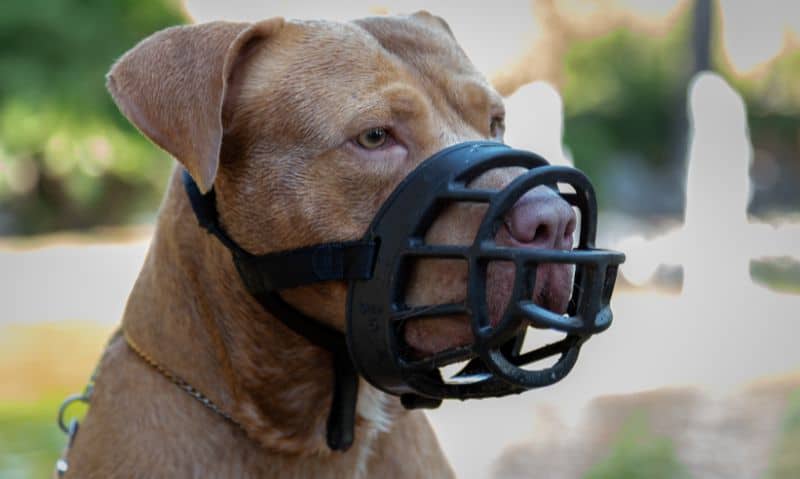
Muzzle Conditioning and Your Rescue Dog
The use of muzzles for dogs has long had a negative connotation. People see a muzzled dog and instantly jump to conclusions about that dog’s training, behaviour, or level of care the owner provides. But the truth is that with proper use and muzzle conditioning, this can be a valuable tool for both safety and health reasons.
I do not deny that there are some situations in which a muzzle is misused. It can do more harm than good if it is left on for an extended time, used when unsupervised, ill-fitting, or a source of stress.
In this article, I am going to help break through the misconceptions about muzzle use and help you introduce the tool to your dog in a positive way.
Reasons to Consider Muzzle Training a Dog
While a muzzle shouldn’t be viewed as a substitute for training your dog, there are several reasons why I recommend muzzle conditioning. It’s also recommended by many veterinary professionals.
Much like crate training (which I also strongly support), muzzle conditioning is a way to set yourself up for success if an emergency happens. You never know when you will find yourself in a situation where a muzzle is required.
When experiencing intense pain, even the nicest of dogs may lash out. For this reason, the veterinarian may require a muzzle during the exam and treatment.
In this situation, your dog is likely already stressed. If this is the first time they have worn a muzzle, that can contribute considerably to their stress and anxiety. A dog already conditioned to wear one will handle the situation much more comfortably.
Other situations where a muzzle may be a great option for your dog include the following:
- Prevent your dog from eating things they shouldn’t on a walk
- During grooming sessions
- Reactive dogs in a situation that may push them over the threshold
- Dogs that have a bite history
Avoid using your dog’s muzzle as a punishment. Not only does this create a negative connotation with the muzzle, but it may also escalate any frustration and reactive or aggressive behaviours.
What is Muzzle Conditioning?
Muzzle conditioning refers to the process of introducing the muzzle slowly to your dog, creating a positive association with it and its use.
Taking your time when muzzle training is critical in setting your dog up for long-term success. By removing the stress and anxiety that often accompanies having something placed over their muzzle, you allow your dog to wear this valuable tool in various settings comfortably.
But don’t rush the process! Work through the following steps while monitoring your dog’s body language and comfort level.
If you notice they are showing signs of stress, you may need to step back and reassess.
Muzzle Conditioning Step-By-Step: How to Put a Muzzle on a Dog for the First Time
Step One: Introduce the Muzzle
As I previously mentioned, the goal of muzzle conditioning is to introduce it slowly, giving your dog time to adjust. This is key for alleviating their fear or stress when first being shown the tool.
Show your dog the muzzle and simply allow him to smell and explore it.
It may take some dogs a little longer to work through this stage as they eye it up from a distance. Don’t rush this process.
When you see that your dog is curious and willing to explore the muzzle, place a treat inside it. Choose a treat that is large enough that it won’t fall through the basket so that your dog has to reach into the muzzle to retrieve it.
Step Two: Treat Games
Hold the muzzle up in one hand and hold a treat with the other so that the treat is inside the basket of the muzzle.
Allow your dog to reach into the muzzle to take the treat. Hold the muzzle steady during this time, allowing your dog to control how quickly they move into the muzzle and how long they remain there.
Repeat this process until your dog moves in to take the treat without hesitating.
Step Three: Start Putting the Muzzle On
Place the muzzle slowly and gently onto your dog’s nose. Give them a treat and remove the muzzle immediately.
Repeat this process a few times, allowing your dog to adjust to the feel of something being placed over their nose. For many dogs, this is the most stressful step in the process, so be patient.
Step Four: Fasten the Buckles
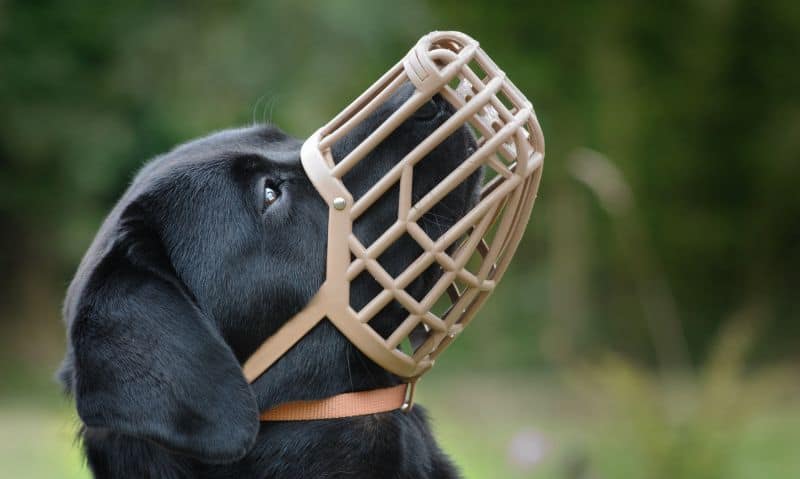
When you place the muzzle onto your dog, fasten the buckle(s) holding it in place. Give your dog a treat, then unbuckle and remove the muzzle again.
If your chosen muzzle has more than one buckle, you may need to introduce the buckles one at a time.
Begin by fastening just one buckle, rewarding your dog, then removing it. When your dog is comfortable with that, introduce the second buckle. Fasten both, reward, then remove the muzzle.
Step Five: Increase the Time Slowly
Now that you can put the muzzle onto your dog without stressing them out, it’s time to start increasing the time it is on before removing it.
Begin by fastening the buckles and waiting a few seconds before rewarding and taking it off. Repeat this a few times before increasing the length of time that the muzzle is on before giving a reward.
Don’t push to move too quickly through this process.
If your dog becomes frustrated or stressed, you may have moved too quickly. Take a couple of steps back, decrease the time and work back up again.
How Long Can a Dog Wear a Muzzle?
The length of time that a dog can wear a muzzle safely will depend on the style of muzzle, the environment you are in, and your dog’s comfort level.
Here are a few guidelines to follow:
- Slip muzzles, or fabric muzzles, should not be used for more than 10-15 minutes
- Basket muzzles can be worn longer but should not be left on indefinitely
- Limit time for brachycephalic dogs due to their increased risk of overheating
- Avoid using a muzzle for too long in extreme temperatures or overly active situations
- Never leave your dog unsupervised while wearing a muzzle
Why the Basket Muzzle is the Best Muzzle for Dogs
When selecting the best muzzle for dogs, you should consider a few key factors to ensure your dog is safe and comfortable.
Many dog owners purchase the fabric muzzles found in most pet stores. While these are the most commonly available, they are not designed to be worn for any length of time.
Your dog should have enough room in the muzzle to open their mouth to pant and drink water.
Basket muzzles are designed to cover the entire muzzle and mouth for optimal security while offering necessary space.
They can be purchased either with a metal or plastic/rubber cage. Both offer a reliable barrier around the muzzle, whether you’re using it to prevent your dog from eating things they shouldn’t or for safety reasons.
Carefully measure your dog before purchasing to ensure that your dog’s muzzle will fit properly. Any level of discomfort can take away from the positive association you are working to build.

Do you use a muzzle for your dog? If so, I’d love to hear about your experience with muzzle conditioning and use in the comments!
Feature Image Credit: Fabio Fernandez Priego | Canva

I think unfortunately with tools like muzzles so many people see so many instances of people using them badly, especially in media because they are in most animal abuse cases I’ve seen on the local news that a lot of people don’t even bother to really look into them. Since, they have already written them off. I think luckily the younger generation on tiktok who are fostering dogs and showing people that muzzles are a good tool is helpful though, just like you are doing. 🙂
Exactly – the media has focused on sharing the bad associations and issues with these tools. But, every tool can be used negatively in the wrong hands!
Sometimes Using a muzzle helps for other people safety, and during their treatment at clinics, it depends how you use it.