
9 Warning Signs of Heat Exhaustion in Dogs
With the summer weather upon us, it’s time for all of our favourite summer activities! Bonfires, beach days and quality time poolside. However, as a dog owner, it is important to recognize the impact that this heat can have on your pup. Here are the common warning signs of heat exhaustion in dogs that you should be aware of as well as tips to keep your pup safe!
Disclosure: This post may contain affiliate links, meaning I will earn a commission if you purchase through my links, at no cost to you. For more info, Please read my full Disclosure.
This is an important conversation that every dog owner needs to have as the temperatures rise!
Heat stroke and heat exhaustion are serious health conditions that can potentially turn fatal.
Keep your dog safe this summer by learning to recognize the warning signs as well as how to react appropriately if your dog is overheating.
When we, as humans, get overheated, we sweat in order to cool down. However, dogs don‘t have the same number of sweat glands, making it more difficult to lower their body temperature.
They have limited sweat glands in their paws, but their main tool for cooling down is panting.
Imagine walking around outdoors in the summer with a fur coat on…
When a dog’s body temperature raises too high (over 104°F), their system becomes overwhelmed. They are no longer able to cool themselves down enough to reach a safe temperature.
Heat stroke refers to the moment in which the dog’s body starts to fail as a result of high temperatures.
It isn’t just their ability to cool themselves that fails. Heat stroke can cause a dog’s body to start to shut down including their neurologic, circulatory, urinary systems and more.
This is where it can turn fatal.
Keeping your dog safe means recognizing signs of heat stress and heat exhaustion before it escalates to this stage.
9 Warning Signs of Heat Exhaustion in Dogs
Heat Exhaustion, also known as hyperthermia, is the first stage that a dog will experience when they are overheating.
It is the point when their body temperature rises beyond a healthy level, and they are no longer able to cool themselves.
If caught and addressed appropriately at this stage, a dog can be cooled down, avoiding a more serious health concern. However, the signs of heat exhaustion are often subtle and overlooked.
Common Warning Signs of Heat Exhaustion in Dogs Include:
- Persistent Panting
- Laboured Breathing
- Dark Red Gums and Tongue or Pale Gums
- Wide Eyes
- Actively Seeking Out Water from Any Source Possible
- Slow Movement, Not Keeping Up
- Desire To Rest More/Seeking Shade
- Rapid Pulse
- Pacing or Showing Signs of Anxiety
Related: ‘Be Prepared With This DIY Dog First Aid Kit‘
15 Warning Signs of Heat Stroke in Dogs
If a dog continues to overheat beyond heat exhaustion, they may then experience heat stroke. It is at this stage that heat can become fatal.
If you see signs of Heat Stroke, contact your veterinarian immediately!
In Addition to the Above List, Warning Signs of Heat Stroke Include:
- Excessive Drooling
- Vomiting
- Diarrhea
- Presence of Blood in Stool or Vomit
- Glazed-Over Eyes
- Confusion/Delirium
- Staggering/Inability to Walk Properly
- Loss of Balance/Coordination
- Weakness
- Muscle Tremors
- Little to No Urination
- Bruising (Especially on the Gums, Inside of the Ears or Underside of the Belly)
- Collapse
- Unresponsiveness/Coma
- Seizures

Prevent Heat Exhaustion with These Tips
#1 – Limit Your Dog’s Time Outside
If you have a dog that loves spending time playing outdoors, they may not always recognize when it’s time to come in.
It’s like a child – they don’t always act on what’s best for their health!
When your dog is outdoors for any length of time, be sure to provide a cool and shady location as well as plenty of cold, fresh water.
Pay attention to how long your dog has been outside, bringing him/her indoors regularly to cool off when possible
#2 – Never Leave A Dog Inside A Parked Car
This shouldn’t have to be said, it’s been discussed over and over, however, it still happens!
It doesn’t matter whether your nearby or only gone a minute. A parked car is like an oven, quickly heating up to potentially fatal temperatures.
Cracking a window will NOT cool it down enough to prevent this.
If you are going somewhere where you are unable to take your dog in with you, leave your pup at home. They may not like being left behind, but it is for their own good.
If you see a dog experiencing distress inside a parked vehicle, contact the authorities.
#3 – Always Ensure Your Dog Has Access to Fresh Water
Whether you are spending time indoors or out, it is ESSENTIAL that your pup has access to fresh water throughout the day.
Check your dog’s water dish regularly and refill it when needed.
If you are going to be outdoors or on the road, make sure that you have a supply of water available or on hand. There are a number of great travel accessories available!
#4 – Avoid Walks During the Hottest Times of the Day
If your schedule allows, take your dog walking first thing in the morning or evening when it starts to cool off again.
Physical activity will increase the chance of your dog getting overheated. Therefore, walking during peak heat hours is increasing the risk significantly.
Consider taking shorter walks and ALWAYS bring water with you!
Don’t forget to check the pavement if taking your dog walking on a sidewalk! You can do this by laying the back of your hand on the surface in question to check temperatures.
This includes requiring your dog to walk over hot sand!
#5 – Limit Excessive Exercise on Hotter Days
Do you enjoy running, biking or hiking with your dogs? You may want to be selective about which days are appropriate for this level of exercise.
As mentioned above, exercise will increase the risk of overheating.
#6 – Add A Puppy Pool to Your Yard
Having the ability to cool off in a pool can improve your dog’s comfort level when spending time outdoors.
You don’t have to invest in an expensive dog pool. Our dogs have a simple plastic kiddie pool.
Make sure to change this water regularly as it will heat up faster than the water in a larger adult pool. They will also likely choose to drink from the pool, increasing the importance of cool, fresh water.
Related: ‘Tick Prevention for Dogs: How to Keep Your Family Safe this Tick Season‘
What to Do If Your Dog is Showing Signs of Heat Exhaustion
If you notice your dog showing any of the above signs listed above, it is important to act quickly.
The key to responding to heat exhaustion or heat stroke is to cool your dog’s body temperature in a safe and controlled way.
NEVER put your dog in cold water or ice. Rapid cooling can cause additional health concerns.
At the first sign of heat exhaustion, move your dog to a cooler area. If possible, moving your dog indoors is preferred.
Wet your dog down using cool (NOT COLD) water. If your dog is smaller or a younger puppy, lukewarm water should be used first to slow down the cooling process.
If you do not have access to a bathtub, hose or other larger body of water, you can use cool, wet towels to cool your dog down. Place the wet towels on your dog’s neck, armpits and behind their hind legs.
Using cool water, wet your dog’s paws and around his/her ears.
Rubbing alcohol can also be used on your dog’s paw pads to encourage perspiration.
If your dog is willing to drink, provide cool, fresh water. However, do NOT force water. Doing so could end up forcing water into your dog’s lungs causing additional complications.
Using a rectal thermometer, monitor your dog’s temperature throughout this process. Temperatures between 103 and 106°F indicate heat exhaustion, while temperatures over 106°F are a warning sign of heat stroke.
Contact your veterinarian IMMEDIATLELY! They will provide you with any additional information that you may need to treat your dog appropriately.
Depending on your dog’s condition, they may require you to bring your dog in for additional treatment including intravenous fluids, supplemental oxygen, etc. This will also allow your vet to monitor your dog’s organ function.
Increased Risk of Brachycephalic Dog Breeds
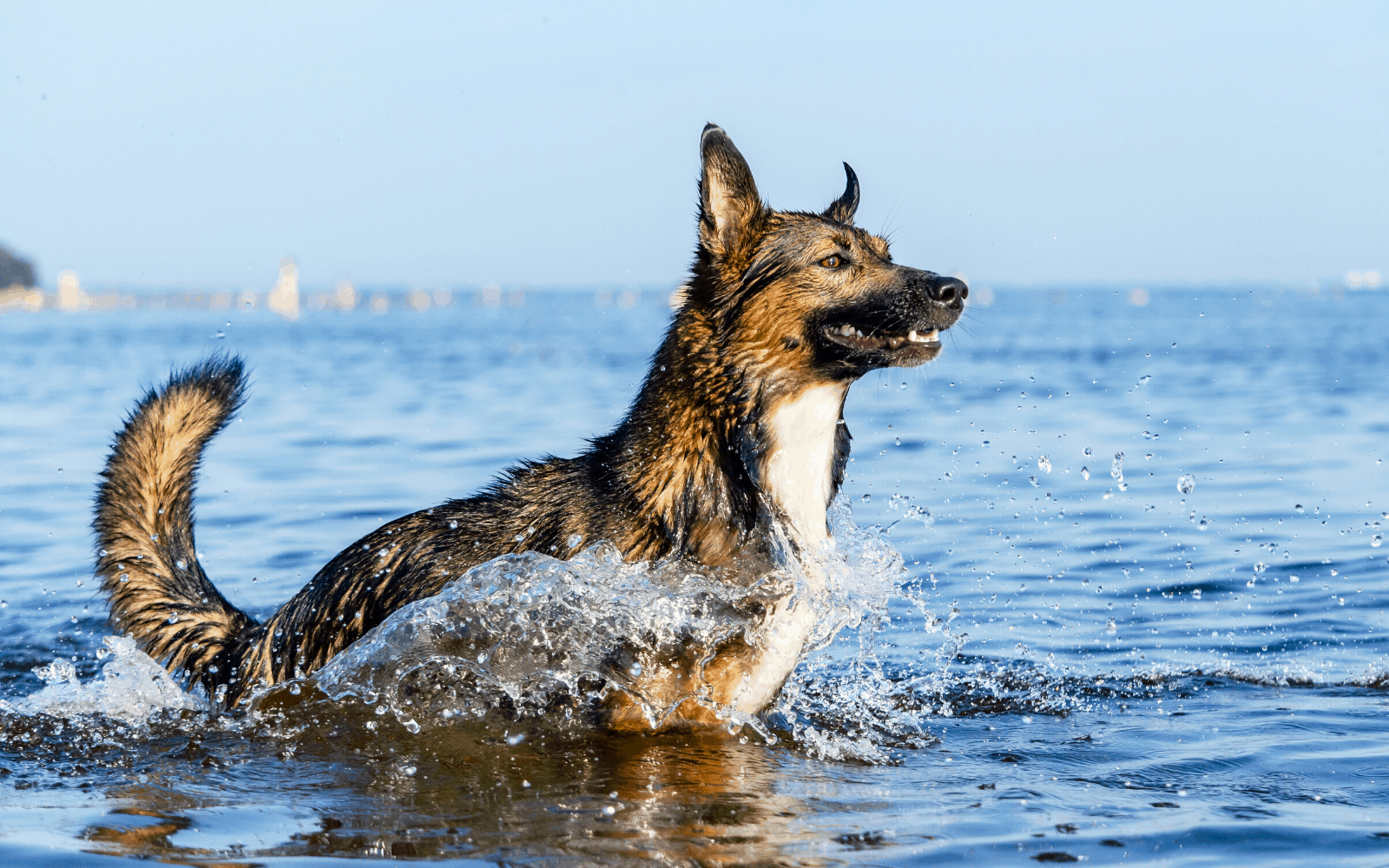
Dogs with shorter noses or ‘flat faces’ like Pugs, Bulldogs, Boston Terriers, Shi Tzus, and Pekingese are at a higher risk for heat-related illness.
The physical structure of their face restricts airflow, making it impossible for them to pant and cool down as effectively as other breeds. This means that they will overheat quicker.
If you share your heart and home with a brachycephalic dog, you will need to take extra precautions to keep them safe.
Other Risk Factors to Consider
If your dog is older or extremely young, their body may be more susceptible to heat exhaustion.
There are also a number of medical conditions that should raise a flag. This includes dogs that are overweight, those who suffer from heart problems and those with difficulty breathing for any reason.
Finally, if your dog is a working or hunting dog, they are more likely to find themselves in a situation where they are over exercising.
It is important to keep an eye on these highly active dogs during the warmer temperatures.
Make sure that you are providing them with plenty of breaks, shade to rest in and fresh, cool water so that they are properly hydrated.

Were you familiar with all of the warning signs of heat exhaustion in dogs? What steps do you take to keep your pet cool on hotter days?

This is so important. It always annoys me when I hear of people leaving their dogs in parked cars. Poor puppies.
It’s heartbreaking! They rely on us to take care of them, giving us everything they have. How do you not make that a priority?
thanks for this… very helpful. pinning!!
Thank you!
Great post! This is so important right now. This summer has been HOT! We’ve been limiting our outside time and making sure to have lots of water.
Thank you! We’ve been keeping the dogs in more than usual this summer as well – better safe than sorry!
One thing that many people seem to fail to understand is that heatstroke can actually kill a dog. It’s not just that they can get very unhappy, uncomfortable, or sick–with severe enough heat stroke, they can die.
Jasmine almost died to hyperthermia though it was not due to heat but drug-induced. Hyperthermia can cause identical damage regardless of the cause. The high temperature fried her liver, fried her platelets, and fried her muscles. It took a month for her to recover, a week out of which she had to spend in ICU.
Exactly! It’s a VERY serious risk that we need to be aware of as pet parents!
If very hot I keep Layla indoors and if we have to be out I put a cooling vest on her which works wonders plus I carry her more in her back pack as I would rather be safe than sorry, plus if we going to a dog park I will make sure it is one that has shade and I always have at least two bottles of water for her. This is something people need to remember and be reminded also
There are so many great options to help keep our pets cool and comfortable despite the heat. It’s SO important to be aware of the risks and act accordingly to keep our pets safe and healthy.
A lot of us wrote about the heat. It is really important information. The heat really bothers me so I always feel like if I’m ok the furballs are ok, keeping all this in my mind
It’s one of those risks that too often is overlooked or underestimated.
This post could save a dog’s life! We are fortunate to have an air conditioning unit downstairs, so the dogs always have a comfortable spot. Years ago my husband tried to tell me that we didn’t have to run it if we weren’t home… then he realized that we do because of the dogs. ! I’m also quite sensitive to the heat, so we don’t go on walks if it is hot outside.
Heat exhaustion can come on SO quickly if we aren’t mindful about it!
This information couldn’t be any more timely. Here in Michigan, we are having a huge heatwave with real-feel temperatures of 100+. It would be really easy for a dog (or a human) to easily get overheated in these temperatures. I think having water around is the biggest thing. The pool idea is a great one! That would definitely keep things cool and fun. 🙂
Yes! I’m in Southern Ontario, right by Michigan, and we’ve been feeling it! It’s so important to remember not only to pay attention to our own health during high temperatures, but also to keep our furry friends safe.
My two cats stay inside all the time but it gets hot in SC. We run the AC most of the year and fresh water is provided in numerous places in our home.
That’s also an important point to remember – even being indoors, we need to keep temperatures in mind and make sure that they are properly taken care of as well!
Thank you Britt this is so helpful! I had a scary incident with this when my dog was young. I live in Hawaii, and Ipo, my rescue pup, was bred to be a pig hunting dog here. She’s a Catahoula hound, Whippet mix. We’d take her to the beach to play, and she was still too nervous of the water back then, and will never willingly stop playing, even when she’s tired. We actually have to be careful to put the toys away and give her breaks because she just won’t stop. She’s also very prone to sunburn with her very short white fur! We have to put sunscreen on her. Especially her nose, ears and belly. Thank you for these tips! We keep a very close eye out for these signs now.
That’s another concern that most people don’t consider! Both of my dogs have longer coats, so sunburn isn’t a concern. However, if you have a shorter-haired dog, that’s an important thing to watch out for!
Excellent blog entry! It’s so important to spread awareness about overheating and heat stroke in dogs. My French Bulldogs time outside always has to be cut short in comparison to my pitbulls. I’m always trying to be mindful of the temperature, if there’s a shaded area for them, and making sure water is always available when we’re outside. Thanks for all of the info!
That’s like our two – my German Shepherd mix has a much heavier coat and feels the heat more than our Flat-Coated Retriever mix. However, she doesn’t think that’s the case… She just loves being outside and will do anything she can to stay outside as long as possible.
This is great to be aware of considering my dog loves being in the sun.
Most pups have NO idea how much sun is actually too much sun… That’s why we have to be aware of the signs and keep our eyes open.
Great post!! Super importnant info especially during the really hot days!! My big one is double coated and has a hard time in the summer but we walk him early mornings or late evenings. If it is still too hot for him, he wont walk at all will just sit and try and go back in the house lol. I cannot believe people still leave their dogs in hot cars like haven’t we leant better already!! By the way love your blogs name and your pets are super cute!!
It blows my mind that the pets in hot cars concept is still a challenging one for so many!
Thank you – They are pretty cute but don’t say that too loud, they already know they are adorable and use it to their advantage often enough lol (They may be a little spoiled lol)