
How to Cut Your Pet’s Nails at Home (Including Tips for Nervous Pets)
Does the idea of trimming your pet’s nails make you nervous? If so, you’re not alone! However, I’ve got some good news – Nail trimming is a relatively easy task if done correctly. Let’s break it down and look at how to cut your pet’s nails at home safely and effectively.
DISCLOSURE: THIS POST MAY CONTAIN AFFILIATE LINKS, MEANING I WILL EARN A COMMISSION IF YOU PURCHASE THROUGH MY LINKS, AT NO COST TO YOU. FOR MORE INFO, PLEASE READ MY FULL DISCLOSURE.
Pet nail trimming may sound like a fun spa trip, but this is much more than a bit of pampering. Overgrown nails can lead to significant pain and discomfort for your pet, making it incredibly important to stay on top of nail care.
Nail care is an IMPORTANT part of our pet’s overall health and hygiene!
For many pet owners, proper nail care has been as easy as a trip to a veterinarian or trusted groomer. However, with the current situation in our world, these services may not be available.
In many areas around the globe, groomers have been forced to close their jobs as they are not deemed an ‘essential service’ while veterinarians are required to limit their care to emergency situations. Unfortunately, a routine nail trimming doesn’t qualify…
Don’t forget to check out Part 1 of my Grooming at Home series ‘Groom Your Pets at Home (With Little to No Regrets)’ where we discuss proper bathing and brushing.
Stay tuned for Part 3: Ear Cleaning and Part 4: Dental Care.
Make sure to sign up for my mailing list so that you don’t miss them!
[mc4wp_form id=”36″]
If you’re reading this post, you’ve likely taken to the Internet in search of some guidance.
So, let’s get to it…
How to Cut Your Pet’s Nails at Home Safely and Effectively
Step 1: Gather the Necessary Supplies
Trying to wrangle your pet can be hard enough work when trimming their nails, you don’t need to add the stress of trying to find supplies in the moment.
Before you get started, take the time to gather up everything that you may need in advance. This includes not only the nail trimmer itself but also treats, styptic powder, and a towel, if necessary, to help you safely restrain a squirmy pet.
There are different types of pet nail trimmers on the market. Personally, I prefer a scissors-style trimmer like this Coastal Safari Professional Nail Trimmer for our medium to large-sized dogs.
Others may prefer a guillotine-style trimmer like this Coastal Safari Guillotine Nail Trimmer.
If you are cutting the nails of a small dog or a cat, you will want a smaller nail trimmer like the Coastal Lil Pals Nail Trimmer. Smaller still, the Living World Small Animal Nail Trimmer is designed for pets like rabbits and guinea pigs.
You will need to sharpen or replace your nail trimmers regularly to avoid them getting dull, making the process more uncomfortable for your pet.
Keep your pet’s favourite treats close at hand. This will help to make the whole process a positive one, easing their anxiety.
This could range from a healthy homemade treat like our Peanut Butter Banana Dog Treats right down to a simple spoon full of peanut butter. The key is to stick with something that your pet knows and loves.
The Importance of Styptic Powder
Within a pet’s nail is a blood vessel referred to as the ‘quick’. If you cut a nail too short it will bleed, which is the result of cutting into this blood vessel.
To avoid cutting the quick, or ‘quicking’, cut back your pet’s nails in several small cuts.
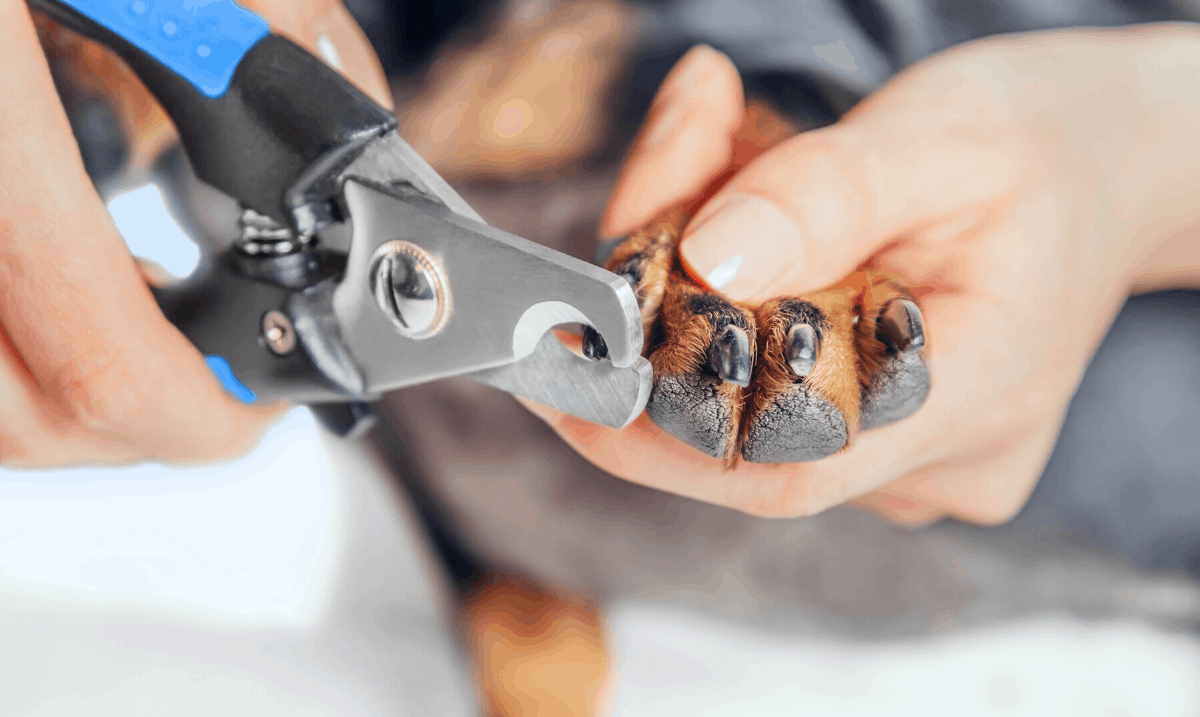
Light-coloured nails will often allow you to see the quick through the nail, making it easier to avoid. In darker-coloured nails, watch for a gray to pink oval or ring at the cut surface of the nail. This is the point when you need to stop cutting as that is the quick coming to the surface.
Regardless of how careful you are, accidents happen. Styptic powder is a substance used by many veterinarians and professional groomers as it will both stop the bleeding and act as an antiseptic. You simply apply a small amount of the powder directly to the wound.
Styptic powder is easy to purchase online. With just a couple of clicks, you can have a product like Coastal Styptic Powder delivered straight to your door!
If you are in a hurry to cut your pet’s nails and don’t have styptic powder available, you can use cornstarch as a substitute.
Simply sprinkle some cornstarch onto a paper towel or in a small container and hold it against the nail. The combination of cornstarch with some pressure will help the blood to clot, effectively stopping the bleeding.
Other alternatives that you may have around your home include both flour and baking soda.
Step 2: Calm Your Pet
Before you start trimming your pet’s nails, take some time to calm your pet.
Your pet may be nervous or anxious, which is normal! Especially if you have never cut your pet’s nails at home in the past.
Allow him/her to see the tool before you start using it. This will give them a chance to get used to it before you are coming at them tool in hand.
REMEMBER: Your pet will feed off your energy. If you are overly nervous and anxious, this will rub off on your pet. Take a deep breath and remind yourself that you’ve got this!
Related: ‘11 Must-Have Apps for Pet Parents in 2020‘
Step 3: Get a Firm Grip on Your Pet’s Paw
This may be easier said than done, especially if your pet is squirmy or excitable.
In order to safely cut your pet’s nails, you need to have control of their paw. This means both seeing the nail (judging where to cut) as well as preventing the paw from moving while you are actively trimming.
This is where the towel mentioned in Step 1 may come in handy. Our sweet Jinx cat is NOT a fan of having her nails cut. However, if I cocoon her in a towel first, only pulling out the paw that I am working on, she is much calmer.
You will need to carefully brush any long hair back out of the way to ensure that you have a clear view of the nail.
Step 4: Time to Trim
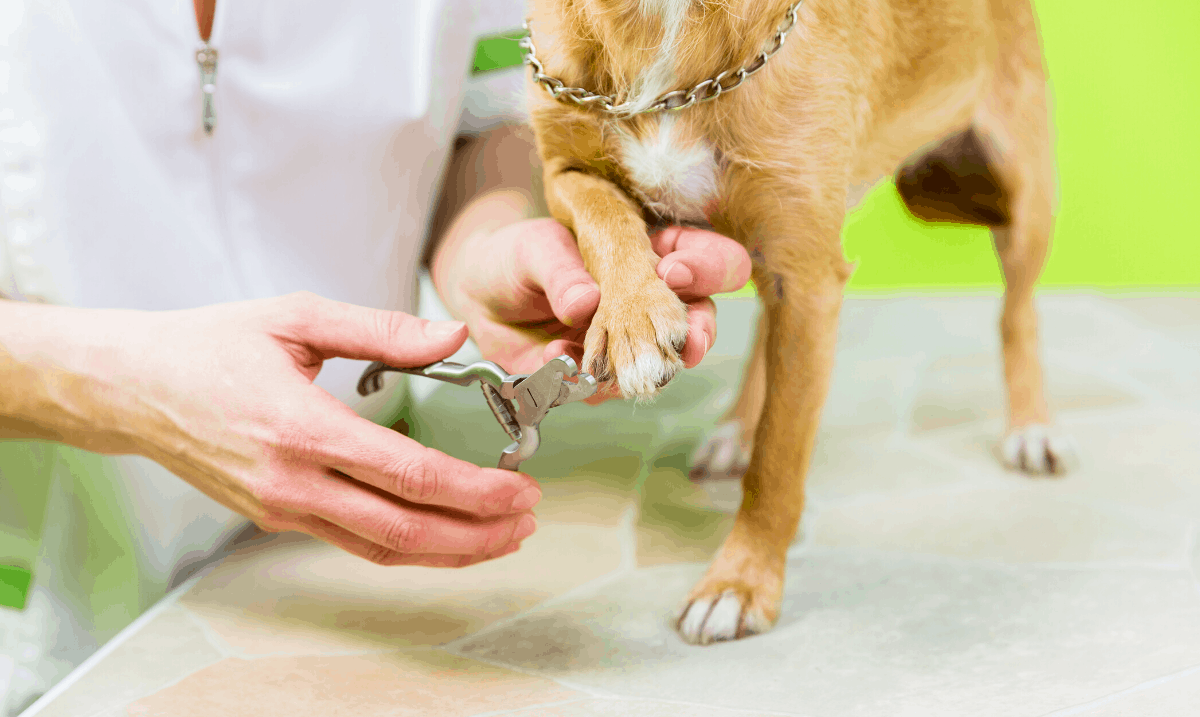
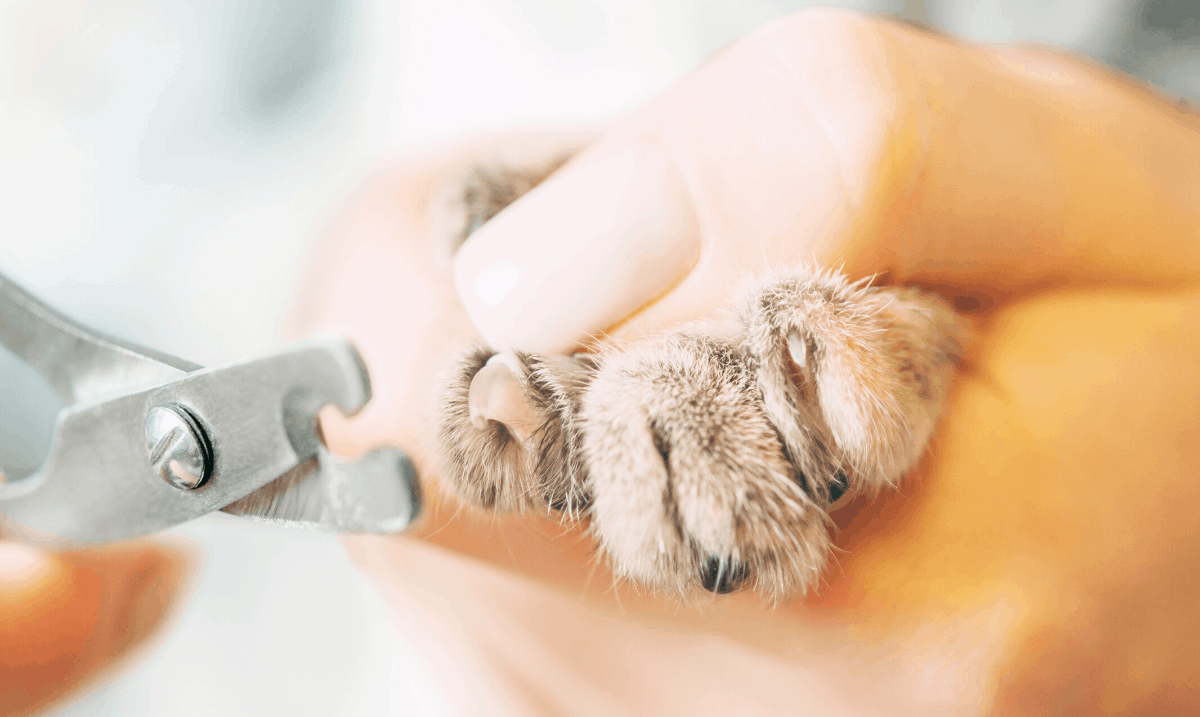
Place a small portion of the nail in the trimmer. NOT the whole nail – Small cuts to avoid the quick.
The clipper should be placed parallel to the end of your pet’s nail, not the pet’s paw. The nails curve as they leave the paw meaning that placing the cutter parallel to your pet’s paw will take far more nail, increasing the risk of cutting the quick. This is generally a 45-degree angle to the paw itself.
You only want to cut the tip of the nail, not back past the nail’s curve.
Make sure to reward your pet throughout the process with praise and the occasional treat. This will help him/her to see nail trimming as a positive experience, meaning it will be less frightening next time.
Don’t forget the dewclaw located on the inside of your dog or cat’s paw.
Step 5: Repeat Regularly and Watch for Signs
How often you need to cut your pet’s nails will vary. Some pets will need their nails trimmed every 3-4 weeks while others can last a couple of months between trimmings.
As a pet owner, you will have to watch for signs that it is time.
The easiest and most obvious sign for many is the ‘clicking’ sound that occurs when your pet’s nails are hitting the ground. When their nails are the proper length, they will not actually make contact with the surface when your pet is walking.
Dogs that are regularly running or walking outdoors may actually wear down their nails, meaning that it needs to be done less often. A good reason to get out and take your pup for a walk daily!
Another way to see if it is time is to simply check your pet’s nail length.
Have the animal stand with their foot flat on the ground and look at where the nail rests in comparison to the ground. You should be able to pass a piece of paper between the nail and the ground. If not, it’s time for a trim!
Using A Nail Grinder
Some pets and their owners are more comfortable with the concept of a nail grinder rather than actually cutting their pet’s nails.
This is a tool that will slowly grind or file your pet’s nails away.
While the slower process will reduce your risk of accidentally cutting the quick of the nail, some animals will be impatient with how long this will take. Others will be uncomfortable with the noise or the vibration that comes from the grinder.
The only way to know if this is a good choice for you and your pet is through trial and error.
Purchase a high-quality nail grinder like this Conair Pro Dog Nail Grinder and don’t rush the process. The steps below will help to work your pet up to using the grinder like a pro!
Tips for Dealing With a Nervous Pet
If your pet is overly nervous during this process, you may want to take a step back and work up to the actual nail trim. This will give your pet a chance to get used to the nail clippers or grinder gradually at his/her own pace.
On the first day, simply leave your tools out for the pet to smell and investigate. Praise them near the tools so that they can see that they aren’t frightening.
When you see that your pet is comfortable with the presence of your tools, slowly and gently pick the tool up and touch it to your pet’s paws before rewarding them with praise and/or a treat.
You can then progress to squeezing the trimmers or turning on the grinder during this process so that he/she can get used to the sounds and the vibration of the grinder.
Remember: This is gradual, allow your pet to guide how quickly you move through this process!
As you reach the point of actually cutting your pet’s nails, don’t do all his/her nails at once. Instead, just do one or two and stop when you can see that he/she is getting uncomfortable. Gradually work this up over time.
Related: ‘12 Easy Ways to Save Money on Pet Food‘
Visual Learner? Check Out These Videos!
I know that there are some of you out there that prefer to learn by watching rather than reading the steps.
If you’re a visual learner, check out these videos from LakesVeterinaryHospital on YouTube. The first video is for smaller dogs, while the second video is for larger dogs.
Additional Tips and Tricks
- Always work in a well-lit room. If you can’t find a well-lit space, wearing a headlamp can make this process easier.
- A general rule of thumb: If you need glasses to read, you need glasses to trim your pet’s nails as well.
- Don’t squeeze your pet’s toes while trimming. This is incredibly uncomfortable for them and will only cause them to squirm more.
Have you cut your pet’s nails at home before? If so, do you have any tips or tricks to share?
Feel free to leave your advice in the comment section!

This post was perfectly timed! Today we were actually talking about cutting Roxy’s (our little Westie) nails. Her nails grow extremely fast and she is starting to slip on our hardwood at times. I think it is definitely time she gets a trim. Thank you for the amazing tips!!
I always find it interesting how different each dog is – one of our dogs has nails that grow WAY faster than the other.
Luckily, here groomer services and pet care stores are open. However, I am the one who always cuts Delta’s nails. I prefer to do it after a long walk, so he is tired, calm, happy and does not bother much with what I am doing to his nails.
It’s SO important to make sure that they are calm first. Trying to wrangle an overly energetic dog is never going to end well for anyone lol
I don’t have any pets, however these tips are very useful to those who do and can’t take them to the groomers at this moment in time!
xoxo
Lovely
http://www.mynameislovely.com
Definitely! Pet owners that never had to learn before are now trying to navigate this, and it’s hard!
Great tips. My groomer always cuts my dogs nails well so we’ve never needed to cut them ourselves but these are great tips for if we do. My dog wouldn’t be nervous but he just won’t sit still!
Unfortunately in many areas, groomers aren’t currently considered essential. It leaves pet owners that have always relied on their groomer to figure it out at home.
These tips are excellent. We used to cut our labrador’s nails and our cat (but we used human nail clippers on her). Our dog hated getting his nails cut, but allowed it because he got a treat after each paw.
The reward system can make a BIG difference!
Great article! I’ve always been scared to do my dogs nails because they are both black! Pinning!
Darker nails are definitely more challenging. Just take it very slowly and watch for that white ring to show up at the cut portion of the nail. If you watch the large dog video, you can see it as she’s cutting the dog’s nails quite well.
I have two dogs (a German Shepherd and a Flat Coated Retriver), the Flat Coat doesn’t care if we cut his nails, he just thinks of it as a big pamper session. The German Shepherd hates it! I’m just glad my dad’s a vet and I can leave him to sort it, it makes things nice and easy haha! Luckily we don’t have to do it very often though, as they are quite active dogs so it’s never really been a big issue for us.
It’s a crazy world when you come across someone who apparently has the same dogs at home that you do – While mine are mixes (rescues) they are a German Shepherd mix and a Flat-Coated Retriever mix. Most people don’t even know what a flattie is!
Having a vet in the family is definitely a positive! He’ll be quite comfortable dealing with it all lol
Thank you so much for sharing! I have a 2-year-old golden retriever at home that refuses to stay still, your tips are super appreciated!
It can be a challenge, but you’ve got this! Make sure your pup is relaxed (and preferably tired). Don’t forget that your dog will feed of your energy!
Thank you so much! I am terrified of doing this, but your post helps so much!
I’m glad to help. I know that it can be scary at first, but just take your time and make sure you’re prepared – you’ve got this!
Cringe when I have to cut my cats nails!
My one cat still makes me cringe because she’s so squirmy, but the towel trick does wonders.
I am so.glad you share that. During the lockdown this has been a great problem for my parents with their dog. Thank you so much.
I hope that they find this helpful! I know that it can be a big cause of anxiety for dog owners that aren’t used to doing it.
Trimming my dog’s nails can be such a production, but it is necessary. Thank you for the great tips
I hear that! My dogs are quite well adjusted to it, but it’s still a production! Haha
Great tutorial. I’m afraid to cut my dog’s nails because they’re black and he HATES having his paws handled too much. I may be able to manage my guinea pig’s nails. It usually only takes a couple of minutes at the vet and she cooperates. I might attempt this on her. Thanks for the help.
Indy HATES having people touch his front paws. He FREAKS out lol He’s starting to get to the point that we can handle them if we work up to it and calm him down A LOT that we can do it. It took years of touching his paws daily working him up to that point.
Wonderful tips! l’ve always been so unconfident trimming dog nails that we pay the vet to take care of them. Thank you for the clear advice!
Our vet will do them as part of the appointment at no extra cost, but one of our dogs has nails that grow too fast to wait for that appointment to come around sometimes. It forced me to learn how to take care of it myself because I wasn’t going to make a special appointment just for that.
I never used to be able to do this when I had a dog! Thanks for the informative post, great to save and refer back to!
Thank you! It’s something that stresses A LOT of pet owners out!
This is such a great and detailed guide. I remember living with a dog owner and her lovely mutt when I was studying. She was always afraid of cutting his nails. She was worried about cutting the quick and really hated doing it. This would’ve been very useful to her.
Most pet owners are nervous, but it’s like anything new – with the right information and preparation you can still be successful!
I really needed this information. My dog’s nails are soooo long at the moment. She’s very skittish and scares easily, so I really didn’t want to trim them myself. With this information and the right tools., I think I might be up to the task.
Just take it slow – Remember, there’s nothing wrong with doing a couple nails each day if you notice that your dog is getting anxious.
What a wonderful amount of tips! When we had a pet bird, cutting his nails made both him and myself nervous. As they have a blood vein in their claws, it’s really important to cut correctly and took a lot of time to get set up and everyone feeling good about the job. This guide would have been so useful.
I think A LOT of pets get nervous largely because they have had a negative experience themselves in the past or because they are simply feeding off the anxious energy of their owners. If we stay calm, it makes a HUGE difference!
this is a very good article with so much detail. At the moment this is so relevant – Thank you x
Thank you!
Ahhh my brother needs to read this! His dog’s nails need some TLC asap!
So many pups do right now!
I never knew about Styptic powder. I’ll have to look into it! Thanks for the tips!! ?
It is SO helpful to have around when you have pets!
We found a local business that comes to my house and trims my cat’s nails. I hated taking him to the vet, and they never could get him in when he needed it. The idea of attempting it myself just gave me the heebie jeebies. Still does, but less now that I’ve read this post! I knew about not cutting too much, but that’s about it. How to avoid that was the problem and why I never tried it myself. I always figured it would just be my luck my cat would squirm and I would cut half his foot off or something ridiculous like that. So far my cat has handled the in-home nails trims pretty well. He knows the people who come by, and hates them. But he doesn’t run from them, and that is an excellent sign. He just knows what is coming and deals with it. But that is much less traumatic than putting him in a carrier and driving 15 minutes to the vet. I’ll be showing my husband this article and see if he wants to give nail trims a try with me. I definitely need to get the septic powder before I try it. You’ve eased my fear of trying to trim my cat’s nails and taught me a lot.
That definitely sounds less traumatic than the ride to the vet, especially if he’s not a fan of car rides! lol
A nail grinder! I’d never thought of that. Also using treats at the same time. That’s a really good tip. I’ve always given the treats after. We have pretty docile cats now but previously we had one that was wild and so aggressive with nail trimming it became a huge problem. Especially since she scratched the kids a lot. A grinder may have helped. Thanks for the tips!
I had a cat that was like that in the past, he had NO interest in having his nails clipped!
This is so important!!! Even when grooming places are open, I think it’s one of the biggest health precautions that go unnoticed. For people who do take their pups somewhere else and now can’t, it’s rough! Thank you for writing this for all the doggo moms 🙂
Exactly! I think a lot of new pet owners assume that nails are just cosmetic, but it’s so much more important than that!
Great post! I have three dogs, all different nail tolerances. One is fine and just lays down, one doesn’t like it but tolerates it with a little help from my husband, and one says he will just grow talons, thank you very much! We’re working on him to use the nail grinder like we do with the other two. I like it better for my lab’s black nails since I never know where the quick is on her. Thanks for the ideas.
Our boy Indy was more than willing to grow talons for a long time! Lol
It took A LOT of work to get him used to it, but I would say he has officially entered the middle territory of the 3 you described. He’s still not a fan by any means, but he’ll put up with it enough for my husband and I to make it work.