
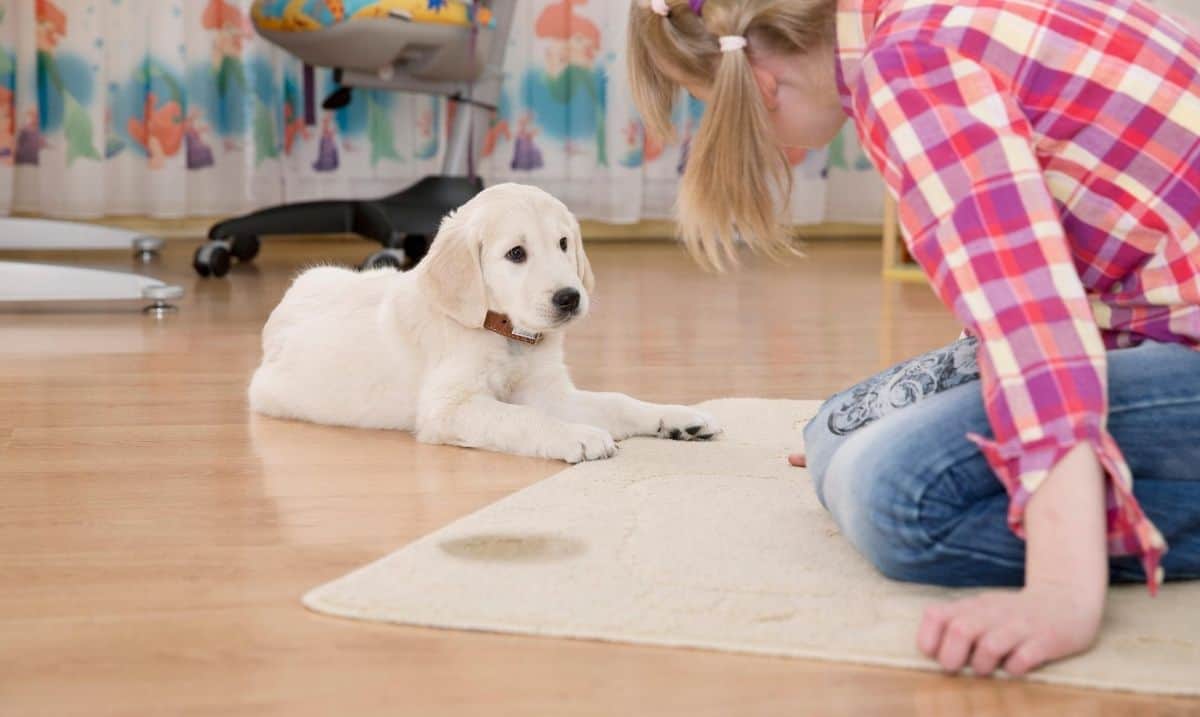
How Soon Should Puppy Training Start?*
*GUEST POST
A well behaved and adjusted dog is a happy dog. Not only will it be comfortable at home, but it will also be easy on the pet parent when his/her dog is not having behavioural problems or accidents. But, you will have to put consistent effort in training every since you get him as a puppy. This effort is worth it when you are able to turn your puppy into an obedient dog through consistent and proper training.
When it comes to raising a puppy, knowing when to begin training sessions can be difficult. Everyone seems to have a different opinion when asked how old should puppy training start, and even dog training books and manuals seem to change from author to author. The fact is puppy training can start as soon as both the pup and owner are familiar with each other.
Many dog breeders believe that simple training can begin as soon as the puppy is able to leave their mother for short periods of time. Though these first few sessions only consist of handling, feeding and voice recognition, they are proven to be important in the dog’s overall development as a family companion.
Once a puppy is adopted and brought home by their new owner, additional training can begin. These first owner/dog sessions should start as soon as the puppy has become familiar with his or her new surroundings.
Related: ‘6 Dog Dental Care Tips Every Owner Should Know‘
Getting Started
The most vital step in the first few days of training is to ensure that the pup becomes comfortable with their new name. By repeatedly referring to the puppy by their name, an owner can achieve the initial communication needed to progress towards more complex vocal commands. Once the puppy is familiar with their name and responding to it regularly, then an owner can move on to simple obedience commands such as sit, stay and lay down.
Some owners will feel that this type of training is best left until the puppy is much older, and believe that the first months of puppyhood should consist mostly of play-time and affection. Though affection and fun play is essential, the longer training is avoided, the harder it will become. Older dogs can become set in their ways quite easily and can be stubborn to learn new commands. The old saying “teaching an old dog new tricks” is accurate, and applies to teaching obedience as well.
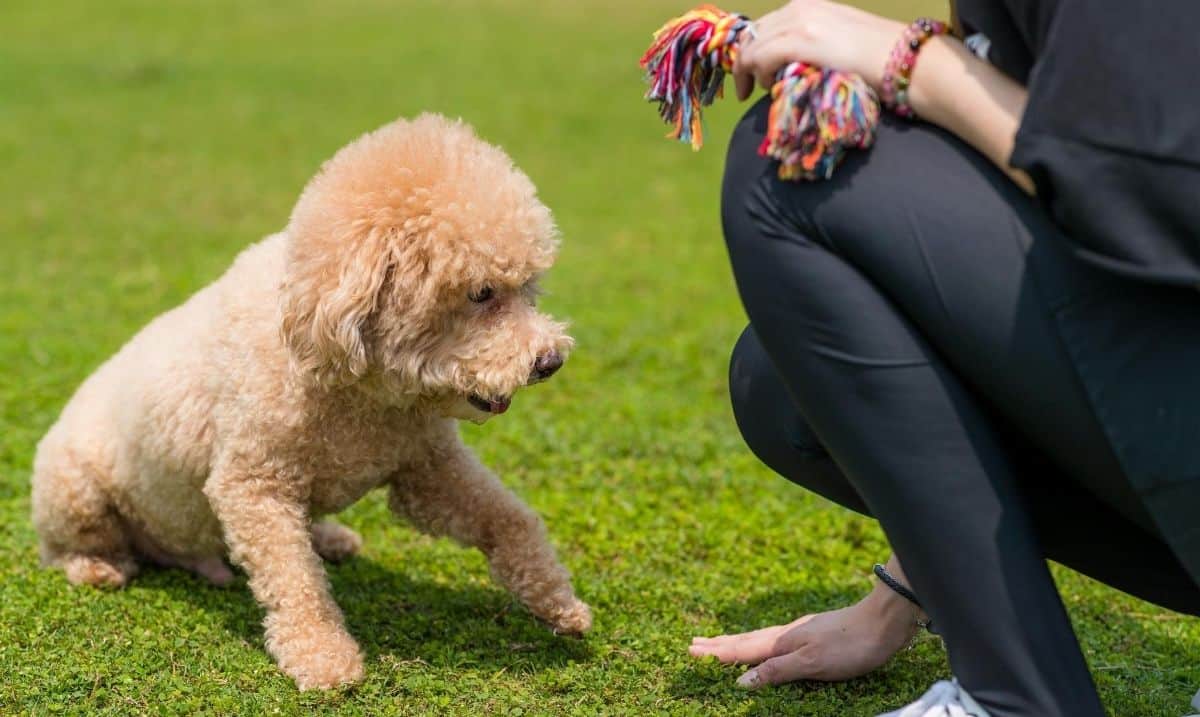
How To Get Your Puppy To Understand You?
Are you wondering how to get your puppy to understand you?
Consistency is the answer!
If you are wondering how to get your puppy to understand you, you are not alone. Many new puppy owners are often confused by the amount of information available and are unsure which training method is the most reliable, comprehensive and effective. First time pet owners are prone to getting frustrated when their new puppy does not respond to their name or listen to their commands. However, the secret to successful dog training is rather simple: positive reinforcement.
Whether you choose traditional vocal commands, whistle training, or even a clicker method, all training is more likely to be successful when accompanied by a few floppy ear scratches, tummy rubs and tasty treats. Ensuring that these sessions are regular instead of once a month will go a long way in ensuring that your dog is well on your way to become a well trained one.
Related: ‘How to Puppy Proof Your Home: What You Need to Know‘
Positive Reinforcement
Positive reinforcement lets your canine companion know that what they have done has pleased you and to them, there is no greater joy than knowing you are happy. Positive reinforcement can also be a great way to get other family members involved in your dog’s obedience training.
Young children will especially love to be the “doggie do-gooders” and shower their new furry friend with affection when he has completed a job well done. Positive reinforcement can also encourage your dog to listen, obey and respect more than one member of your family. If they come to realize that all family members will appreciate their obedience, they will grow to be a well rounded, welcoming and loyal family pet.
Some training methods do frown upon positive reinforcement and will try to convince you, the new puppy owner that consistent treats and affection will only lead to a spoiled and needy dog. However, this is not true, and many reputable dog training guides are built on a foundation of love and affection.
Knowing how to get your puppy to understand you can be frustrating and time-consuming. Still, as a responsible dog owner, you must show your dog and any other animal for that matter, gentle consideration and respect.

The Final Takeaway
If you come across a training method that insists on inhumane discipline or punishment, do not for even a minute, consider its use. By using positive reinforcement as your core training principle, your puppy will not only grow to understand you but live a longer, happier and more joyful life.

About the Author
Mir Ali is a pet lover and loves to write on all aspects of pet care, health and training on atozpetcare.com.

This article is perfect! I am in the transition of getting a new puppy in the fall, and this post gave me a wake up call on what to expect. Thanks for sharing.
I am glad that it helped you! All the best for your new puppy.
I am so happy to pass this along to my bf who just got her first puppy. She is going to love your website.
Thank you! Let her know she’s welcome to reach out if she has any questions. There’s also a free downloadable new puppy checklist on the ‘new pets’ section!
Puppy training is a must. I would imagine it is like raising kids.
Oh yes. It does take quite a bit of effort. If you want a well trained pup, you got to put in the effort.
For the life of me I can’t remember how we trained our puppy, way back in the late 80s or early 90s. But ones thing for sure, positive reinforcement is the best way to learn a new skill or change a behaviour, even with humans
It is always interesting to learn about how pup owners train their dogs. It is like as if the dog can understand our common language but they are also smart at the same time. Love that pets can learn their names and they respond to them! Yes on consistency! I noticed that with my cat. Whatever habits she develops, I try to learn her language.. Like when she scratches the door, it means she wants out. Thanks for sharing these amazing tips for training!
Nancy ✨
I love that we can learn to communicate with our pets in their language as well… They do try to tell us so much, if we’re willing to listen!
I miss having my dog and remember (albeit vaguely) the training we did with her back in the 80s! She was with us for 17 years and was such a well behaved dog. Great post!
It’s never too late to get a new one if you can spare some time for taking care of them.
Love the simplicity of this article, I don’t have a pet yet but this sets the foundation on how to train my pet when I get one. Great post
Thank you. I am glad that you liked it.
Beautiful post, although I don’t have a pet I know its almost like raising a child wherein you teach them and guide them for the smallest things they do so that they turn out well behaved.
So, in my family home, we had several pups and dogs at different times and I don’t think any of them were trained well. I wish I had these pointers!
It’s especially important when you’re dealing with more than one pet. It can quickly get overwhelming!
Interesting read! I’ve had three dogs and two of the breeders have asked what we were planning on naming the pup before we brought them home so they could start getting them familar with their name as early as possible. We’ve always started toilet training with positive reinforcements from day 1 but waited a little while longer for things like sit/ stay until the pup is comfortable at home x
Sophie
It’s good to hear that they were aiming to work with you for the name recognition. It doesn’t make or break if they will learn it, rescued adult pets DO learn their name, but it’s easier if you start early!
When I was a kid we had a dog who was pretty much his own boss. He did what he wanted and when he wanted. We all loved that dog, but we couldn’t really take him anywhere because he wouldn’t walk on a leash or listen to anything we say. We adjusted to that, but other people certainly didn’t like it. He died at 17 years old and since then I always wanted a dog but was afraid of the burden of a dog who won’t behave. I am not sure I would even now be patient enough to train my dog. So I was considering taking an older dog, but now I see that may not be such a great idea? Or maybe we could just settle in with an older dog who needs a home and is already set in his/her ways. Would you ever recommend a professional dog trainer?
If you would prefer to avoid the puppy training phase, an older dog may be a great idea! There are many amazing older dogs that have already been trained in the care of rescues and shelters. I would recommend reaching out to rescue if you want to go that route and have a discussion with them about what you’re looking for. Rescues are able to use foster homes to better understand the dogs, giving them an idea of how well trained they are and if additional training is necessary.
I am also a big advocate for professional trainers, especially for anyone that may be concerned about the training process.
Thank you so much! This is such a useful response!
You’re welcome 🙂
This is such a great and informative post. I haven’t had to train a puppy yet since we just have a cat. But we eventually want to get one too so I will save this post for future reference! Thanks for sharing!
My sis would love this post – she’s been bugging everyone for a puppy but I’ve mentioned so many times that she’ll need to give her pup a lot of effort & attention 🙂
When we had a pug we actually signed up for a training class at one of the local pet stores. The trainer that helped us was amazing. Also during this time he was able to socialize with the other pups. We noticed a huge difference after taking him to these training classes. He was such a great doggy. Thanks for sharing this great post!
I love how this post is talking about how to train puppies with positive reinforcement, I don’t have dogs but this is the way that I would want to do it.
What a great guest post! Puppy training is super important and I’m sure this is very helpful for new pet owners. This blog will certainly be my first stop when/ if I ever adopt a puppy.
Thank you – that’s my goal with this blog, to have the information that any new (or experienced) pet owner will need available to them all in one place.
What a fab article. The puppies are so cute and everything he says makes sense. Keep the great work Britt. This is an amazing site for dog lovers. You rock.
Thank you – Mir Ali did a great job putting this guest post together!
I am glad that you love the article .Thanks!
I’ve been wanting to add another pup to our home…Now I *really* want to! Excellent article. Positive reinforcement is so important to training – as well as avoiding behavior problems.
Great post! Absolutely, positive reinforcement is the best easy to train. I hate the “method” of alpha wolf training, it has shown time and time again how ineffective this is. Thank you for sharing!
aweeee i miss having a puppy!!!! so much goes in to having one! I didn’t know there was a good time to train or not. Great post!
Such important information for those planning to get a puppy. I have noticed many owners not paying too much attention on the training of dogs and just owning them for fun. But it’s so important to impart the right training at the right time.
It really can have a big impact on our experience as owners, right? I can’t imagine how frustrating it could be trying to live with a dog that isn’t trained on the basics at least!
We definitely needed to start training sooner and for longer. Although my dog was excellent with house= training and rarely did anything in the house, even when he was little, he’s really disobedient at times and likes to do whatever he wants haha. We gave up on training far too quick.
I think that’s a struggle that many, many dog parents face!
Very useful post! I think you should start training as soon as you have a pup. My elder started training when he was 2 months old and he rocks agility. we took our younger when he was a little over 3 month and his training was significantly harder because his temper was much more formed.
It definitely gets more challenging with age – not that it can’t be done. I adopted Dav girl at 1 year old and Indy at 1 1/2. Both had some previous training but they also had some bad habits that we had to work to overcome!
We got a puppy in quarantine too, love these tips!
Congratulations!
I’ve been looking at getting a dog for a while, and this is such a helpful guide! I definitely hadn’t even thought of “puppy proofing” ?♀️ Thanks again!