
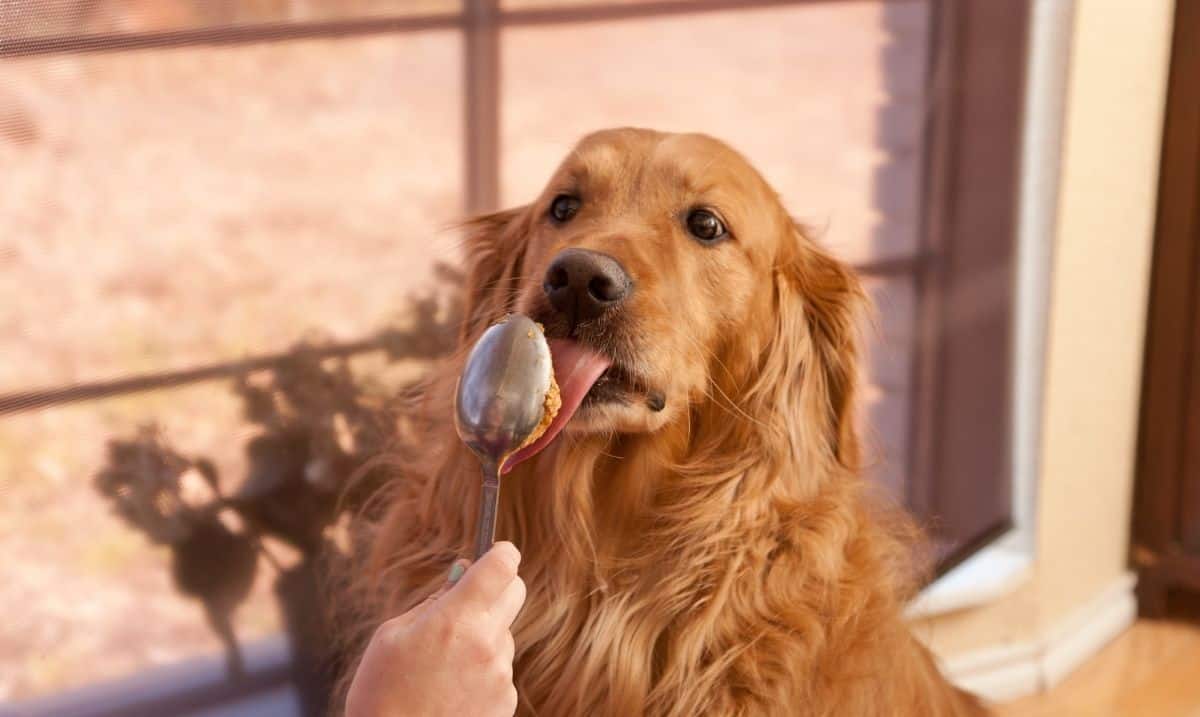
Can Dogs Eat Peanut Butter? Know the Risks!
One of the most common flavours for dog treats, most pet owners don’t think twice about sharing the delicious snack with their dogs. However, not all types of peanut butter are safe! To fully answer the question ‘Can dogs eat peanut butter?’ you must first learn these safety tips…
Most dog owners recognize peanut butter as a fun treat for our pups (and a great way to keep them busy while cutting their nails), however, few are familiar with the potential risks.
Today, I’m going to break down everything you need to know about peanut butter safety and your dog.

Xylitol – The Toxic Ingredient
A common sugar-replacement sweetener, xylitol can be found in a number of products including chewing gum, toothpaste, sugar-free candies and some brands of peanut butter.
The sugar alternative is safe for human consumption; however, it is highly toxic to dogs!
Veterinarians around the globe have dealt with thousands of cases each year of poisoning by xylitol.
Why is it so common? The toxic dose of xylitol in dogs is much smaller than that of chocolate (a known toxin), and it’s hidden in many of our regular products!
For example, 3 pieces of your favourite xylitol-containing gum would likely prove fatal for a 10 lb dog.
When your dog ingests a product containing xylitol, it is absorbed into the bloodstream.
Here, it triggers a rapid release of insulin from the pancreas, quickly causing his/her blood sugar levels to drop drastically.
Related: ‘9 Surprising Health Benefits of Pumpkin for Dogs‘
Hypoglycemia (low blood sugar) can happen as quickly as 10 minutes after ingesting the toxin.
Signs and symptoms include:
- Confusion/Disorientation
- Staggering
- Lethargy
- Weakness
- Trembling
- Irregular Heart Rate or Breathing
- Collapse or Unconsciousness
- Seizures
If you suspect that your dog has ingested xylitol, contact your veterinarian IMMEDIATELY. Left untreated, hypoglycemia can quickly turn fatal.
Check out this comprehensive list of products that are known to contain xylitol from PreventativeVet.com.
Identifying the risk is the first step to keeping your pet safe!
Don’t Trust ‘All Natural’ Labels
If you see the label ‘All Natural’ on a jar of peanut butter, do not assume that it is safe for your pup!
Xylitol is considered to be an ‘all natural’ sugar substitute, meaning that it may still be present.
Always read over the list of ingredients carefully.
The safest (and healthiest) types of peanut butter are generally found in the natural foods section of your favourite store and contain only 1 ingredient, peanuts.

Limit Treats for Your Dog’s Health
Peanut butter treats are exactly that, treats. They should not be considered a substitute for your dog’s regular diet.
Too many treats can contribute to obesity, pancreatitis as well as a list of other potential health concerns.
Your dog’s treats should account for no more than 10% of their daily calorie intake.
Note: When discussing ‘treats’, this includes both treats with peanut butter as an ingredient AND straight peanut butter.
Peanut butter is packed with natural fats and protein, which contribute to good healthy.
However, the warning of ‘too much of a good thing’ holds true! But how much is too much? This differs from dog to dog…
If you have questions about how much peanut butter your dog can safely enjoy, contact your veterinarian.
Related: ‘Can My Dog Eat Carrots?‘
Conclusion – Can Dogs Eat Peanut Butter?
Great news, if your dog loves that nutty taste, the answer is Yes! Dogs can enjoy peanut butter as an occasional treat as long as you ensure that it is free from xylitol.
If you are purchasing a commercial peanut butter dog treat from your pet store, rest assured – your purchase will be dog-friendly.
However, if you plan on sharing a spoonful of PB with your dog, carefully read all product labels.
If the idea of purchasing commercial dog treats makes you nervous, or you simply enjoy making their goodies at home, why not try our easy (and delicious) 3 Ingredient Peanut Butter Banana Dog Treats?
Your dog will thank you!

Does your dog love peanut butter? What are his/her favourite peanut butter treats (either commercial treats or recipes)?

I am always super careful about the contents. Before I always bothered our vet to verify it’s safe. My pups don’t eat peanut butter but that’s because we don’t have it at home. My husband doesn’t like it and I am allergic to peanuts (only slightly but still better safe than sorry)
Definitely better safe than sorry when there are allergies involved.
This is such an interesting post. I never knew that peanut butter could be dangerous to dogs.
Thank you! It can be a GREAT treat option, you just have to be aware that not all peanut butters are created equally.
I’ve heard dogs love peanut butter for as long as I can remember. I don’t own a dog, as I’m a cat person, however these are great tips and information to keep the pups safe. Reading labels is so important not only for us but for our pets too.
Reading labels is SO important. You can’t control what you’re eating or what you’re feeding your pets if you aren’t aware of what’s in your foods.
Great information! I’ll have to share this post with a few of my friends who own dogs. You really provided some great information on the risks, and symptoms for when a dog ingests a product containing xylitol. I always see those peanut butter doggy ice cream treats in the freezer section at the store. I believe I bought it one time for our pug when we had him. He wasn’t actually too crazy about them, so we tossed it. But now I am aware of some of the dangers when it comes to xylitol.
Peanut butter is a BIG favourite when it comes to dog treats and most companies have moved away from the use of xylitol in their peanut butter. However, there are still brands out there that continue to use it. I don’t understand why, there are no real benefits, but we just avoid them in our house.
Luckily we don’t feed our dogs human food so it’s not a concern of mine plus I HATE peanut butter. 🙂 It is interesting to know though as we often have gum lying around the house and now I need to see if the gum contains xylitol. I know quite a few people who let their pets lick the spoon after eating peanut butter so I’ll be sure to share this news with them.
Gum is a HUGE offender of xylitol. I know that our favourite brands all have it, so we are careful to keep gum up and out of their reach when we do purchase some. It doesn’t take much for it to lead to serious health consequences!
Great info! My older dog, Kitsune, LOVES peanut butter….but, then again, he loves most foods haha. I limit how much treat type foods he gets, though, in an attempt to keep him at a healthier weight. I swear that dog would eat until he was too fat to walk if I let him! Silly pup.
Our boy Indiana is the same way. I swear, that boy thinks with his stomach 99.9% of the time.
All of my dogs love their peanut butter treats.
Ours go CRAZY over them!
Great post, don’t laugh but I hate the smell of peanut butter so there is none in our house but it is important to remind people about the xylitol in peanut butter especially as so many dogs do get it as treats
You’re actually not the only person that I know that has said that – a friend of mine gags at the smell every time!
The number of products that contain xylitol is constantly growing–it’s mindboggling especially because peanut butter has a sweet taste in itself. I understood that they added sugar for consistency-sake; xylitol does nothing for that.
Either way, the important thing to watch is that peanut butter should have a single ingredient–peanuts. Nothing else.
I can’t wrap my mind around the need for it either. Single-ingredient peanut butter tastes incredible. Why do we need to add sugar alternatives and other ‘junk’ to something that’s good all on it’s own?
Bella loves her peanut butter! I tend to stick to our favorite brands (we share and I love PB on my toast). In fact, I get my non-xylitol Kraft peanut butter shipped in from Canada. 😀
We share here as well – In fact, the second that I put bread into the toaster, our two come running lol
I had no idea about xylitol being harmful to dogs. We have rarely given our dogs peanut butter but I’ll be sure to check the ingredients when we do. Thank you for the post!
It’s one of those risks that isn’t talked about nearly enough!
I have never heard that dogs could eat peanut butter, I actually always heard that they couldn’t eat it tbh. I think that it’s good advice to look at labels, especially since in the US all-natural is not a regulated term, and doesn’t mean anything tbh.
Definitely! It’s a buzz word for marketing purposes but doesn’t really mean anything at the end of the day.
I had no idea they might not be able to but I don’t own a dog. I know it’s a great treat ingredient so would guess that having it as a ‘treat’ is what makes it safe. That and natural peanut butter (nothing with additives!).
Restricting it as a ‘treat’ is definitely important. It’s no different than our treats – they aren’t a substitute for proper nutrition.
Our pups LOVE peanut butter. So glad you’re spreading awareness about Xylitol – I have found that many pet parents don’t know this is toxic! I remember telling my vet that I was going to make homemade dog treats, and she told me I would probably be better of using regular JIF than a NaturalPeanut Butter because Natural commonly contains xylitol. I found a single ingredient peanut butter which is my go-to for baking homemade treats. Thanks for sharing!
We’ve been switching to a single ingredient variety for the same reason. I prefer knowing exactly what’s going into our dogs’ treats.
This is great information about what to look out for when it comes to peanut butter! We need to be more aware as dog owners..
Definitely! Awareness is the key to keeping our pups safe!
I don’t know why pb manufacturers started putting xylitol in their products. Maybe a calorie thing for us humans? We warned everyone that came in the store with a pb loving dog.
I think that it was an attempt to keep up with the big ‘anti-sugar’ craze. There are a lot of sugar substitutes out there – it’s too bad that they aren’t using something that’s safe for the dogs as well. It’s not like it isn’t known that many, many dogs love their peanut butter!
Although I’ve been buying the same brand of peanut butter for decades, I still check the label just in case they started using Xylitol. We can’t be too cautious when it comes to our dogs’ safety.
Exactly, you can’t be too cautious! While I would hope that a company would let us know if they made a change like that, you just can’t trust that they would make an effort to advise their customers appropriately.
Oh my goodness, I’ve never even heard of xylitol, much less did I realise it was an ingredient in some peanut butters. We don’t have dogs but I’m guessing that what’s not good for dogs isn’t good for cats either. I’ll have to keep an eye on our jars because one of our cats loves Marmite and PB isn’t a million miles away in taste for him – thanks Britt!
Good assumption – it’s toxic for cats too!
Great post! My dogs love peanut butter! I do get them organic from the health food store so there is nothing but peanuts! Why they put Xylitol in PB to begin with beats me. No one needs that junk! A great reminder for folks to check those labels!
I don’t understand why they feel the need to add it either.
This is such a great and informative post. Good to know that they cannot have xylitol! Thanks for sharing
Thank you!
As soon as I heard the warnings about some of the ingredients in peanut butter, I checked to see if the brand my parents gave their dog was safe – it was! Thanks for sharing!
I’m glad to hear that the peanut butter they are using is safe!
Great and important tip! My mother’s cat has started to hang around during mealtimes and she’ll eat absolutely anything that comes from the table. “She’s just curious about what we eat!” My mom said, but it pays off to just be a bit careful with what we feed our pets.
It’s definitely important to be cautious of what we’re feeding our pets. There are a number of things that are completely safe for us, but not as much for them. A well-meaning treat can lead to serious complications.
This was so eye opening! I have noticed an awful lot of peanut butter flavoured dog treats but never thought about whether they were good for them. My dog rarely eats anything peanut butter flavoured though x
Ours LOVE their peanut butter treats, but I am super careful about what they are enjoying. They don’t get anything unless I read the labels first.
I had to get up and go read the ingredients in my peanut butter after this because I was curious! We don’t have a dog, but I had never even considered this . I had always thought peanut butter was one of those universally-accepted human foods that was ok to feed dogs. I’m learning more about ingredient labels these days, and how important they actually are, and this post reminds me of that. Having a friend who is vegan, he is always reading labels, and there are a number of things I wouldn’t consider to have animal products in them, but they do. While this has nothing to do with my own dietary choices, I often wonder how many people ever read product labels and know what is in their food?
I am always surprised when I get talking with someone and find out that they don’t take the time to look at food labels. Don’t you want to know what you’re putting in your body?
Very informative post and dog lovers should know the risks associated with peanut butter. Here in India we hardly ever give our dogs any option to have oily substances as they tend to loose their hair very fast. Good to read and enjoyed the knowledge.
Peanut butter is a very common flavour in dog treats here commercially. However, a lot of dog owners fail to recognize that there are ‘good’ peanut butters and ‘bad’ peanut butters when it comes to making homemade options.
Oh, I did not know about xylitol. Thank you for sharing. Is it toxic just to dogs and not cats?
It is also extremely toxic to cats too.