
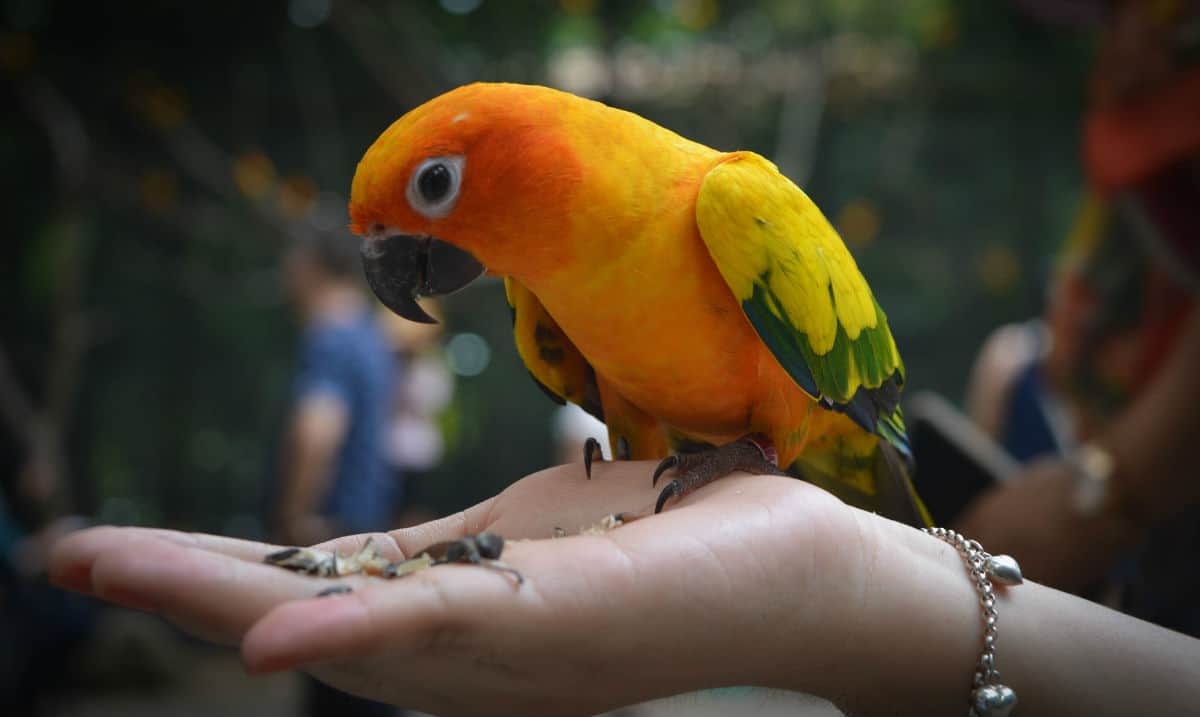
Teach Your Pet Bird to Talk With These Simple Tips
The internet is full of adorable videos of birds chattering away, greeting their owners enthusiastically or dropping a curse without hesitation. The incredible intelligence of these feathered friends is clear as they mimic those around them with an astounding level of accuracy. However, if you are planning to teach your pet bird to talk, it’s not always as easy as the videos make it look! Check out these simple tips to help you through the training process.
DISCLOSURE: THIS POST MAY CONTAIN AFFILIATE LINKS, MEANING I WILL EARN A COMMISSION IF YOU PURCHASE THROUGH MY LINKS, AT NO COST TO YOU. FOR MORE INFO, PLEASE READ MY DISCLOSURE.
If you have always dreamt of sharing your home with a talking bird, you’re in luck! As people’s appreciation of these chatty birds has grown, so too has the popularity of welcoming these feathered friends into our homes. For this reason, there are reputable and trustworthy breeders and rescue organizations around the globe.
Before you get started, there is one thing that you need to remember throughout this process – You must love and accept your bird regardless of the outcome. Never forget that this beautiful creature is part of your family. His/her ability to speak is only one part of a much bigger picture. If you put the time and effort into training your bird to find that he/she sounds more a cartoon bird squawk than anything else, love your pet anyway!
First Thing’s First, Know Your Bird
Just as no two people are alike, no two birds are the same. For this reason, no two birds are going to respond to your training in the same way. The first and most important part of training your bird to do anything is to first create a bond by spending time together. This will create a level of trust, which is necessary if you are going to encourage your feathered friend to try something new.
While there are some breeds that are known for having the ability to talk while others don’t, it’s important to note that not every bird, regardless of breed, is interested in learning.
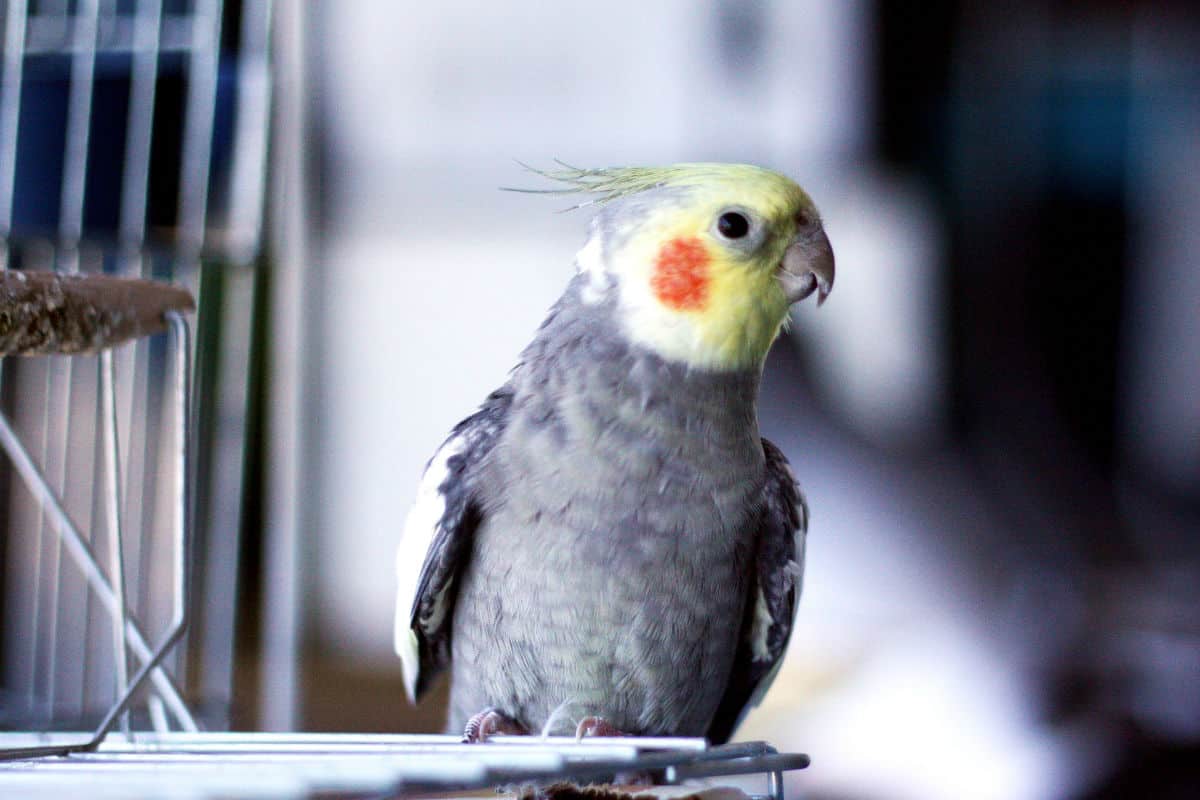
While all parrots, theoretically, have the ability to talk, there are some species that are known for having a greater success rate and likelihood to pick up on speech. Therefore, if you’re looking to introduce a talking bird into your home, you need to do your research first! Some of the best-known talkers include cockatoos, cockatiels, African gray parrots and Amazon parrots. This isn’t to say that there are no other species that can be taught to speak, but if your heart is set on having a talking bird, working with one of these will increase your likelihood of success.
Start Simple and Manage Your Expectations
As with any training, you need to manage your expectations. Your bird isn’t going to learn to speak sentences overnight – it’s a process and a process takes time. Choose a couple of short, simple words such as ‘hello’, ‘bye-bye’, ‘apple’ or ‘night-night’ to start with. Over time you will be able to add to your bird’s vocabulary one word at a time. When your bird has mastered the individual words, you can then piece them together and teach them sentences.
It’s also important to note, going back to the first point, that your bird may pick up on some words better than others. If you know your bird well and watch for the signs, you will see which words catch his/her attention. This will help you to decide which words are best to start with.
Minimize Distractions
We live fast-paced, high-energy lives and with that comes a number of different distractions in the home. This includes television chatter, phones ringing, other pets or people in the home, etc. If you are planning to spend some time training, start by eliminating as many distractions as possible. Set yourself up in a quiet room. If you live with others, let them know that you are going to take some time training so that they can focus on any other pets in the house, fielding phone calls and not interrupting your training session.
Repeat Words as Often as Possible and as Clearly as Possible
Birds learn through mimicking what they hear repeatedly. Therefore, if you want them to teach your pet bird to talk, you need to commit to repeating the words you are currently teaching over and over. The best way to do this is to repeat the words yourself, doing one-on-one training. However, there are tools available that can assist you with this stage, including CDs and recorders.
Don’t rely solely on these tools. They will never replace the connection of training your bird one-on-one.
When you are repeating these words, make sure that you enunciate each syllable clearly. If you mumble your words, in part or in full, your bird will not be to pick up on what you’re saying to repeat it. Pay careful attention to the tone and inflections you are using when speaking.
Using an enthusiastic tone will encourage your bird in a positive way. Have you ever wondered why birds often pick up on foul language or phrases like ‘shut up’ or ‘ouch’? When we speak these words, we are usually in an emotional state of some form, and that causes us to speak them with more energy and enthusiasm. Take this concept and use it to your advantage.
Positive Reinforcement
You want your bird to associate speaking with feelings of positivity, and the best way to do that is to reward him/her regularly during this process. Does your bird enjoy a specific small food treat? If so, that’s the perfect opportunity to reward them each time that they speak a word that you’re working on. Some great options include grape pieces, almond slivers and sunflower seeds.
If you want to get the best reaction and response from your bird, you need to start by identifying what treats he/she enjoys the most. This will help to provide motivation.
In the beginning, offer a treat each time that you say the word that you are treating, as this will associate positive energy with the word itself. As the bird starts to repeat it, even if the word sounds like only part of the word, offer a treat as a reward. This will encourage your bird to keep trying. When you notice that he/she is comfortable with the partial word, you can start offering a treat only when the word sounds like the actual full word. Repeat this process with each word and phrase.
Did you teach your pet bird to talk? If so, what are his/her favourite words/phrases?

I love the part to accept your bird first, before anything else. And just like any student, we have to get to know them well, to be able to teach them effectively. I’ve enjoyed reading this!
I think a lot of people overlook that part too often when it comes to all pet training – They have their own personalities, strengths, etc.
Oh that’s how to do it, nice post. I’m excited now and wanna try to apply the tips soon.
Thank you!
I love the variety of posts here in the blogging realms. If I have a bird, I will surely teach him these tips. <3
It’s so much fun to connect with people in different niches, isn’t it?
Going to pass this info on to my nephew, he got a bird recently and the only thing he has taught him so far is peek a boo, and that wasn’t really taught! It just came naturally lol
The whole training process can be a lot of fun – it takes patience – but it can be fun!
This is so cute! I have always wondered how to teach your pet to talk.
It’s a process, but it can be a lot of fun!
My kids and I have a bird for a pet. I love having a bird in the house, they’re such social, funny pets. I’m teaching my bird peek-a-boo these days, super cute ; )
I love the videos of birds playing peek-a-boo! So much fun!
This is interesting. I do not have a parrot though but having these talking birds certainly going to make the home lively – as long as you don’t teach them curse words
I’m sure they will provide a lot of humour with what they choose to pick up – every now and then they’ll surprise you with something lol
If and when and I get a bird, I am coming back to this page.
I’ve always wanted to get a parrot, but I know that it doesn’t fit with our lifestyle right now. Maybe some day.