

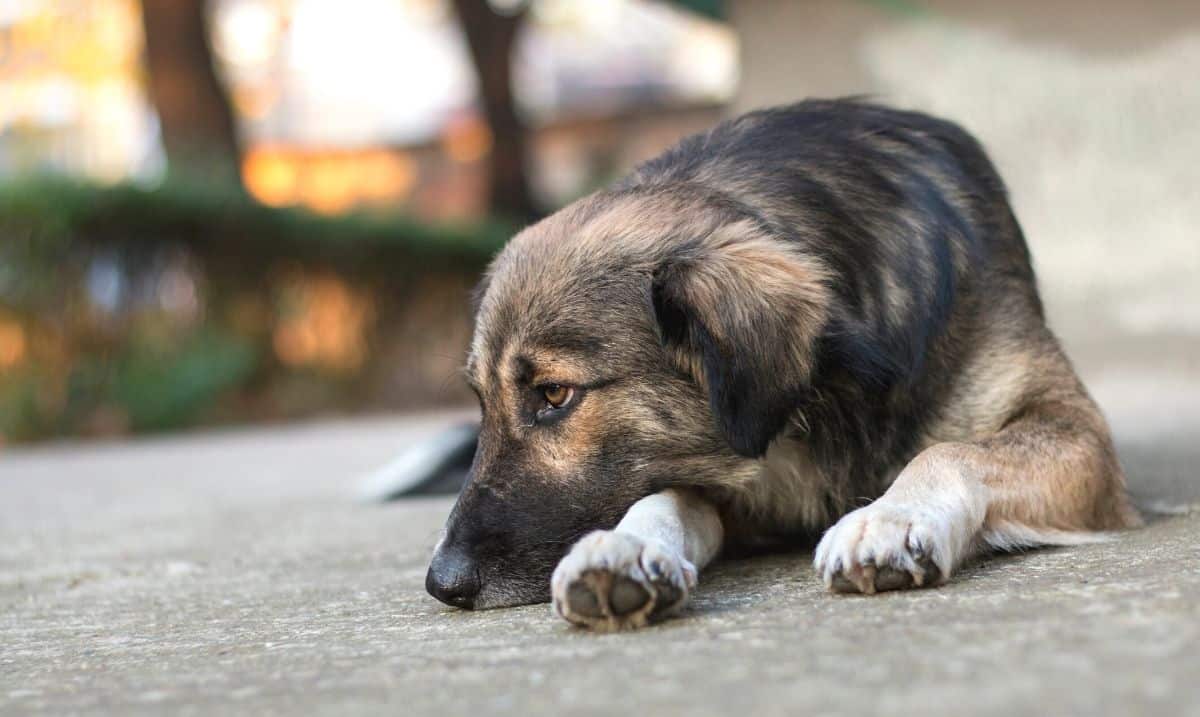
How Do I Know if My Dog Is Sad? | Signs of Dog Depression
Here in Canada, October is Mental Health Awareness Month. This is a time to discuss the various mental health struggles faced by Canadians and what can be done to help. But what about our pets? Did you know that our pets can face mental health struggles too? Today, I’m going to identify the signs of dog depression and what you can do to help.
Dogs are incredibly sensitive beings, experiencing a range of emotions just as we do.
They can be happy and excited (as many dog owners have experienced), but at the same time they can also feel sad, blue or even depressed.
As a dog owner, it is our job to learn to recognize these changes in our pet, as well as acknowledging when something isn’t ‘normal’ and needs to be addressed.
First, let’s address the elephant in the room – Sadness vs Depression.
Common sadness is a short-term response to our current circumstances or the things that we encounter.
Depression, however, is a longer-term struggle that has the ability to take over one’s life entirely, even impacting their physical health and well-being.
In humans, we are able to discuss our concerns with those we love in order to help us distinguish one from the other.
Related: ‘Easy and Effective Ways to Entertain Your Dog at Home‘
However, with our canine friends, we lack the ability to ‘talk it out’.
Instead, we have to learn to recognize signs of sadness and depression in their behaviours and actions, addressing them accordingly.
NOTE: If at any point in time, you notice a sudden change in your dog’s mood or behaviour, you should contact your veterinarian. Each of these signs of dog depression could also be a sign of a bigger medical issue.
If you are unsure of whether or not your dog has experienced a subtle change in behaviour, it’s time to start tracking.
Consider creating a journal or downloading a smartphone app for pets that will allow you to track meals, activity levels, and other nuances.
This can also be a valuable tool in the treatment of your dog.
Due to the inability to reason with your dog or discuss their emotions, it is nearly impossible to distinguish between ‘sadness’ and ‘depression’.
For this reason, any change of mood that continues over time is often referred to and treated as depression.

Signs of Dog Depression
Loss of Interest in Favourite Activities
An apathetic dog is one that suddenly loses interest in things that once triggered joy and excitement.
This includes their favourite treats, going outside for walks, playing with their favourite toys or even receiving praise from their owners.
These dogs appear to ‘mope’ around and often can’t even be enticed to join in on their favourite activities.
If there is no clear explanation, like an injury keeping them from enjoying playtime, take note.
This is one of the common signs of dog depression that you should be aware of.
Sleeping All the Time/Insomnia
Dogs, in general, sleep a lot. Some more than others.
Our pups Daviana and Indiana are quite happy to sleep large portions of the day away, particularly if they are left home alone.
However, they also have their energetic moments.
To determine whether or not sleeping all the time is a warning sign, you must first look at your dog’s usual routine.
For example, a dog that is normally active as it approaches meal time that you now have to wake up to eat or a dog that starts to sleep through your return home rather than greeting you as they usually would.
You should also take note if your dog is suddenly struggling to fall asleep or stay asleep.
Fatigue, loss of energy and insomnia may also be caused by an underlying medical condition.
If you notice these changes, contact your veterinarian to discuss potential causes and other signs that you should be watching for.
Changes in Appetite
Have you noticed a change in your dog’s eating habits?
Just as with people, changes in appetite or eating habits is one of the better known signs of dog depression.
Dogs that are struggling with feelings of sadness or depression may lose interest in food, even if they were once food-driven.
If your dog was once polishing off their food and you now notice food left in their dish with no reasonable explanation (additional food given, changes in their meal routine), this could be a sign that something is turning your dog off from their food
Alternatively, your dog may still finish their food, but they take far longer than they normally would for no obvious reason.
On the other end of the spectrum, you may notice that your dog is suddenly eating all the time.
When related to depression, this could be a sign that your dog is turning to food as a source of comfort.
It is important to note that changes in appetite may also be a sign of a physical cause such as dental pain or digestive issues.
Changes in weight and appetite are also linked to more serious conditions like organ failure.
It is always recommended to consult your veterinarian if you notice any of these changes in your dog to rule out a physical cause.
Related: ‘6 Dog Dental Care Tips Every Owner Should Know‘
Excessive Licking or Chewing or the Paws
It is normal for a dog to groom themselves, however, a depressed dog may take this to another level.
There are two reasons that this may be happening…
First, dogs often struggle to tell the difference between physical and mental/emotional pain.
When faced with feelings of emotional pain, they may try to ‘fix’ themselves by utilizing the same methods that they would for a physical injury.
This would include licking the area that they believe to be wounded.
Another reason that this may occur is the fact that chewing or licking their paws may be soothing or comforting.
The actual act of licking has been found to release endorphins, providing a quick boost to your dog’s mood (like a short-term, natural high).
Hiding or Avoiding Contact
Finally, you may notice that your dog is withdrawing from you and your family entirely.
Take notice if a once social dog is suddenly hiding away in another room with no interest in being part of the ‘pack’.
Dogs are naturally pack animals. Even if they aren’t interested in interacting at this time, they should be drawn to staying nearby.
Any time that a dog starts to hide away or avoid their pack, this is a sign that something is wrong.
Dog/Owner Mirroring
One important thing to consider is whether or not your mood is the reason for your dog’s behaviour.
Dogs often mirror our mood and emotions.
If you are overly anxious as you step into an unfamiliar space, for example, you may notice that your dog will also be on edge and uneasy.
In the same way, if you get all excited, your dog will return the excitement.
So, you have to ask yourself: Am I the one feeling sad or depressed?
Is it possible that these aren’t signs of dog depression, but rather a reflection of your own emotions?
Take steps to improve your own mental health and well-being if you are struggling mentally or emotionally.
You can then see if this will, in turn, improve your dog’s mood.
What Can I Do?
After you have identified some or all of these signs of dog depression in your dog, what next?
Stop and consider any changes in your life that may have recently occurred, which could trigger your dog’s change in mood.
Have you recently moved? Did you change jobs and therefore disrupt your dog’s schedule?
On a more serious note, have you recently lost a loved one (human or pet)?
Remember, dogs develop close relationships just as we do and therefore may also be struggling with feelings of grief and loss.
Identifying the ‘trigger’ may help you to find the best course of treatment.
For example, if your dog is struggling with a change of schedule, he/she may need your reassurance that you are still there, and they are still a priority.
When you are home, take more time to praise, cuddle, and play with your dog.
Another option may be to find a distraction or comfort for that time in which you are gone, like leaving the radio on.
Most dogs will ‘bounce back’ from feelings of depression by addressing the route cause.
If, however, you are unable to ‘cheer up’ your dog, it is time to reach out to your veterinarian or a pet behaviourist to discuss your options.
Just as we have anti-depressants and anti-anxiety meds for humans, there are options that will help your dog to cope with their current situation.
There are also options available through behaviour modification when addressed early enough.
For this reason, it is better to seek help early rather than putting it off in the hope that things will change in time.

Have you ever cared for a dog with depression?
What signs of dog depression did you notice first? What treatment approach did you find to be the most effective?

I don’t know if this is related to depression but my dog has really bad separation anxiety especially when both my partner and I leave the house or a new situation. Because of Covid both of us are home and he is all happy but recently we went somewhere and he’s been sooo clingy and needy now and I can tell he is very stressed. He is a rescue so that might be why. Wonder if you had any tips for that?
Our boy Indy deals with really bad separation anxiety. It’s to the point that he acts out if I go take a shower because he can’t actively see me. We have been working with him, slowly conditioning him by stepping away for a short period at a time. He was doing really well for a while, but recently took a BIG step back with this whole lockdown situation and having us home all the time. If it’s a mild case, you can start with just 5 minutes and a distraction (like a frozen treat) and work your way up. However, in more serious cases, professional behaviour modification may be needed.
Yea, my partner was thinking to try stepping away 5 mins at a time too. It is not all the time, only sometimes when there is something new when he gets all stressed. He also checks behind the curtain when we shower lol
Our dogs both do that with the shower. I have to watch though, the one dog doesn’t stop at checking some days. She has been known to decide she is going to hop right in with us lol
This is such a great post. I knew that dog’s could have anxiety, but it makes sense they could have depression as well. Unfortunately I do not have a dog right now, but I’ve pinned your post for future reference. Thanks for sharing.
The first time I have ever seen it was in a rescue dog that a friend had adopted. We’ll never know what the dog had been through prior to coming to her house, but it took a few months of behaviour modification before he started to come around. That being said, the time and effort were worth it – he is currently a very happy and healthy pup and a loved member of the family.
Oh my, this is such an interesting post. Thank you for sharing ?
Thank you!
I never knew dogs could be depressed:(
It’s sad but knowing is the first step to providing them a happier life! As they say, knowledge is power
This is such helpful information. It really is a good thing to know and understand so that your dog can have a much more happy and healthy life. Making note of this post. We are entertaining the idea of another pet someday down the line as my son gets older.
Knowing the warning signs is key. There are great options to address the cause, but first, you have to know that something isn’t right.
It’s so sad that pets can get depressed! Thank you for sharing this guide so that more pet owners will realise if their dog is depressed and know how to help them! xx
It is sad, but luckily it can be addressed! We just have to know what to watch for.
Awww poor pups! I hate to see them sad. Sometimes my pup does look rather sad, it’s usually when she is having a bad tummy day (she has a genetic stomach issue that flares up now and again). Cuddles do seem to help, same as when I’m sick and I like cuddles. Thanks for the tips. That’s a great point about mirroring a depressed human. I had never really thought of that.
It’s always important to recognize potential triggers like that. Your pup is lucky to have you!
I have definitely seen signs of dog depression in my life. As kids, we had dogs but it was selfish to have them in a house with 5 raucous children!
Rosie
It depends on the household, the dog and the options they have to ‘get away’. Some dogs do really well with rambunctious children as long as they have a ‘safe space’ that they can retreat to when they need some alone time 🙂
Thanks for the great tips! dogs are such great creatures, and it is a shame that they can’t tell us what’s wrong. My dog loves the cold, and when autumn comes around he could just sit and sleep outside all day. If I didn’t know he does this every year I would be concerned! But if you want and listen, they will show you! Thanks for sharing this info!
That is so true! If you’re willing to pay attention to what they are trying to tell you, they do make an effort to communicate in their own way.
This was interesting to read, and now I am pretty sure our staffy isn’t suffering from depression. He can be a bit mardy sometimes, but I don’t think he’s depressed. Just letting us know we abandoned him for too long or moved his toys.
Our boy Indy is a bit of a diva like that. He pouts when things don’t go his way or if we haven’t given him attention in what he deems to be too long. That being said, I definitely don’t think that he’s suffering from depression. We can clearly connect his pouting to a specific cause and when we correct it, his whole demeanour changes lol
When my mum goes on holiday, I stay at her house to look after her dog. You can tell he gets sad and really misses her as he won’t eat anything all week.
A lot of people overlook the incredible bond that our dogs have with us. That’s why you see dogs slip into a state of depression far too often in the shelters.
This is very enlightening, even if I don’t have a dog. I bet my dog-loving friends would love this article!
Thank you!
I guess we always think of our pets as just being happy go lucky creatures that spring to joy when they see us. But like people, our poor dogs can easily get scared, sad, or even depressed like you said. Sadly, I guess I would be pretty blinded by it unless I noticed them not eating or hiding or something. SO I am glad you brought these signs to light if anything to remind me to pay better attention to our extra family member like I would my wife!
Looking back, I’m pretty sure that I would have missed it completely in the past as well. While I knew a fair amount about depression in humans, I was completely unfamiliar with the signs in our dogs. That knowledge is powerful.
We have a wired hair dachshund and he is very active. It is our first dog. I am saving your article so that I can recognize the signs of depression if he shows any in the future. Thank you.
He sounds adorable!
Super informative, thank you! Our moods and behaviors really do influence things, huh?
They can definitely have a major impact on our pets.
I do hope I will never any of those signs in my own dogs! but the post is very useful to anyone
I haven’t dealt with this in my own dogs, but I have had a foster here before that was showing signs of depression. Recognizing it was the first step towards helping him to overcome it and find happiness again.
This is brilliant!! I love that you have highlighted how important it is to make sure that you know and understand your dog xx
Every dog is different, so it’s SUPER important to get to know your pup individually. The signs of depression, physical illness, etc. differ slightly from dog to dog. Our boy Indy pouts when he doesn’t get his way (he’s overly dramatic) and it could easily be mistaken for depression if someone didn’t know him well enough.
the only time I’ve observed this was in our girl after her partner in crime passed away. She went through a depression. Not sure if it was hers or mirroring our loss, but it was something only time could fix.
Dogs definitely go through grief when they lose a companion. I’ve seen it in my pets in the past.