
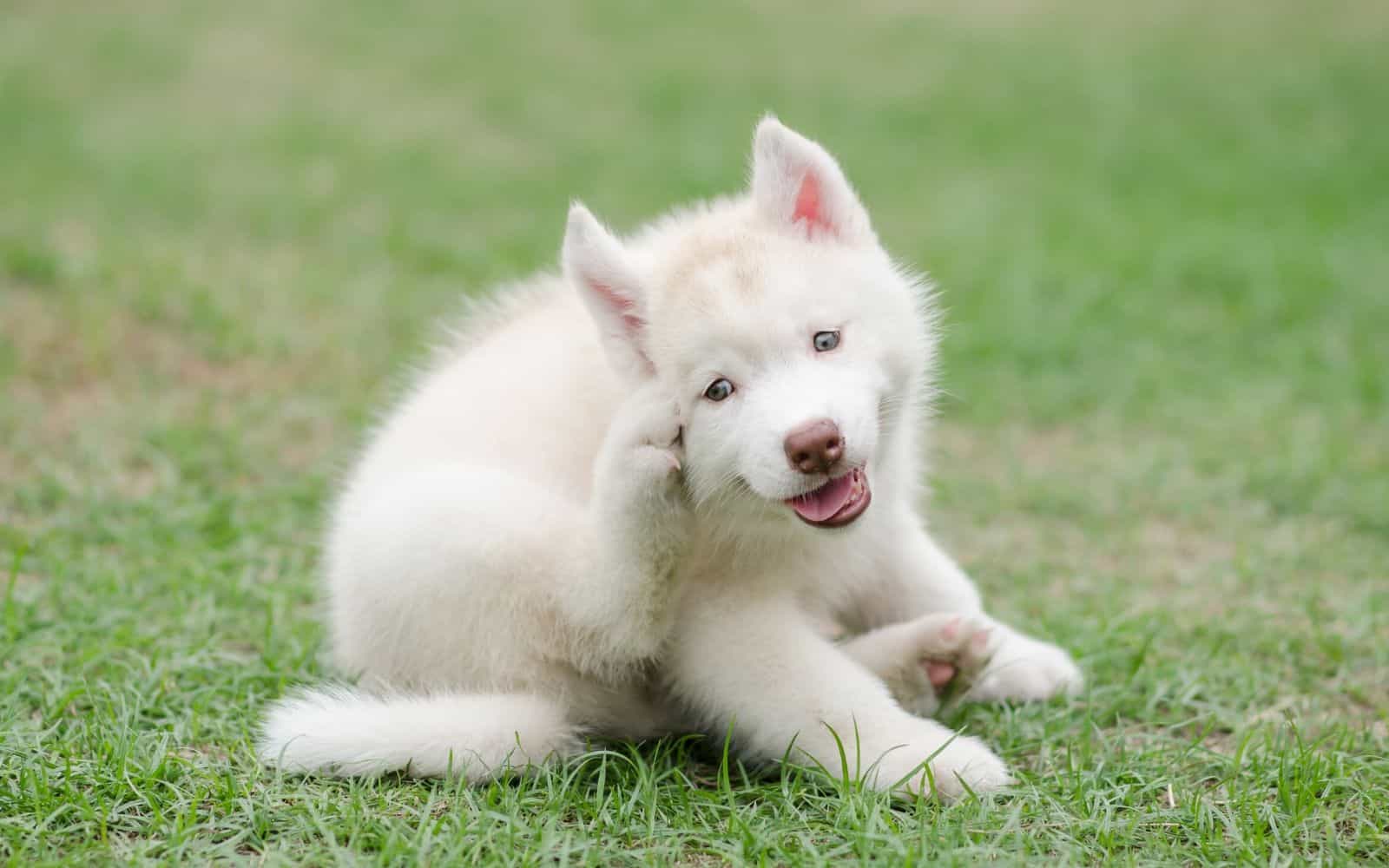
Can Dogs Get Poison Ivy?
Whether you’re hiking the trails or simply spending time at your local dog park, you may find yourself coming in contact with poison ivy. While it’s well-known that contact can cause a lot of discomfort for humans, is there any risk to our canine friends? Can dogs get poison ivy? Let’s check it out…
Disclosure: This post may contain affiliate links, meaning I will earn a commission if you purchase through my links, at no cost to you. For more info, Please read my full Disclosure.
For those who enjoy hiking, camping and spending time in the great outdoors, you’ve likely been warned about the risks of poison ivy before.
The vine may look innocent at first glance, but those who have come in contact with it may tell a different story!
The well-known poison ivy rash is itchy and uncomfortable – but can your dog suffer the same fate?
Can dogs get poison ivy?
Let’s dig into the facts about poison ivy, why most people react to it and what exposure can mean to your dog…
Related: ‘Tick Prevention for Dogs: How to Keep Your Family Safe this Tick Season‘
Identifying Poison Ivy
If you’re planning on spending any time outdoors this summer, there’s a good chance that you may come in contact with the poison ivy plant.
In fact, here in Canada, it can be found in every province across the country with the exception of Newfoundland (according to the Government of Canada website).
The identification of poison ivy can be challenging if you’re not sure what to look for.
Why? It can actually present itself as a shrub, a vine or a small tree.
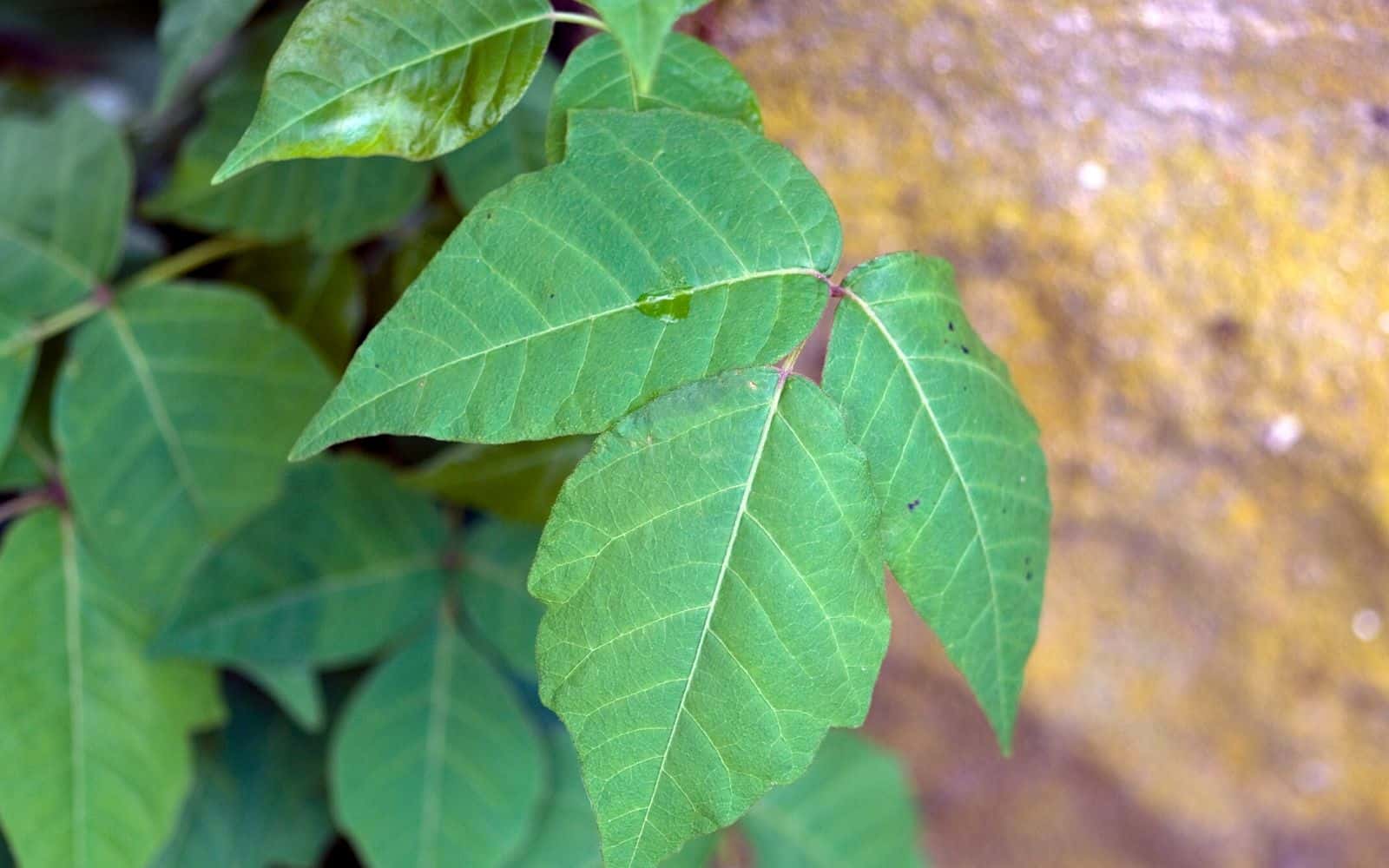
However, regardless of it’s form, they all have one thing in common – Groupings of 3 leaves alternating to the left and right of the plant (so, not side by side).
Have you ever heard the phrase ‘leaves of three, let it be’? There’s some truth to that old rhyme!
During the springtime, the plant grows small yellow-green flowers, and it may also grow small green berries that fade in colour, appearing off-white in the fall.
It’s also important to note that there are NO thorns on the poison ivy plant. So, if you notice spiky thorns, you can rule it out.
As for where to look – the plant can be found in a wide variety of different locations ranging from wooded trails and open fields to roadsides and urban backyards.
If you’re spending time outside, keep your eyes peeled!
Why Does Poison Ivy Cause A Reaction?
The itchy rash caused by poison ivy isn’t actually a result of coming in contact with the leaves themselves.
In fact, it’s an oil within the plant called urushiol oil.
Why is this important to know? You don’t actually have to come in contact with the plant itself to have a reaction!
The oil can be carried on clothing, gardening tools, footwear and more.
Most people start to develop a rash approximately 24 to 48 hours after coming into contact.
While not everyone will react (there are varying levels of sensitivity from the highly sensitive that break out in large, painful rashes to those who don’t react at all), most people will develop some form of itchy rash or blisters in the area.
In more serious cases, the reaction can cause large open sores and significant blisters.
Anti-itch remedies like oatmeal baths and calamine lotion will provide temporary relief while you wait for the rash to clear up.
Aloe Vera is also a well known remedy, including both commercially available aloe vera gels as well as the plant itself.
Larger, more serious cases may require prescription medication. Contact your doctor for more information or if you believe you require medical assistance.
Related: ‘Must-Have Camping Gear for Dogs‘
Can Dogs Get Poison Ivy?
Rashes and reactions to poison ivy are so uncommon in dogs that many veterinary professionals will write it off, stating that there are no concerns.
However, the Pet Poison Helpline does advise that a dog CAN get an intense, itchy rash.
Unlike humans, dogs generally have a protective coat of fur that protects them from the dangers of the poison ivy plant.
With the oils unable to penetrate the coat and reach the skin, they simply wipe or wash away in time.
This includes not only those dogs with a long, full coat but even shorter coated dogs.
If a dog’s skin does come in contact with the urushiol oil, they may develop an itchy, bumpy rash that is best described as a form of allergic dermatitis.
However, as stated above this is VERY rare!
Can You Get Poison Ivy From Your Dog?
The bigger risk when spending time outdoors with your dog is the likelihood that your dog will carry the urushiol oil on its fur.
Brushing up against your dog or petting your dog can transfer that oil to your own skin causing a reaction.
It doesn’t take much contact at all to cause a reaction for the average person.
In fact, the CDC warns, “When exposed to 50 micrograms of urushiol, an amount that is less than one grain of table salt, 80 to 90 percent of adults will develop a rash.”
For this reason, it is important to pay attention not only to your own risk of contact with the plant but also whether or not your dog has been exposed!
What Should You Do if You Think Your Dog My Have A Poison Ivy Rash?
If you notice a rash developing on your dog, there is a good chance that this has nothing to do with the poison ivy plant at all.
As stated above, the likelihood that your dog will experience a reaction is VERY rare.
This could, however, be a sign of a much bigger health complication completely unrelated to the poison ivy.
In addition to the risks of a rash-style allergic reaction, ingestion of the poison ivy plant can also carry some serious risks of its own.
This includes gastrointestinal problems and even anaphylaxis.
Symptoms of poison ivy contact or ingestion in dogs includes:
- Redness or swelling
- Bumpy, red rash
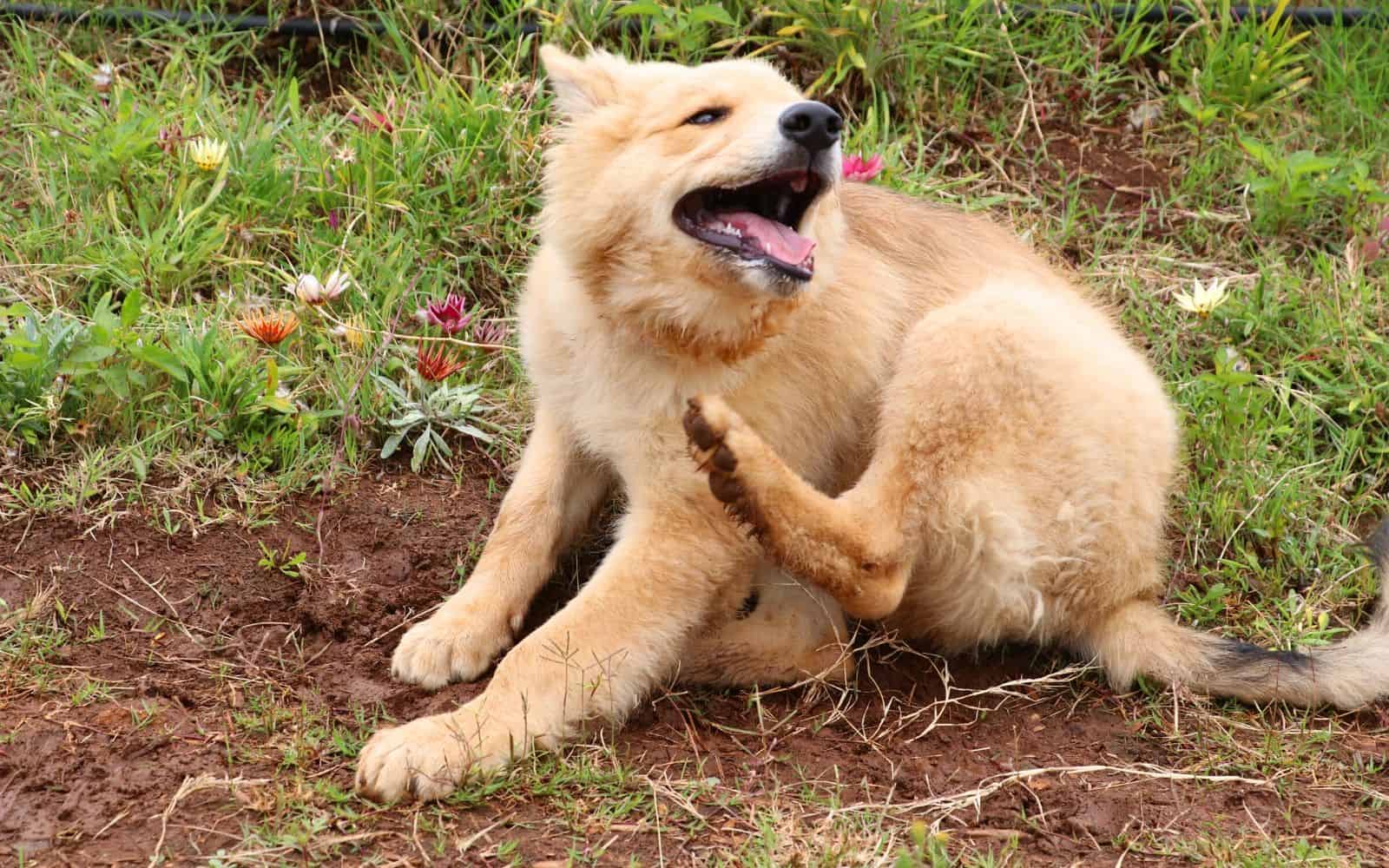
- Excessive and persistent itching
- Intense licking or biting at their own skin
- Blisters and/or scabs
- Abdominal pain or discomfort
- Loss of appetite
- Diarrhea
- Vomiting
- Difficulty breathing
If you notice any of these signs, contact your veterinarian immediately!
If your dog is only exhibiting signs of a slight rash or minor stomach discomfort, your veterinarian may be able to explain your next steps over the phone.
However, anaphylaxis left untreated can be fatal in a very short period of time.
Your veterinarian may also be able to prescribe topical, oral or injected medications to treat the poison ivy and prevent a bacterial skin infection.
Related: ‘Recognizing and Treating Hot Spots in Dogs‘
Tips and Tricks to Reduce the Risks of Poison Ivy for You and Your Dog
#1 – Learn how to identify poison ivy and other potentially poisonous or harmful plants in your area.
#2 – Pay careful attention to your surroundings whenever you are spending time outdoors. This will hopefully allow you to identify the plant and take preventative steps before a reaction occurs.
#3 – If you are hiking in an area where your dog is at risk (we often read warnings of areas where poison ivy has been spotted), keep him/her on a leash to prevent your dog from wandering off where they could come in contact out of your line of sight.
#4 – After hiking or walking your dog, wipe your dog down with a towel or give your dog a bath (depending on availability). Wear gloves throughout this process to protect yourself from coming into contact with any oils on your dog’s fur.
#5 – Don’t stop at bathing your dog. If you believe that your dog may have come in contact with poison ivy, you should also wash his/her collar and leash as they may also act as carriers.
#6 – Wash your own clothing immediately after returning from an area where you have been exposed to poison ivy, or after washing your dog (along with any towels used on your dog).
#7 – Shower as soon as possible after any potential exposure to the urushiol oil.
#8 – Monitor your own yard and remove/dispose of poison ivy if you see any present. ALWAYS wear gloves and long sleeves when dealing with poison ivy to prevent exposing your skin to the oil.

Were you already familiar with the answer to the big question ‘Can dogs get poison ivy’?
Have you ever dealt with poison ivy reactions in your family (including your dog)? If so, what tips and tricks would you share?

Great post. I will share it with my niece who has a dog.
Thank you!
Definitly need to share this with my wee nan. She lives out in the country on the farm and has a dog. It would be useful to have just in case Bob ever gets out.
It’s rare, but it definitely CAN happen. My girl Daviana had poison ivy last year from one of our camping trips. She has a skin condition that makes her extra sensitive to irritants and apparently poison ivy was no exception…
This was so interesting. Ive neevr thought about this before. I had no idea that it was from the oils and not the plant itself. The process of how it transfers was all new information for me. Thanks for the tips, this was so useful! x
Sophie
It’s understandable why most people don’t consider what actually causes the reaction. The oils are released from the plant when any part of the plant breaks, so it would appear that you’re getting it from the plant.
Interesting post, thank you!
Thanks for reading!
I’ve never come across poison ivy over here in the UK, but we do have something called Giant Hogweed which causes burns and blisters. So taking care around unknown plants is key. I also grow Eurphorbia in my garden and have to wear gloves when pruning because the milky sap is a skin irritant. But all that aside, I didn’t know dogs (or cats) could be affected by these plants so thank you for this post, it was very helpful. Lisa
Most pups won’t thanks to their coats, but you don’t want to take a chance! My girl has a thick coat (German Shepherd mix) and still came home with poison ivy after a camping trip last year.
Good to know about the potential effects of poison ivy. I’m not even sure where we have it in the UK. I’m not in the country so I doubt we’d run into it much!
It’s pretty common around here, even in the parks in some of the bigger city areas.
I knew you could get poison ivy from petting an dog that had been in it, but I never thought about whether or not they could get it. Believe it or not, I’ve never had poison ivy. We have a ton of it in the yard, along our tree lines, in the woods, and at the farm. I’m afraid to touch it these days as my mother who never had it until after she was 50 now has horrible reactions to it.
It’s hard to say – you could be one of the few that are immune to it (I’m one) or there could be a BAD reaction awaiting you. Better safe than sorry, right?
Oh wow! I didn’t even know it could happen at all. I’m glad it’s a rare occurrence. Dogs get into everything.
It’s rare BUT it can happen! My girl Daviana had poison ivy last summer after one of our camping trips. That being said, she has a skin condition that makes her incredibly sensitive to any irritants.
Britt, as always great post! I will actually be sharing this with a few of my friends. Thank you providing this information on what to look for if you think your dog may have had contact with poison ivy. When we had our pug we would always wipe down his paws after a walk/hike. I can only remember one time that he broke out in a rash. We later found out that when he laid in a grassy area a few ants had bit him. -We didn’t know what it was so we took him to the vet, and she gave us an ointment to treat it. Anyway thanks so much for sharing this great information!
Ants are another pesky risk that a lot of people aren’t aware of! We had one dog that suddenly started showing a swollen mouth and we could out she had been eating something with ants in it.
What great tips for reducing the risk of getting poison ivy for both dog and dog parent. This reminds me when I was 11 or 12 yrs old or so. In the middle of the night, our cat (a himalayan) came into my room, and jumped up on my bed to lay next to me. He was purring and crawling all over my head and face. The morning came and it was evident, he had been in poison ivy before coming into my room. Needless to say my face took a beating. I looked atrocious, meanwhile the cat was perfectly fine (all those layers of fur). There were no bad feelings though ;). Although, I did side eye him for a week after. Well with my one good eye that wasn’t swollen with poison ivy.
Oh no, I can just picture that! My brother is incredibly sensitive to poison ivy, so it didn’t take much for him to look like a big, swollen mess lol!
I learned a lot from this post, and I don’t have a dog, nor am I planning to get one. I had no idea it was the oil that caused the rash, though I shouldn’t be surprised. Useful post!
Thank you!
As someone who enjoys hiking in various regions a lot, this post has answered a question I have wondered about quite a lot. This is a fabulous resource for hiking and dog lovers like me (there are a lot of us around!). Thanks so much for the information and advice you have included here. Extremely useful, practical and easy to follow.
Thank you! It’s something I wondered about for quite a while before I dug into it personally… Even then I shrugged it off due to how rare it is until my girl Daviana came home with a poison ivy rash from one camping trip. That was an interesting experience that I’d be okay with avoiding in the future!
Wow what an informative post and I can’t believe that I never knew about this, thank you so much for keeping dogs safe x
A lot of people aren’t aware of the impact it can have on our pups, or that we can actually get it FROM them even if they aren’t showing any signs of it!
Confession time: I am an immigrant and had never heard of poison ivy until I moved to North America. Thankfully, never encountered, but it sounds very unpleasant. This was a great orientation to everything you need to know about poison ivy, as well as protecting yourself and your dogs.
Hopefully, you never encounter it. My brother used to get it every summer, and it was SO uncomfortable for him!
This is another super helpful post. It makes a lot of sense that dogs could pass poison ivy on to humans through their fur, but I’d have never thought of that myself. An important piece of info!
It’s something that a lot of dog owners overlook, I believe. However, it can happen so easily! Especially for those who are highly allergic to the oils and react worse than the average person.
This was such an informative piece for me. I had no idea of Poison Ivy. Great resource for all dog lovers and those who hike.
It’s all over here. Definitely a struggle for those of us that enjoy hiking in the area.
I had no clue it was oil from poison ivy that was the irritant! A friend of mine is a logger, and gets it literally everywhere at times, and it is miserable for him. Which the oil certainly explains how it gets under his clothes. I had often wondered how that worked. Lol. This also explains how dogs can carry it with them and transfer it to their owners. Washing everyone and everything after a potential contact would be so important!
My brother gets it everywhere – just heading out into the bush is enough more often than not. I’m one of the few that are immune to it, so I’ve never experienced it first hand. However, seeing him struggling with it all the time growing up, I really felt for him!
Great post! You have great info about poison ivy and honestly, I hadn’t thought about the oil lingering on my dog’s fur. But, it makes so much sense – will wipe him down from now on. Also, love the tips about oatmeal and aloe – it works wonderfully as a paste!
The way I look at it, a couple of quick minutes of wiping the pups down can make all the difference, so why not? Better safe than sorry!
I’m super allergic to poison ivy, oak, and sumac. My dogs have never gotten poison ivy, but I often bathe them after our hikes because I’m so paranoid I’m going to get it from the oils on their fur. I very often get poison ivy bad enough to need a prescription to help me get over it. It’s no fun, especially now that we live in the middle of the woods and hike on a daily bases. Thankfully I’ve somehow managed to only get it once so far this year.
My brother was like that growing up – I swear he just had to look at it and get it somehow!
Great post and something to remember although we only go to dog parks which does not have it as the gardeners make sure of it because of kids. Thanks so much
That’s so important – I can’t imagine trying to take care of a kid with poison ivy. It’s not like you can explain to them what’s happening.
Depends on which part of the body is affected, isn’t it? Cookie once had a reaction to being exposed to something on her belly. It was not poison ivy, though, but when we examined all the places she was running through, it was Wandering Jew.
There are a lot of different plants that can potentially cause a reaction – poison oak, poison sumac, etc. Poison ivy is just the most well-known to most people as far as human reactions, which leads to the questions about whether or not it can impact our pets the same way.
Poison ivy is one of my fears besides ticks when taking my cats out. They love to off road it so to speak. Again they aren’t going to catch it but *I* do not want to catch it off of their fur. I hate poison ivy and my family is super allergic.
If your family is super allergic, it’s definitely something to be aware of and take steps to prevent. It’s really easy to get it from a pet’s fur, and that wouldn’t be fun for anyone involved.
Are dogs with hair instead of fur (Maltese, Yorkies) or hairless dogs more likely to have a reaction to poison ivy?
I had a terrible run in with poison ivy a few years ago, and it still makes me so uncomfortable to think about it!
It’s more about the ability of the oils to get at their skin. SO a long-haired dog with hair instead of fur would still have that layer of protection. However, a hairless dog would definitely be more susceptible.
Having been struck by the ivy itch I can sympathise with any dog owner who has to cope with an irritated dog. We can complain but the can’t * scratch scratch *. We dodn’t have much of it in our area but I will be on the alert now!
My dear girl Daviana had it last year and it was SO hard to help her get through it. I hated that I couldn’t explain why she couldn’t scratch at it – she just didn’t understand.
I never thought about dogs reacting from poison ivy. I try to stay away from wooded areas or even plants in my yard because my skin is so sensitive. I haven’t had a case of poison ivy or oak since childhood.
We spend A LOT of time out in wooded areas as avid campers and hikers, so it’s a topic that we’ve been very careful to learn all that we can about.