

Beginners Guide to Eco-Friendly Pet Ownership
As a society, we are growing increasingly aware of the impact we have on the environment. Zero-waste challenges and climate change discussions fill our social media feeds. But what about our pets? Today I’m going to share beginner tips for eco-friendly pet ownership.
There is no denying the fact that we (the human population) have a profound impact on the environment around us.
Countries are shipping off their waste to avoid overcrowded landfills.
Meanwhile, businesses are being challenged to make environmentally responsible choices when it comes to their production and packaging decisions.
Take a step back and look at your daily decisions as a pet owner.
You’ll likely discover a startling amount of waste due to excess packaging, worn-out dog toys, litter disposal/dog poop bags, and more.
Is it possible to share your home with a pet AND make eco-friendly decisions?
Yes, it is! It just requires a dedication to researching your options and finding ‘outside the box solutions’.
If that sounds overwhelming, don’t worry.
I’m going to break down a list of the biggest struggles faced by beginners to eco-friendly pet ownership and provide effective solutions.
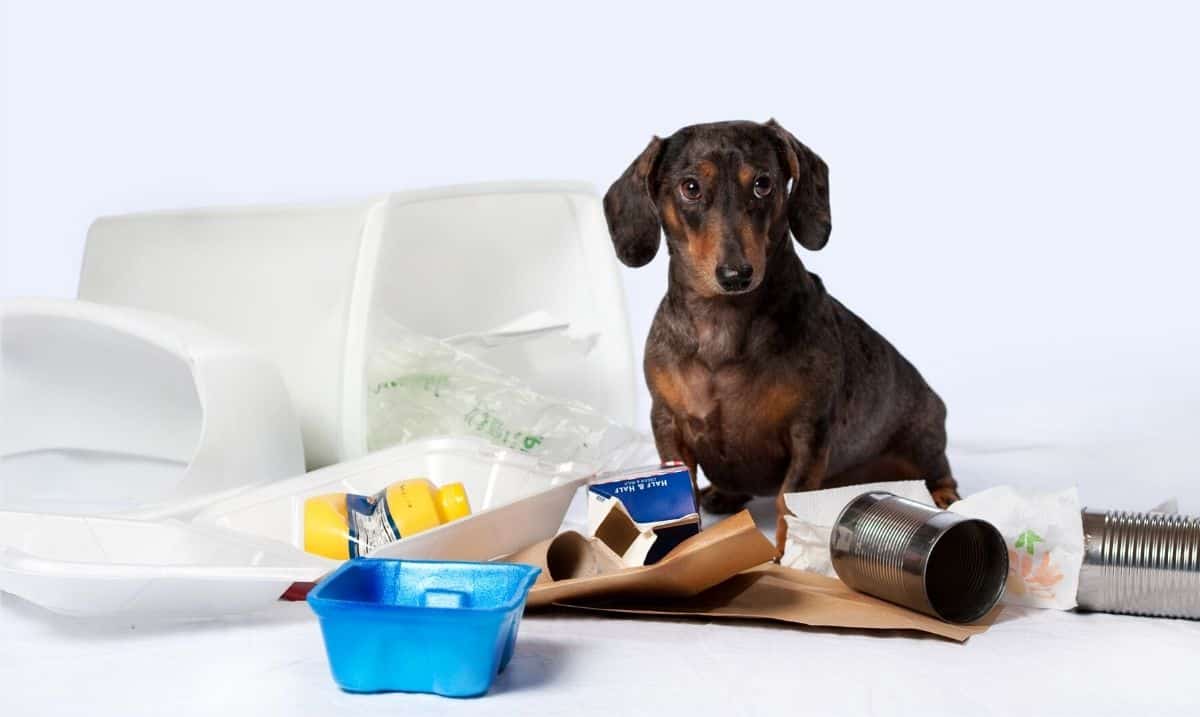
Beginner’s Guide to Eco-Friendly Pet Ownership
Shop for High-Quality Toys and Accessories
This is a point that you have likely heard when it comes to your own purchase decisions when it comes to fashion, furniture and more.
Rather than buying ‘fast fashion’, invest in higher quality products that will stand the test of time.
Surprisingly, many pet owners fail to carry that same mentality into their selection of pet supplies.
Cheap, low-quality pet toys are available everywhere you turn.
How do the companies keep the prices so low? They count on the fact that these items quickly wear out, forcing you to repurchase time and time again.
Unfortunately, each of those destroyed dog toys, worn out dog beds and broken collars find their way into local landfills, contributing to the growing waste problem.
However, many of these items are necessary for a happy, healthy pet.
The solution?
Invest a little more when purchasing pet supplies, buying products that will stand up to the abuse of your pet.
For example, there are dog toys specifically designed to stand up to heavy chewers.
You’ll save money AND reduce the unnecessary waste. It’s a win/win!
Consider Hosting A Toy Swap
Pets often get bored of their toys over time, leading us to purchase new, interesting options.
Unfortunately, while these toys are usually still in great shape, they are often tossed aside and forgotten about.
Rather than discarding these ‘old toys’, why not allow them to bring joy to a new pet?
Make sure that you take the time to clean all toys properly prior to the swap.
You will be surprised how quickly an older toy can look like new!
Another option is to contact your local shelters and rescue organizations to find out where you can donate used toys.
NOTE: This also applies to other pet supplies including pet beds, leashes, collars, kennels, pet bowls, cat trees, etc.
Before buying something new, explore the options to swap or purchase second-hand.
Donate, gift, or sell second-hand pet supplies that are no longer of use in your home, extending their life.
Related: ‘Easy to Make DIY Ferret Toys and Accessories’
DIY Toys from Household Items
There are many toys that you can make at home from household items for your pet.
Not only are these a great way to save money, they also recycle items that may have otherwise been considered waste around the house!
This includes old t-shirts, plastic bottles, old socks, cardboard boxes, and more.
Dog owners, are you looking for inspiration?
Check out this great video published by Proud Dog Mom on YouTube!
Shop Products with Less Packaging or Recycled Packaging
When you are out shopping for pet supplies, take a moment to consider the packaging on the items that you are purchasing.
Many dog and cat toys, for example, are now available without unnecessary plastic packaging, sold individually in bins, or hanging on display package free.
I understand that purchasing package free isn’t always an option.
However, your commitment to making smart choices shouldn’t end there!
Seek out companies that are using recycled products in their packaging or offering biodegradable/compostable packaging options.
While we often make homemade dog treats ourselves, there are times that we spoil the pets with ‘a little something special’.
One of our favourite dog treat brands, Northern Dog Biscuit Bakery, packages their treats in a 100% compostable kraft bag.
Encourage Companies to Explore Low Waste or Waste Free Options
Are your go-to pet brands still using packaging that produces an abundance of waste?
Speak up and let them know the changes that you would like to see as a regular consumer!
We live at a time where companies are more accessible to us than ever before thanks to the power of the internet.
With a single email or DM on social media, you can make your opinions known.
Just be sure to word it in a positive and constructive way. As the old saying goes, “you catch more flies with honey than with vinegar.”
If you know of a specific lower cost or simple swap, share your recommendations.
Many companies, especially small businesses, are more than willing to consider eco-friendly options if they are able to find a cost-effective way to implement these changes.

Make Responsible Food Choices
Research shows that cats and dogs are responsible for approximately 25-30% of the environmental impact caused by the consumption of meat in the US.
This number could be cut back drastically if pet owners were to make responsible choices when purchasing pet food.
Do your due diligence when selecting a pet food brand.
The goal is to find an organic, environmentally responsible brand whose products meet your pet’s nutritional needs.
Don’t forget, as mentioned above, to also consider the packaging!
Alternatively, consider making homemade pet food or treats with eco-friendly ingredients.
Just be careful, this isn’t always as easy as it sounds… You need to ensure that you are meeting all of your pets nutritional needs.
Related: ’12 Easy Ways to Save Money on Pet Food’
Utilize Biodegradable Waste Bags
One of the biggest issues that I have found as a pet owner is the multitude of plastic bags that are disposed of on a daily basis picking up dog poop or scooping the litterbox.
While I am NOT recommending skipping these tasks (do NOT be the dog owner that doesn’t clean up behind themselves), there are eco-friendly options available.
There are compostable and biodegradable bags available on the market.
The best part? Dog poop that has been cleaned up using a compostable bag can then be composted!
Single-use plastic is a known contributor to our waste problem in the world today.
Consider reading THIS document from the UN Environment Programme regarding single-use plastics and their impact on our world.
Switch to Eco-Friendly Cat Litter
If you’re a cat owner, you may be reading the last point and wondering how the bag matters that much if you’re disposing of large quantities of cat litter in them.
However, there are eco-friendly litter options that you can consider.
Clay litters aren’t the only litter options on the market!
Consider making the switch to litter made from corn, recycled paper, wheat, wood shavings or other ‘natural’ options.
It may take some time to find a litter that works for you AND your cat, as some cats are very selective about the litter they use. Just keep trying until you find the best option for your situation.

Do you have any go-to tips and tricks for eco-friendly pet ownership?
Let’s come together and support one another in making environmentally responsible choices in the pet community. I invite all of you to share your tips in the comment section.

These are fabulous ideas for reducing waste and becoming much more eco-friendly. I honestly hadn’t considered pet toys to be wasteful, but now that you brought it to my attention I can see how they could be if they get destroyed regularly! My cat only has a few toys that interest him so I haven’t had much problem with my toys getting out of hand or torn up much…(he is super lazy), but my mom’s dog always tears up everything! I am going to bring this up to her next time I talk to her. Thanks so much for your always informative post!
My girl Dav went through a super destructive phase. If we bought cheaper dog toys, they wouldn’t last more than a few minutes. The only exception has been her stuffed flamingo toy that she’s OBSESSED with lol
Wow this is a great topic Britt and such an important one too! The toys and poop bags are the biggest thing for us. I’ll have to check out some of those DIY toys and biodegradable bags. Thanks for the inspiration on this!
We made the switch to biodegradable bags a couple of years ago. They are a little more costly (you can’t pick them up at the dollar store) but if you nab a good deal on Amazon, it’s not that big of a difference.
I hadn’t really thought about making being a pet owner more sustainable so this is a great post for ideas! Using biodegradable begs is something that everyone should be doing, such an easy swap. Making your own dog toys is also a great shout – as long as they have fun a dog isn’t going to care how much it cost or if you made it!
Exactly! For the longest time, Dav girl LOVED this toy my husband made with scrap wood and plastic pop bottles. She had to spin the pop bottles around on a piece of wooden doweling to get treats to come out of it. The game entertained her for MONTHS before it eventually gave way and had to be recycled/used for firewood lol
I need to start looking into more eco friendly cat and guinea pig supplies xx
While our cats don’t result in as much waste as our dogs do, there were still many ways that we could improve our choices in terms of the cats.
I think it’s so important to be sustainable in as many areas of life as possible, including pet care! My cat has never been very interested in toys, but we occasionally buy them for her to try. If she is not interested, we give them away to other cat owners we know, and sometimes they give us their rejected toys too! xxx
That’s the key. There’s also the toy packages with multiple toys. Our cats have NO interest in the hard plastic balls with the bells in them, but my mother loves them for her foster cats as they are easier to clean and sanitize. There are times when we have to buy a pack of toys just to get the one that our cats love – so I just save the jingle balls and give them to my mother. No waste!
Another great post for new pet owners!
Rosie
Thank you!
This is such an in-depth post. I love the sound of making toys from household items if I’m honest! A toy swap sounds really good too x
My whole family has dogs and we have used the toy swap option with the family in the past. Recently, I won a gift basket in a charity auction for a rescue organization that is dear to my heart. It included a few different toys including Dav’s favourite fabric frisbees (but glow in the dark, which I hadn’t seen), however, I knew that some of the toys would either be destroyed in seconds or wouldn’t even catch the attention of our dogs. I gave these to my mother for her pups (and I’ve been told they love them dearly)!
I have been on the hunt for a good litter for the past few months, honestly never thought of litter when thinking about eco-friendly or cat food either. Very interesting indeed and definitely an eye-opener. Our 17-year-old kitty has been eating the same hard cat food for years I’m not sure he would switch. Are you suggesting a low meat cat food or more of an organic one? I could see what I can find and test it on him maybe the old guy can still learn a new trick ha.
Meat is necessary for a cat’s health, so going low meat isn’t generally advisable (unless there is a medical reason). For that reason, it’s important to find a company that is able to produce/distribute a meat-based product in the most environmentally friendly way possible. The best way to do that is to do some research into the brand itself and the processes that it uses.
Using secondhand and DIY toys is a great idea! I’m a big thrift shopper *and* DIY-er and I always get such strange looks from people when I tell them just how often I do both those things – until they SEE the items I have that are secondhand and/or homemade, and they realise that you can’t even tell! Plus, it’s not like your pets have to keep up with the latest trends either, haha ?
Exactly! We love doing DIY stuff here. Not only can the average person not tell the difference, but it’s a great way to pull in a little personalization and make it your own.
Your sound advice for being more echo-friendly in the ownership of our pets is worthy of note. Investing a little bit more, truly makes some difference.
Thank you
Congratulations for writing such an informative and interesting article. I am going to share it with my friends and family who have pets. This is going to be very useful for them. They also need to know about such eco-friendly efforts.
Thank you!
That’s such a great idea. It’s amazing what we can make into toys from unwanted household items. We need to make good decisions when buying and buy better quality to start with.
Especially if you know that your pet tends to destroy their toys. Dav LOVES playing tug, but her tug toys never last long. So, we switched to using old socks and tennis balls. That way, we’re recycling – the sock would have gone in the garbage anyway, and the tennis ball is reused time after time.
We have a cat and always buy eco-friendly cat litter and compostable bags to empty it out in. I never buy plastic toys either and stick to ones made from wood and twine.
Those are all great steps to take!
Errrrmawgawd! A doggie toy swap! What a fabulous idea. We have a million toys!!! I love this! We try and sew up ones that get torn as well.
I just went through a couple of weeks ago and sewed up 20+ toys. We had been putting them aside to address later and the basket where we were storing them was adding up quickly lol
Thank you so much for sharing such a comprehensive post. 🙂 I’m sure many new and old pet owners will find this really useful. We should all start to think about reducing our carbon footprint and that should include our choices for pet care too. 🙂 Great article!
Our society is starting to make great strides in living a more eco-friendly lifestyle, however, we need to recognize the different areas of our lives that this can be accomplished. Many pet owners fail to consider the waste associated with their pet’s products in the same way that they do their own.
I super love these ideas especially the DIY toys from household items! Not only it is eco-friendly, reduces clutter but the thought of making something for your pet and seeing their reaction upon receiving the toy is something I would definitely love! I just wish I had a pet lol!
It’s such a satisfying feeling! Who doesn’t want to do something for their pet that they love?
This is great info. Sharing an eco-friendly environment with a pet isn’t as difficult as I thought it would be. Awesome post.
It’s much easier than many people realize.
Hi! As a canine proprietor, I love these thoughts particularly the DIY toys from family unit things! It is eco-accommodating, lessens the mess yet the idea of making something for your pet and seeing their response after accepting the toy is something I would cherish.
I love seeing our pets respond positively to things that I make for them!
Love this article, Britt! We all need to be more eco-friendly and how we incorporate our pets into our everyday eco-friendly living is great! I’m always looking for ways to be more friendly to the earth. This is a much-needed article! Hopefully, people will take this to heart, and change will start happening in a big way.
I truly believe that there is a balance we can all strike between living a lifestyle that makes us happy and minimizing our impact on the environment. It’s all about familiarizing yourself with the options available!