
Can Dogs Get Poison Ivy?
Whether you’re hiking the trails or simply spending time at your local dog park, you may find yourself coming in contact with poison ivy. While it’s well-known that contact can cause a lot of discomfort for humans, is there any risk to our canine friends? Can dogs get poison ivy? Let’s check it out…
Disclosure: This post may contain affiliate links, meaning I will earn a commission if you purchase through my links, at no cost to you. For more info, Please read my full Disclosure.
For those who enjoy hiking, camping and spending time in the great outdoors, you’ve likely been warned about the risks of poison ivy before.
The vine may look innocent at first glance, but those who have come in contact with it may tell a different story!
The well-known poison ivy rash is itchy and uncomfortable – but can your dog suffer the same fate?
Can dogs get poison ivy?
Let’s dig into the facts about poison ivy, why most people react to it and what exposure can mean to your dog…
Related: ‘Tick Prevention for Dogs: How to Keep Your Family Safe this Tick Season‘
Identifying Poison Ivy
If you’re planning on spending any time outdoors this summer, there’s a good chance that you may come in contact with the poison ivy plant.
In fact, here in Canada, it can be found in every province across the country with the exception of Newfoundland (according to the Government of Canada website).
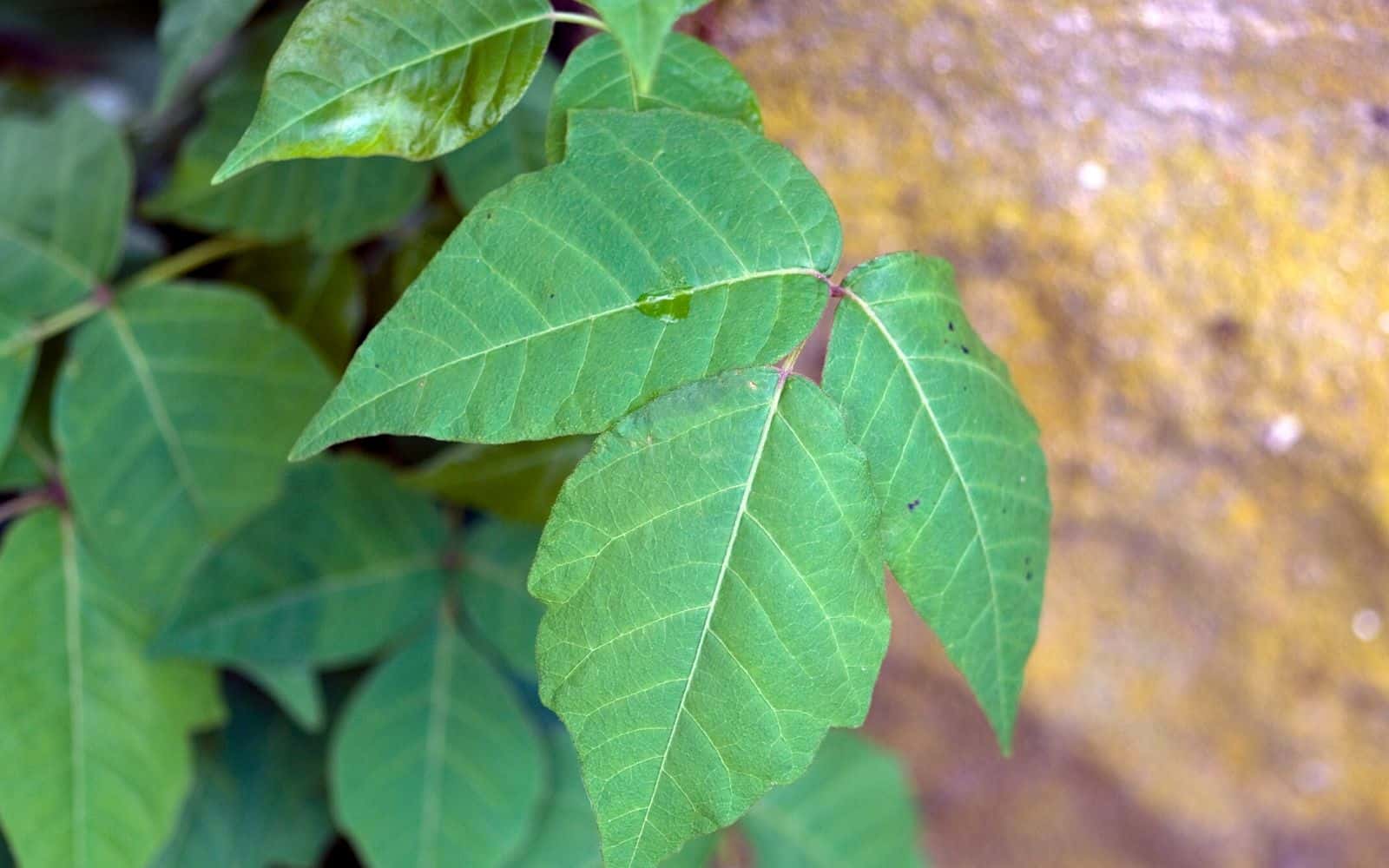
The identification of poison ivy can be challenging if you’re not sure what to look for.
Why? It can actually present itself as a shrub, a vine or a small tree.
However, regardless of it’s form, they all have one thing in common – Groupings of 3 leaves alternating to the left and right of the plant (so, not side by side).
Have you ever heard the phrase ‘leaves of three, let it be’? There’s some truth to that old rhyme!
During the springtime, the plant grows small yellow-green flowers, and it may also grow small green berries that fade in colour, appearing off-white in the fall.
It’s also important to note that there are NO thorns on the poison ivy plant. So, if you notice spiky thorns, you can rule it out.
As for where to look – the plant can be found in a wide variety of different locations ranging from wooded trails and open fields to roadsides and urban backyards.
If you’re spending time outside, keep your eyes peeled!
Why Does Poison Ivy Cause A Reaction?
The itchy rash caused by poison ivy isn’t actually a result of coming in contact with the leaves themselves.
In fact, it’s an oil within the plant called urushiol oil.
Why is this important to know? You don’t actually have to come in contact with the plant itself to have a reaction!
The oil can be carried on clothing, gardening tools, footwear and more.
Most people start to develop a rash approximately 24 to 48 hours after coming into contact.
While not everyone will react (there are varying levels of sensitivity from the highly sensitive that break out in large, painful rashes to those who don’t react at all), most people will develop some form of itchy rash or blisters in the area.
In more serious cases, the reaction can cause large open sores and significant blisters.
Anti-itch remedies like oatmeal baths and calamine lotion will provide temporary relief while you wait for the rash to clear up.
Aloe Vera is also a well known remedy, including both commercially available aloe vera gels as well as the plant itself.
Larger, more serious cases may require prescription medication. Contact your doctor for more information or if you believe you require medical assistance.
Related: ‘Must-Have Camping Gear for Dogs‘
Can Dogs Get Poison Ivy?
Rashes and reactions to poison ivy are so uncommon in dogs that many veterinary professionals will write it off, stating that there are no concerns.
However, the Pet Poison Helpline does advise that a dog CAN get an intense, itchy rash.
Unlike humans, dogs generally have a protective coat of fur that protects them from the dangers of the poison ivy plant.
With the oils unable to penetrate the coat and reach the skin, they simply wipe or wash away in time.
This includes not only those dogs with a long, full coat but even shorter coated dogs.
If a dog’s skin does come in contact with the urushiol oil, they may develop an itchy, bumpy rash that is best described as a form of allergic dermatitis.
However, as stated above this is VERY rare!
Can You Get Poison Ivy From Your Dog?
The bigger risk when spending time outdoors with your dog is the likelihood that your dog will carry the urushiol oil on its fur.
Brushing up against your dog or petting your dog can transfer that oil to your own skin causing a reaction.
It doesn’t take much contact at all to cause a reaction for the average person.
In fact, the CDC warns, “When exposed to 50 micrograms of urushiol, an amount that is less than one grain of table salt, 80 to 90 percent of adults will develop a rash.”
For this reason, it is important to pay attention not only to your own risk of contact with the plant but also whether or not your dog has been exposed!
What Should You Do if You Think Your Dog My Have A Poison Ivy Rash?
If you notice a rash developing on your dog, there is a good chance that this has nothing to do with the poison ivy plant at all.
As stated above, the likelihood that your dog will experience a reaction is VERY rare.
This could, however, be a sign of a much bigger health complication completely unrelated to the poison ivy.
In addition to the risks of a rash-style allergic reaction, ingestion of the poison ivy plant can also carry some serious risks of its own.
This includes gastrointestinal problems and even anaphylaxis.
Symptoms of poison ivy contact or ingestion in dogs includes:
- Redness or swelling
- Bumpy, red rash
- Excessive and persistent itching
- Intense licking or biting at their own skin
- Blisters and/or scabs
- Abdominal pain or discomfort
- Loss of appetite
- Diarrhea
- Vomiting
- Difficulty breathing
If you notice any of these signs, contact your veterinarian immediately!
If your dog is only exhibiting signs of a slight rash or minor stomach discomfort, your veterinarian may be able to explain your next steps over the phone.
However, anaphylaxis left untreated can be fatal in a very short period of time.
Your veterinarian may also be able to prescribe topical, oral or injected medications to treat the poison ivy and prevent a bacterial skin infection.
Related: ‘Recognizing and Treating Hot Spots in Dogs‘
Tips and Tricks to Reduce the Risks of Poison Ivy for You and Your Dog
#1 – Learn how to identify poison ivy and other potentially poisonous or harmful plants in your area.
#2 – Pay careful attention to your surroundings whenever you are spending time outdoors. This will hopefully allow you to identify the plant and take preventative steps before a reaction occurs.
#3 – If you are hiking in an area where your dog is at risk (we often read warnings of areas where poison ivy has been spotted), keep him/her on a leash to prevent your dog from wandering off where they could come in contact out of your line of sight.
#4 – After hiking or walking your dog, wipe your dog down with a towel or give your dog a bath (depending on availability). Wear gloves throughout this process to protect yourself from coming into contact with any oils on your dog’s fur.
#5 – Don’t stop at bathing your dog. If you believe that your dog may have come in contact with poison ivy, you should also wash his/her collar and leash as they may also act as carriers.
#6 – Wash your own clothing immediately after returning from an area where you have been exposed to poison ivy, or after washing your dog (along with any towels used on your dog).
#7 – Shower as soon as possible after any potential exposure to the urushiol oil.
#8 – Monitor your own yard and remove/dispose of poison ivy if you see any present. ALWAYS wear gloves and long sleeves when dealing with poison ivy to prevent exposing your skin to the oil.

Were you already familiar with the answer to the big question ‘Can dogs get poison ivy’?
Have you ever dealt with poison ivy reactions in your family (including your dog)? If so, what tips and tricks would you share?

Very helpful !!! Just wondering though , if you use Aloe and the dog licks it do the get sick ?
Aloe is mildly toxic. It would take a lot of aloe for it to have serious effects, but licking it can cause digestive issues like stomach upset. I recommend, like most topical products, that you put it on and monitor your dog and use a cone if needed to prevent licking.